
Last updated November 15, 2026
 Wrought iron
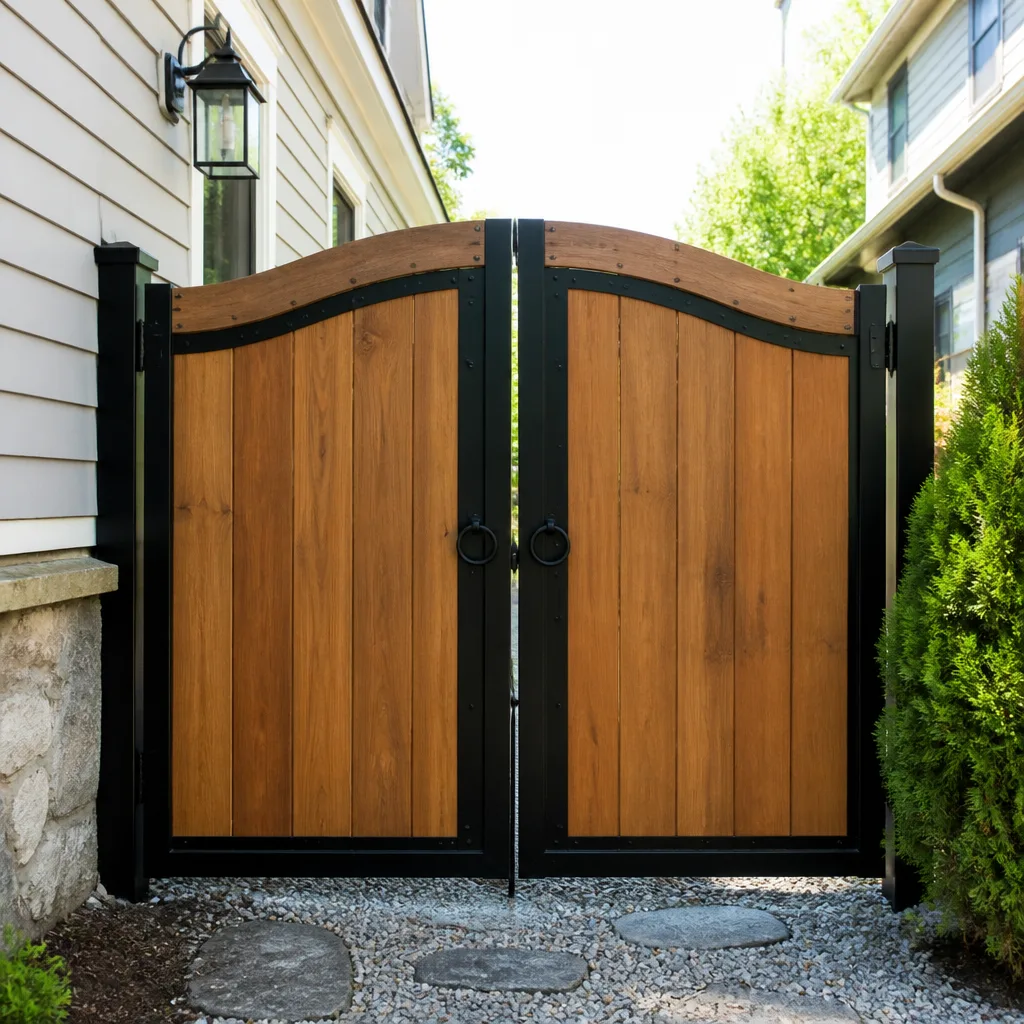 Wood & steel frame
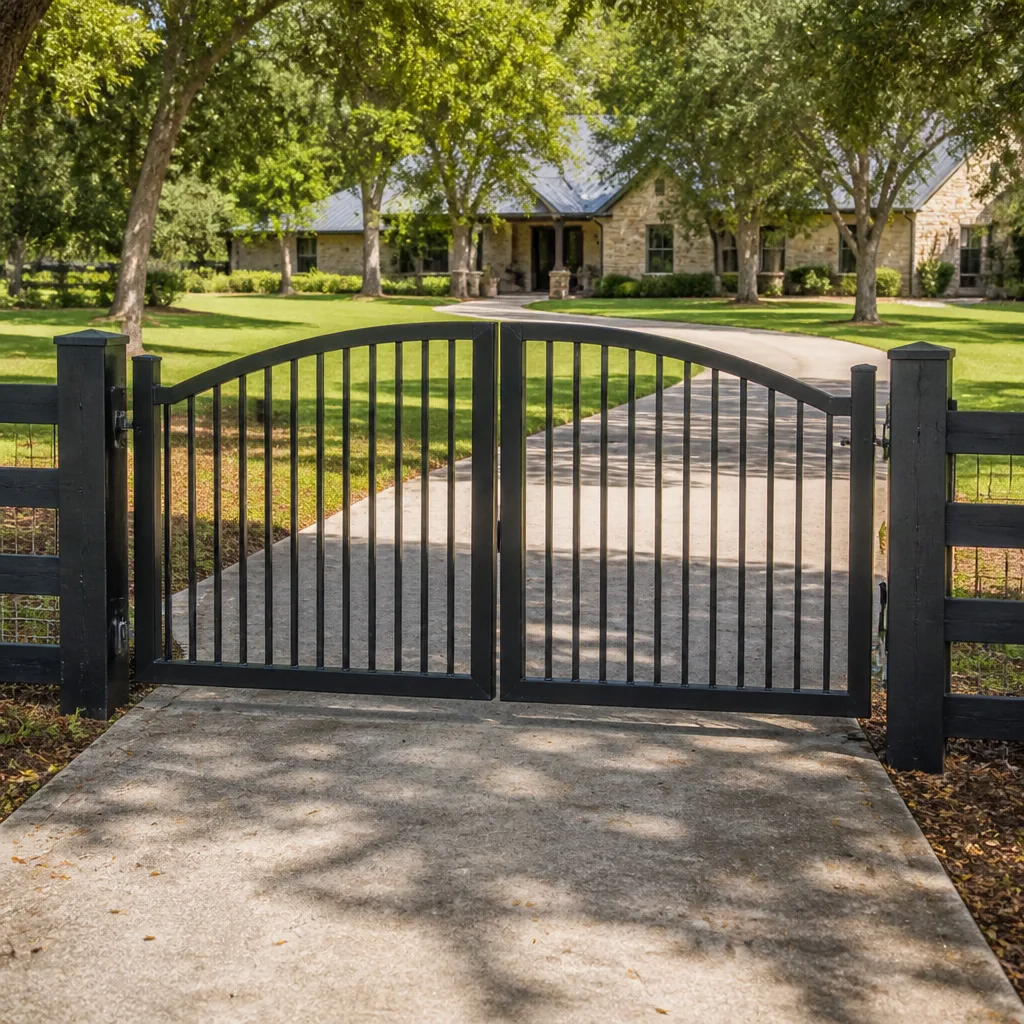 Farm & ranch
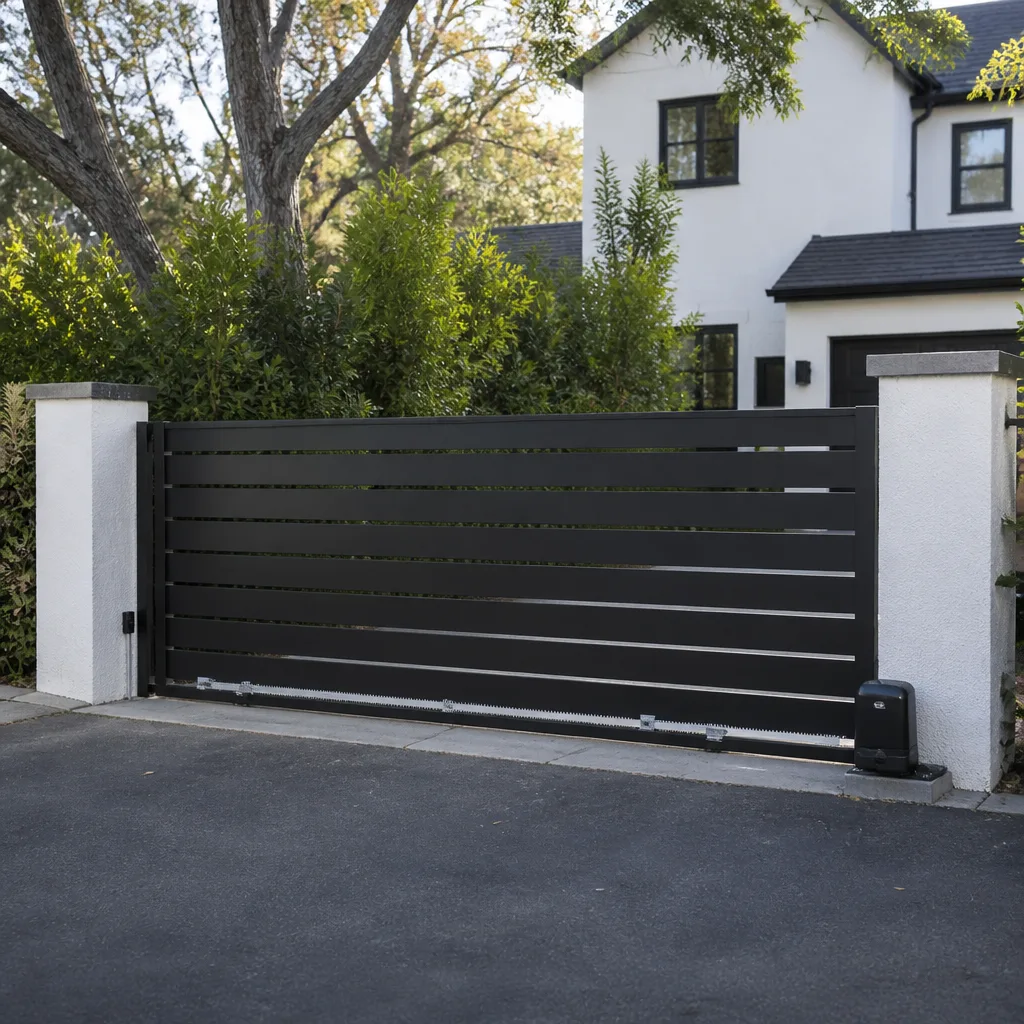 Sliding driveway gates
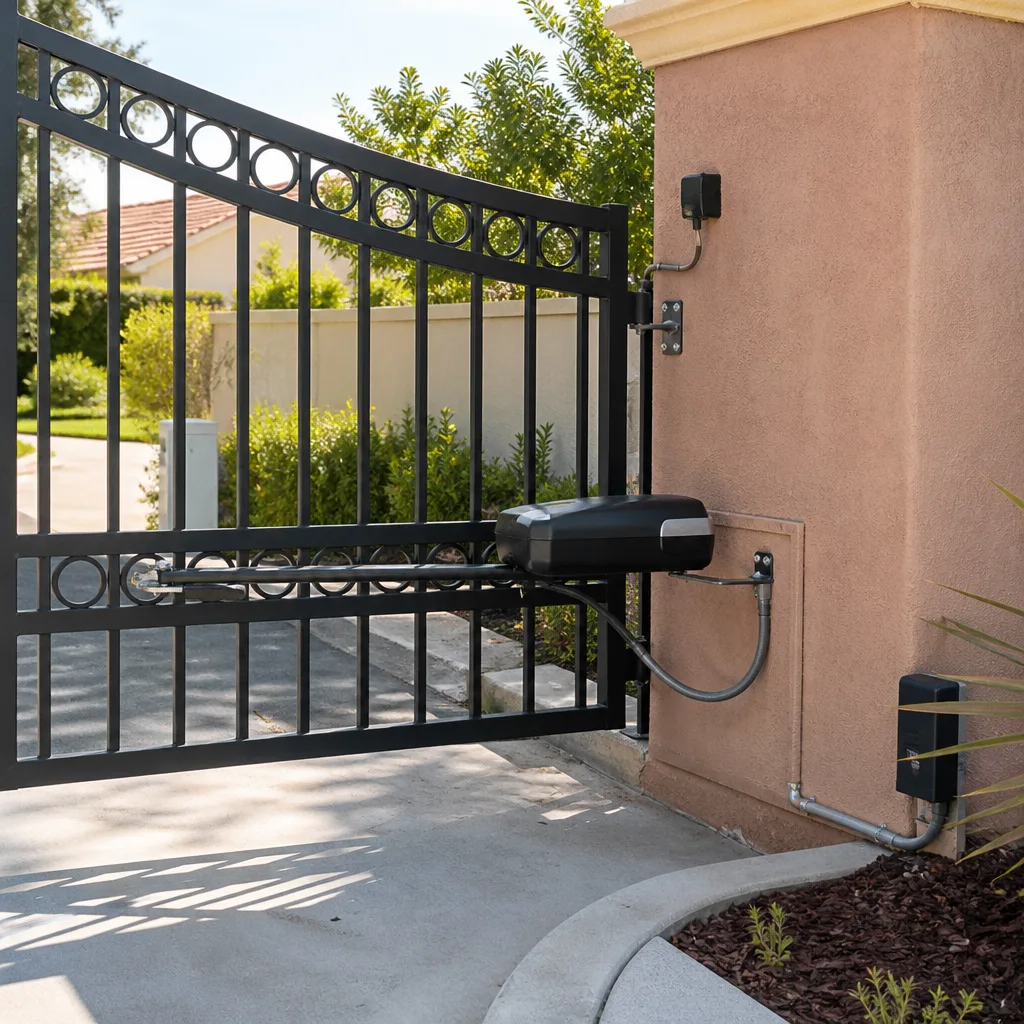 LiftMaster operators
Free on-site gate assessment - hinges, posts, and your LiftMaster or Nice gate operator checked before anything is quoted
The assessment is free and the quote is the invoice.
Get your free estimateGate Repair Emergency Preparedness Guide for Arvada Homes
Most gate emergencies don’t start with the gate. They start with a power flicker, a bent roller, or a keypad that suddenly stops recognizing the code – and the homeowner standing in the driveway realizing they’ve never actually located the manual release. Here’s the counterintuitive part: the repair itself is usually the easy phone call. The hard part is the 20 minutes before you make it, when your gate is stuck open on a Friday afternoon and your property is sitting exposed. This guide is built to eliminate that 20 minutes. We’ll cover manual release by gate type, security-failure protocol, how different systems behave in a power outage, Colorado storm prep, and how to vet a gate specialist under pressure. It’s written for Arvada homes and properties that already have an automated gate – so you can build both response plans before the emergency happens.
Quick Answer
An emergency gate repair in Arvada is any situation where a gate won’t close and leave your property exposed, or won’t open and trap a vehicle or resident – the first is a security emergency, the second is an access emergency, and each needs a different pre-planned response. The single most useful piece of prep is locating and testing your gate’s manual release now, before you need it, because it takes 90 seconds when you know where it is and roughly 20 minutes when you’re hunting for it in the dark. Call (844) 761-1390 to book a repair; we answer 24/7 and fast dispatch runs 7am to 7pm, Sunday through Friday.
Styles & brands we work with
- Wrought iron
- Wood & steel frame
- Farm & ranch
- Sliding driveway gates
- LiftMaster operators
Table of Contents
- Where Is the Manual Release on Your Gate?
- Manual Release by Gate Type: Swing, Slide, and Underground Hydraulic
- Security-Failure Protocol: Stuck Open in the First 30 Minutes
- Power-Outage Gate Behavior by System Type
- Pre-Storm Preparation for the Colorado Front Range
- How to Vet an Emergency Gate Contractor Under Pressure
- Reading the Failure: Motor, Control Board, Sensor, or Structure
- Common Mistakes to Avoid
- When to Call a Professional
Where Is the Manual Release on Your Gate?
The manual release is the mechanism that disconnects your gate operator’s motor from the gate leaf, letting you push the gate open or closed by hand when power or the operator fails. It exists on every automated gate – swing, slide, and underground hydraulic alike – and it is almost always located on or near the operator housing, not somewhere in the gate frame. Find it once, in daylight, with nothing on the line. Then you’ll never be guessing.
Here’s the sequence we recommend for every Arvada homeowner with an automated gate:
- Locate your operator housing. On a swing gate, that’s usually a box mounted on a post near the hinge; on a slide gate, it sits at one end of the track; on an underground hydraulic system, there’s a low-profile cover plate near the gate’s travel path.
- Look for a key, a lever, a pull handle, or a small access door on the housing. Many residential systems ship with a release key; if you can’t find yours, ask your installer or a gate technician to walk you through it.
- Read the operator’s label and note the brand – FAAC, BFT, Linear, and Viking all use different release designs, and knowing yours saves time during a call.
- With the gate stopped and the area clear, test the release once. On a swing gate you should be able to push the leaf freely; on a slide gate, roll it by hand.
- Re-engage the release and confirm the gate returns to automatic operation. If it doesn’t re-engage cleanly, that’s a repair item on its own – a disconnect that won’t lock back in is a safety issue, not just an annoyance.
- Photograph the release mechanism and your operator label, and store the images on your phone. During a real emergency, that photo is worth more than a manual.
Why the emphasis? Because the manual release is the difference between a security problem and a small one. If your gate is stuck open and you can close it by hand, you’ve bought yourself time to think. If your gate is stuck closed and you can open it by hand, you’ve kept your car from being trapped. That single piece of knowledge covers both emergencies – security and access – before either one starts. Get the full picture of what we handle on our Gate Repair Arvada page, or read on to see how release looks on each gate type.
Manual Release by Gate Type: Swing, Slide, and Underground Hydraulic
The manual release works differently on a swing actuator than on a slide motor, and differently again on an underground hydraulic system. What “manual release” physically looks like varies enough that you should match the method to your gate, not assume one approach fits all. If you’re not sure which type you have, the operator location is your first clue: swing operators sit on a post near the hinge, slide operators sit at one end of the track, and underground hydraulic systems are buried beneath a cover plate along the gate’s travel.
Swing gate actuator
Swing gate actuators – the arm-mounted or articulated-arm units most common on residential driveways – typically release via a keyed lever or a bypass pin on the operator housing. Once released, the gate swings freely on its hinges. Push it closed by hand, and remember a swing gate has no counterbalance: it will fall shut or swing open on its own if you let go on a slope. Block it if you need it to stay put. Brands like FAAC and BFT build swing operators with distinct release designs, so the housing key on a FAAC unit won’t look like the lever on a BFT, and that’s normal.
Slide gate motor
Slide gate motors release via a keyed clutch, a manual override bolt, or a disengage lever on the motor housing, depending on the make. Once disengaged, the gate leaf slides along its track by hand. This is the type where release knowledge matters most in a security emergency – a slide gate stuck open exposes the full width of your property, and pushing it closed manually is the fastest correction available. Linear and Viking both build slide operators with manual override designs; if you can’t find yours, that’s a good first question for a technician.
Underground hydraulic
Underground hydraulic operators are the hardest to release because the mechanism is buried. Some use a keyed release at the housing cover; others require a manual pump or bypass valve. If your gate uses an underground hydraulic operator and you don’t know the release procedure, this is the one system we’d recommend having a technician demonstrate before you need it. Hydraulic systems under pressure also carry a specific safety concern – never force a release you haven’t been shown, because a pressurized hydraulic line can behave unpredictably. Call us for electric gate repair if your operator is hydraulic and you’re not confident in the release.
Security-Failure Protocol: Stuck Open in the First 30 Minutes
A gate stuck open is a security emergency, not an access emergency – your property is exposed and the clock is running on the exposure window, not on getting your car out. The first 30 minutes should be spent on three things in priority order: verifying the gate can’t be closed manually, establishing temporary physical security, and calling for repair. Don’t skip step one by assuming the problem is electrical. Plenty of stuck-open gates are mechanical – a broken roller, a bent track, a sheared hinge pin – and a mechanical failure is often closable by hand once you know the cause.
Here’s how to work through the first 30 minutes:
- Confirm the failure. Try the manual release. If the gate closes by hand, close it and secure it. If it won’t move or won’t stay closed, you’re in step two.
- Establish temporary physical security. Options include parking a vehicle across the opening, moving a second vehicle behind it, or, if your property layout allows, positioning a portable barrier or chain across the drive. Never leave the opening unmonitored if you can help it.
- Check the obvious. Is the operator receiving power? Has a breaker tripped? Is there an error light on the control board? Knowing whether the operator is dead or reporting a fault will make your repair call faster.
- Call for repair. Have your gate brand and operator model ready – the faster we can identify whether we’re dealing with an operator, control board, sensor, or structural failure, the faster a fix happens.
- Do not force anything. Don’t pry the gate shut, don’t bypass the safety sensors, and don’t run the operator with the obstruction removed and the sensor reconnected without checking the fault first. Heavy gate panels can crush, and a gate that closes unexpectedly on a person or vehicle is a serious hazard.
One note on timing: if your gate fails open on a Saturday, the fix is scheduled for the next opening, Sunday, as that’s a normal day for us. Call (844) 761-1390 and we’ll book you in. We answer 24/7, with fast dispatch from 7am to 7pm, Sunday through Friday.
Power-Outage Gate Behavior by System Type
Not every gate fails the same way in a power outage, and knowing your system’s default behavior is the difference between a plan and a scramble. Some operators fail safe (stay closed), some fail secure (stay where they are), and some are designed to fail open for emergency egress. Which one you have determines whether a blackout means a security exposure or a trapped vehicle – and that determines which response plan you need.
Here’s the rough mapping by system type, with the caveat that the specific operator model and its configuration matter more than the category:
- Fail-closed systems. Many residential swing and slide operators are configured to hold their last position or close on power loss. These preserve security but can trap a vehicle. If your gate fails closed, your emergency plan is an access plan: find the manual release, open the gate, and get the vehicle out.
- Fail-open systems. Some commercial-grade operators and egress-configured residential systems release to open on power loss. These preserve exit access but leave the property exposed. If your gate fails open, your emergency plan is a security plan: manual close and temporary barrier.
- Battery-backup systems. Many modern operators, including several FAAC, BFT, and Linear models, run on battery backup for a period after power loss before entering a release state. If your operator has battery backup, the outage isn’t necessarily an emergency yet – check the operator for a battery fault light before assuming the gate is stuck.
- Hydraulic systems. Underground hydraulic operators vary; some hold position, some drift open. Hydraulic systems can also lose gate position if pressure drops, so treat any unexpected movement as a repair item.
Why does this matter for Arvada? Because the Front Range sees high-wind events and winter storms that knock out power more often than most homeowners expect, and the outage often hits during a workday when nobody’s home to notice. If your property has a gate that fails open, you want to know that before the next windstorm – not after. For hard-to-diagnose behavior in an underground or commercial system, our gate repair team can map your operator’s fail behavior during a routine service visit.
Pre-Storm Preparation for the Colorado Front Range
Arvada sits on the Front Range, which means the gate-relevant weather is mostly wind and snow: downslope windstorms that can gust hard enough to bend a residential gate, wet snow that loads a panel or jams a track, and freeze-thaw cycles that work loose hinges and footings. You can’t stop the weather, but you can reduce how many gate emergencies each storm produces. A pre-storm walkaround takes about 15 minutes and is the highest-value prep on this whole page.
Run this checklist before a forecast windstorm or snow event:
- Clear the travel path. Remove debris, toys, and anything a gust could blow into the gate’s swing or slide path. A branch that lands in the track during a windstorm turns a non-event into a stuck gate.
- Check the hinges and rollers. Worn hinges and rollers are what a wind gust exploits. Wobble now is a sheared part later. A hinge or roller that moves more than it should is worth a look before the weather hits.
- Inspect the operator housing. Confirm the cover is secure and no wiring is exposed. Wet snow driven into an open control board is a classic winter failure mode, and it’s preventable in 30 seconds.
- Test the manual release. If it’s stiff now, it will be worse in cold weather and worse again under stress. Release it, work it, and re-engage.
- Clear snow from the track and the gate’s clearance zone before moving it. Never run the operator through a snow drift or ice dam. Heavy wet snow compacts against the rollers and can stall or damage the motor.
- Look at the footings. After a freeze-thaw winter, gate posts and operator pads can shift. A gate that suddenly rides its track unevenly is telling you the footing has moved, and that’s a structural repair, not an operator fix.
Two of those items – hinges and footings – are the ones we get called about most after a storm. Both are easier to fix before the storm than after, and both can be caught on a pre-season inspection. If you’d like a technician to walk through your gate before winter or before the next wind event, that’s a straightforward service call.
How to Vet an Emergency Gate Contractor Under Pressure
Anyone who answers a phone can say “we do gates.” The problem is that a gate specialist and a general handyman look identical at the phone stage, and you’re likely calling from a driveway with your property exposed – not a good time to find out the difference. Two questions cut through most of it, and you can ask both in under a minute. If a caller can’t answer them clearly, that’s your answer.
The two questions that separate a gate specialist from a generalist
Question 1: “Do you work on automated gate operators, control boards, and safety sensors – or do you refer that out?” A dedicated gate specialist will handle the operator, the control board, the safety sensors, and the access control or loop detector system directly. A generalist will either refer it out, describe a vague “we’ll figure it out” approach, or default to selling you a new system. Electric gate repair is a specialty, not a side service – the failure could be in the operator, the access control board, the safety sensors, or the mechanical structure, and a qualified specialist diagnoses which one before quoting.
Question 2: “Which gate brands do you work on, and can you name a few that match mine?”
A specialist should be able to name the brands without checking. We work on a wide range of residential and commercial brands – LiftMaster, FAAC, BFT, Linear, Viking, Ghost Controls, DoorKing, Elite, and Mighty Mule are the ones we know best – but the point of the question isn’t to test a list. It’s to see whether the caller recognizes your brand and can speak to its operator design, control board layout, and release mechanism. FAAC, BFT, and Viking have very different control boards and release designs; someone who works on all three will know that without hesitation.
A third question worth asking
If you’re giving a technician property access, ask whether they carry out an on-site diagnosis before quoting and whether they can put the price in writing before work starts. On a gate, the price is set per job by the written estimate – never a guess over the phone, never an open-ended hourly rate. That protects you and it’s how a specialist should work. You can read more about our broader coverage on the Arvada page.
Reading the Failure: Motor, Control Board, Sensor, or Structure
Every gate failure falls into one of four buckets: the motor assembly, the control board or access control system, the safety sensors, or the mechanical structure. Knowing which bucket you’re in tells you how urgent the problem is, what to do in the meantime, and roughly how big the repair will be. The trick is reading the symptoms before someone tells you the answer.
- Motor assembly failure. Symptoms: the gate moves in only one direction, runs slowly, stalls under load, or hums without moving. On a swing gate, an arm motor that runs but doesn’t move the leaf is usually a motor coupling or gearing issue. On a slide gate, a gate that moves but won’t start cleanly is often a motor or drive-gear problem. This is a repair, not an emergency, unless the gate is stuck open.
- Control board or access control failure. Symptoms: keypads and remotes stop working, the gate acts erratically, or an error light shows on the board. This bucket includes loop detectors in commercial systems and access control boards in DoorKing and FAAC installations. Diagnose the board before replacing the motor – a lot of “dead motor” reports are actually a failed control board.
- Safety sensor failure. Symptoms: the gate stops mid-travel, reverses, or won’t close at all with a clear path. The gate’s safety sensors exist to stop the gate on an obstruction; when the sensors fail, the gate often refuses to close as a safety default. This one is a genuine hazard if bypassed – don’t do it.
- Structural failure. Symptoms: the gate drags, rides the track unevenly, sags, or makes a grinding noise along the ground. This is a hinge, roller, track, or footing issue. A swing gate that drags was often a bent hinge or shifted post before it was a gate problem.
One safety note that applies across all four buckets: gate operators carry real electrical current, and gate panels are heavy enough to cause serious injury if they close on a person or vehicle. If a failure involves exposed wiring, a shorted control board, or a gate that moves unexpectedly on its own, treat it as a professional-only repair. Don’t open the operator housing, don’t bypass a safety edge or sensor, and don’t run the gate with the obstruction removed to see what happens. A trained technician can isolate the fault safely; in a driveway under stress, that’s what you want.
Common Mistakes to Avoid
- Not knowing where the manual release is. This is the mistake that turns a stuck gate into a security emergency. Locate and test the release now, on a dry afternoon with nothing on the line – not at 11 PM in a snowstorm.
- Forcing a stuck gate shut. Prying or pushing a gate that won’t move is how hinges get bent and motors get damaged. If the gate won’t close by hand after release, the problem is mechanical, and forcing it only adds to the repair.
- Bypassing a safety sensor to get the gate to close. The sensor is what stops the gate on an obstruction. Disconnect it and you have a gate that closes on people or vehicles. Never bypass a sensor or safety edge; call for repair.
- Assuming a dead gate means a dead motor. Plenty of “failed motors” are failed control boards, tripped breakers, or a sensor reporting a fault. Diagnose before replacing parts – a specialist identifies the actual failure rather than defaulting to a full system swap.
- Running the gate through snow or debris. The operator is strong enough to try, which is exactly why it gets damaged. Clear the track and travel path before running a gate in winter.
- Skipping pre-storm checks on hinges and footings. A loose hinge or shifted footing is what a Front Range windstorm converts into a bent gate. Fifteen minutes before the storm beats an emergency call after it.
- Giving property access to an unvetted caller. Ask the two vetting questions before letting anyone onto your property, and confirm that a written estimate comes before any work. A gate specialist will welcome the questions; a generalist will dodge them.
When to Call a Professional
Call a professional when the gate won’t close and you can’t close it by hand, when the gate won’t open and someone or something is trapped, when the operator shows an error light or runs erratically, when the gate moves on its own, or when any part of the operator housing or control board is exposed or shows heat or burn marks. Call us when a hinge or roller has failed and the gate is dragging, when a footing has shifted and the gate is riding the track unevenly, or when you’ve located your manual release but it won’t re-engage. Don’t call when a breaker has tripped and resetting it restores operation – that’s a watch item, not an emergency. Every situation in the first list deserves a trained technician. Gate Repair Arvada offers free estimates in Arvada – call (844) 761-1390.
See the difference
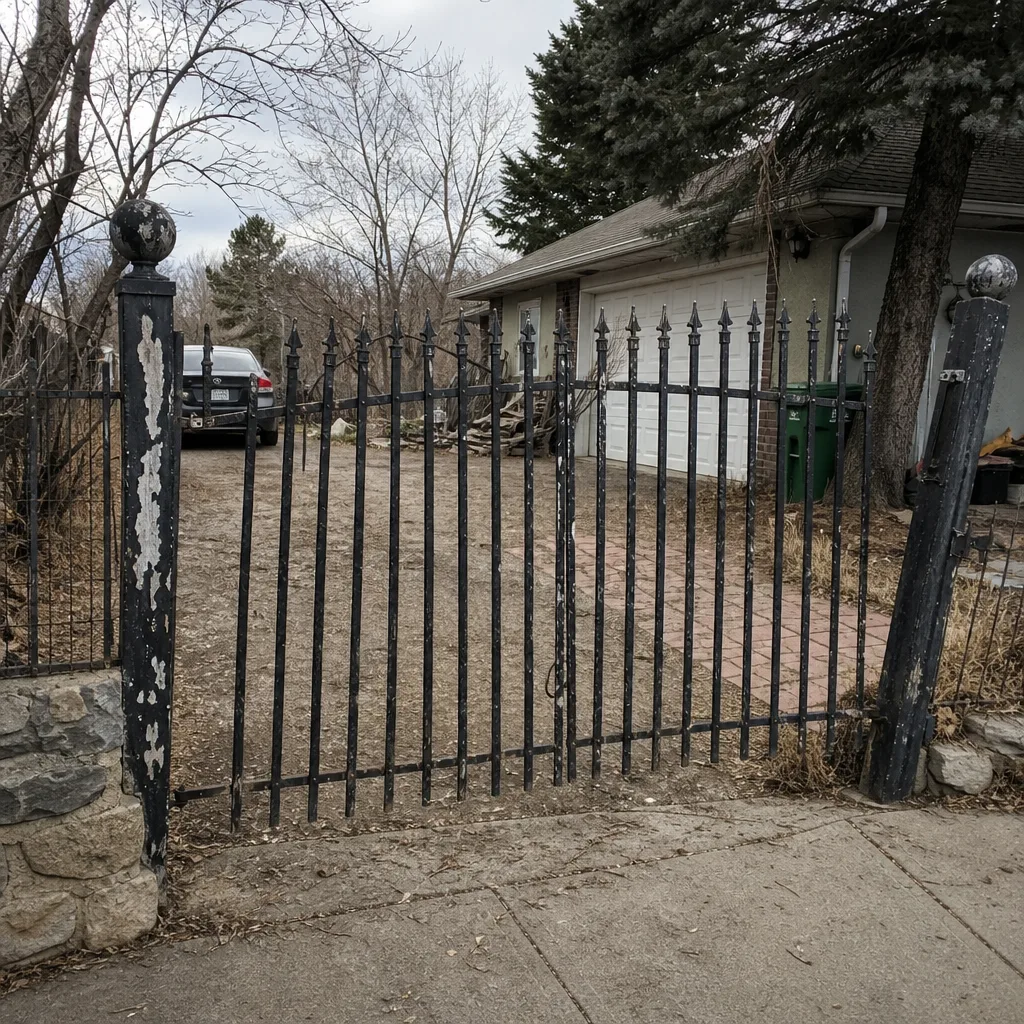 Before
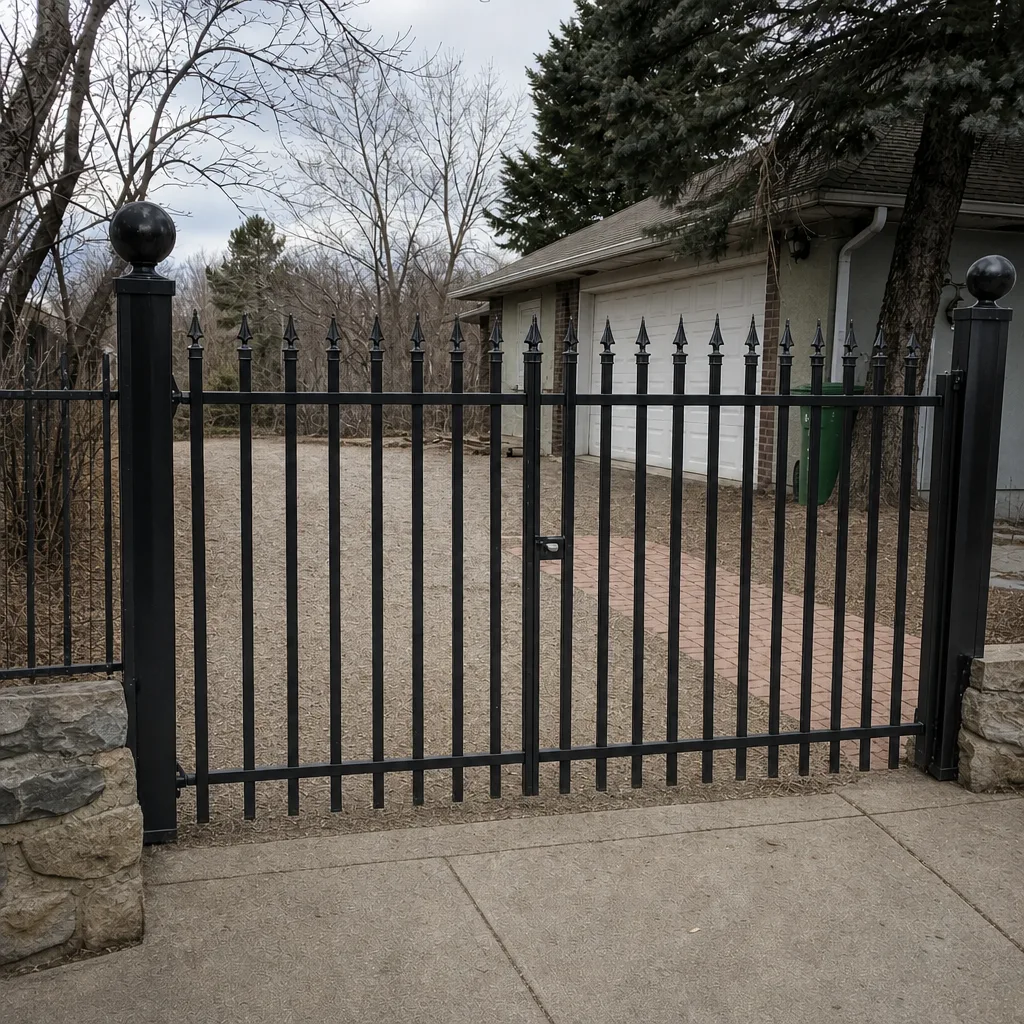 After
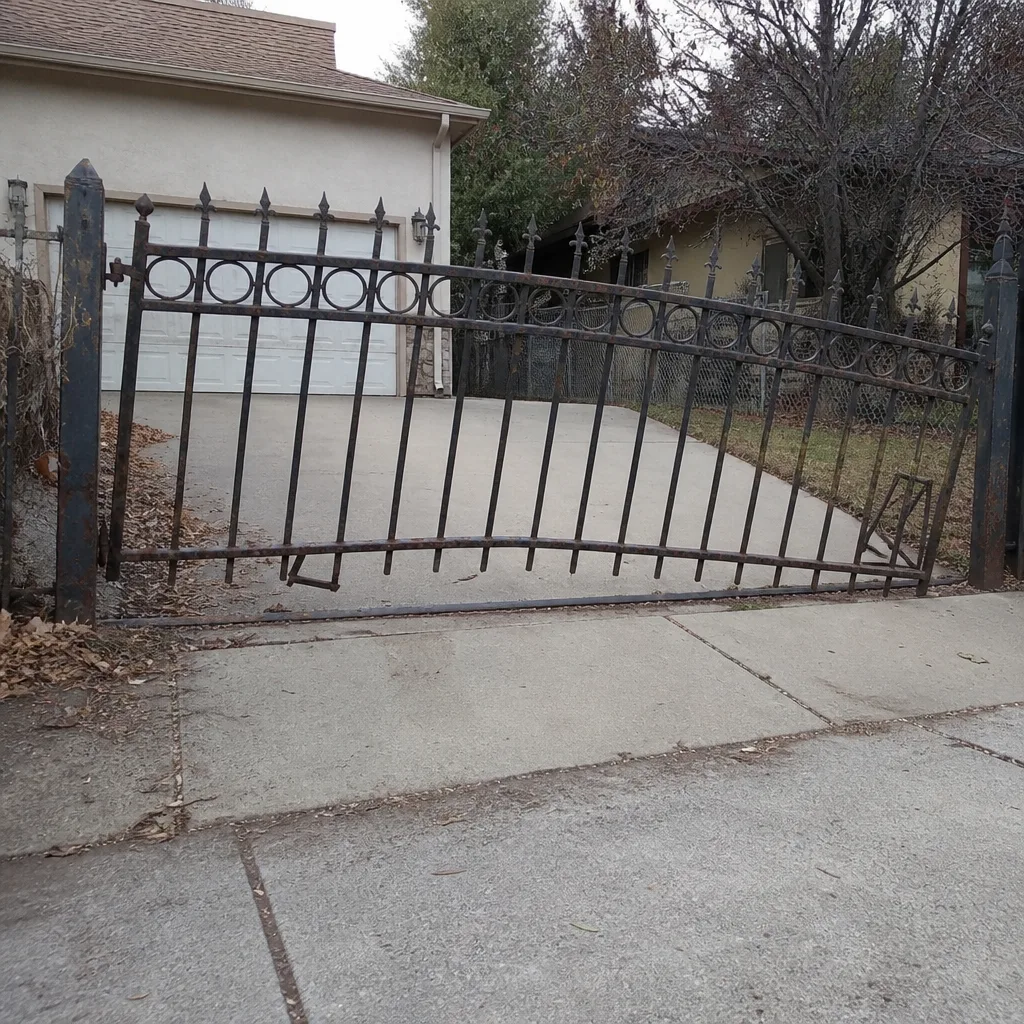 Before
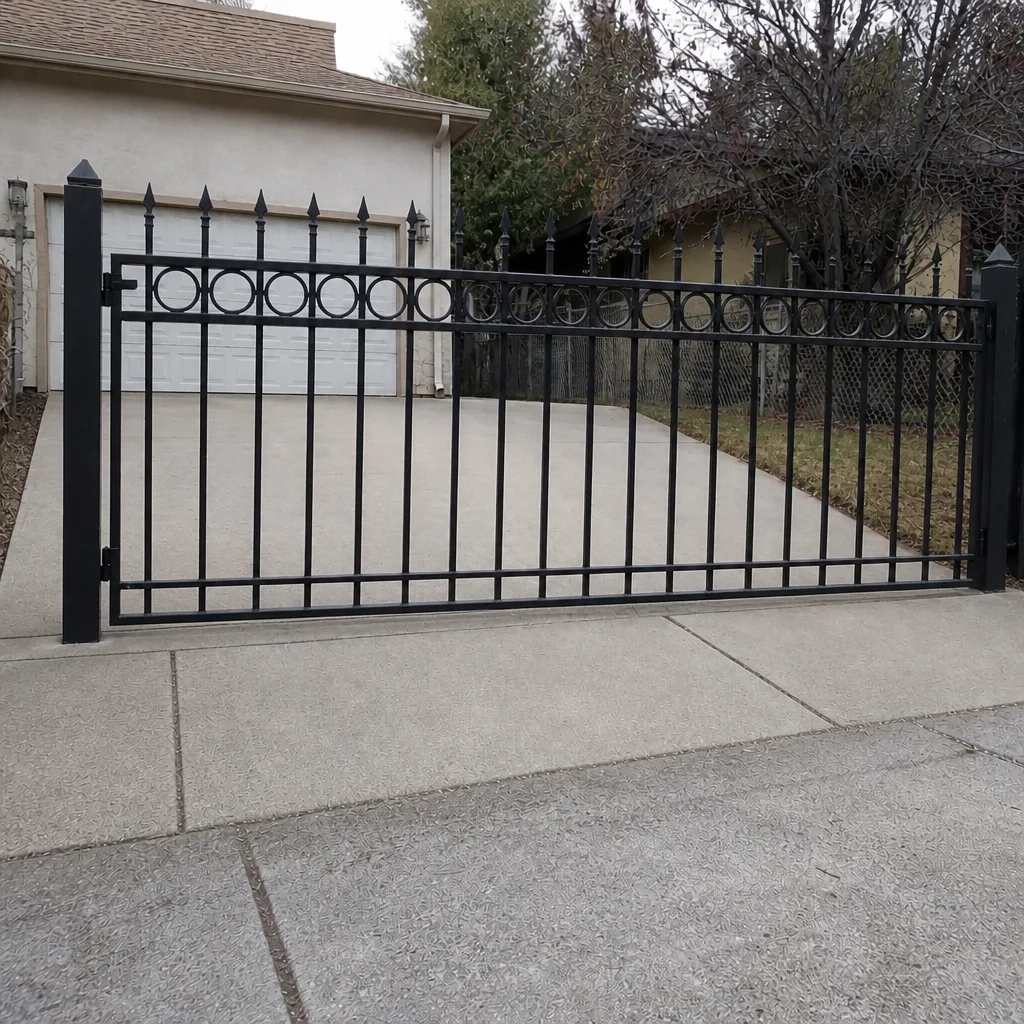 After
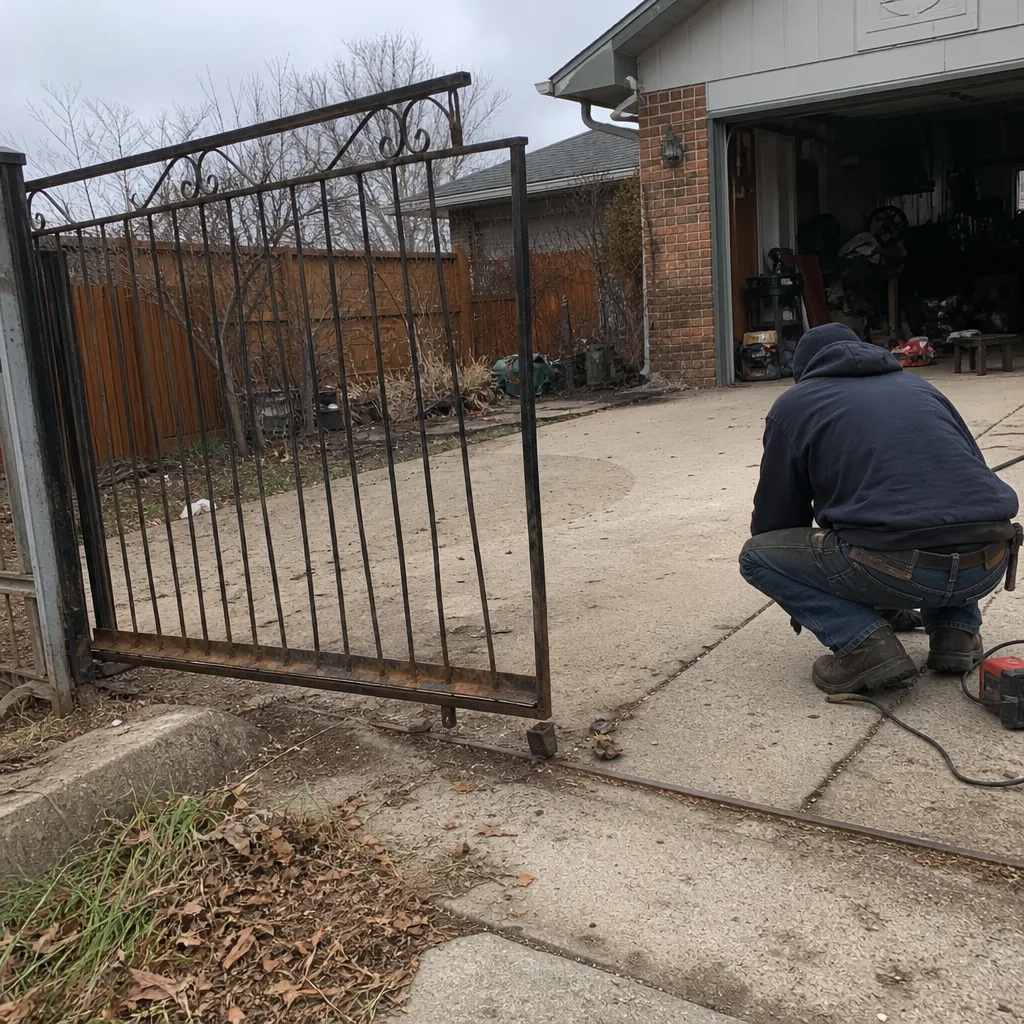 Before
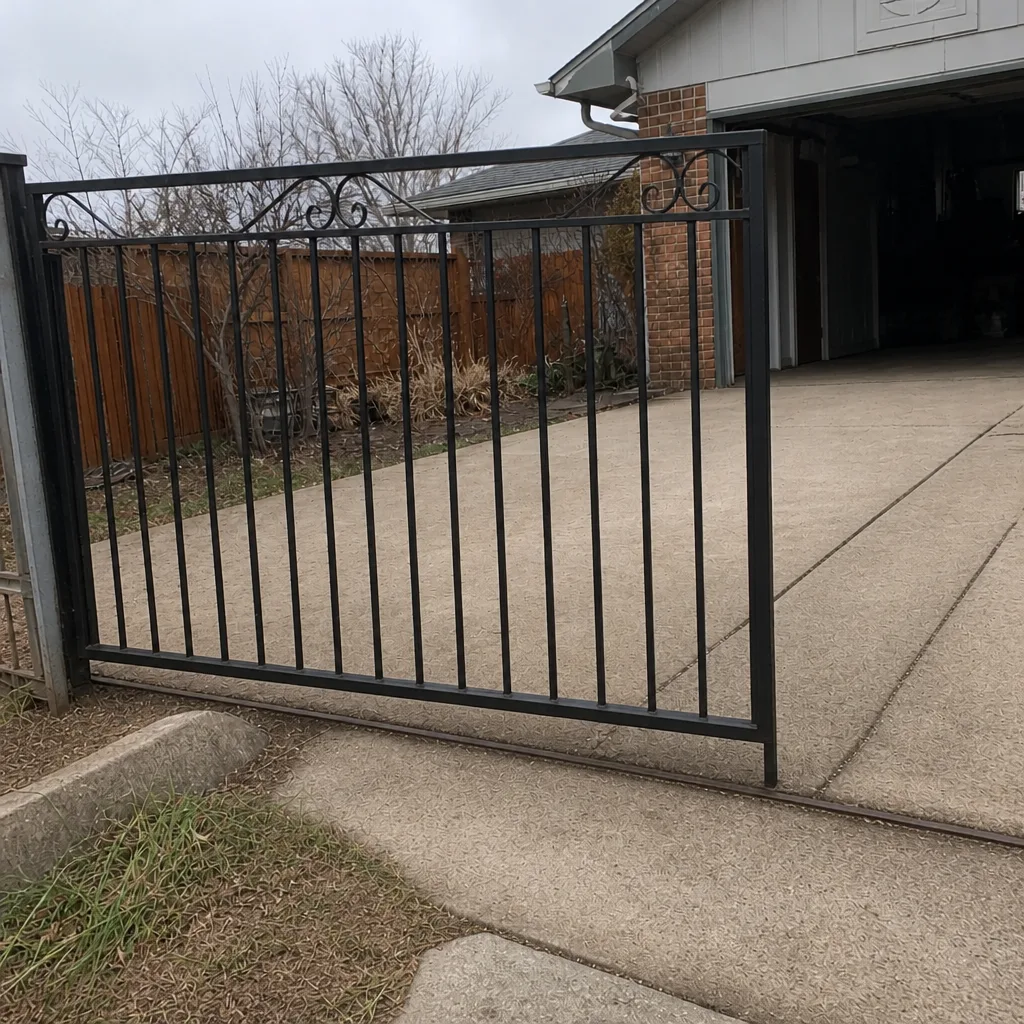 After
Frequently Asked Questions
It comes down to which failure mode you’re in. If the gate won’t close and your property is exposed, it’s a security emergency – the priority is temporary physical security and a manual close if possible. If the gate won’t open and a vehicle or resident is trapped, it’s an access emergency – the priority is the manual release and getting people out. Each has a different first move, which is why we recommend building both plans now.
Same-day service is often possible, and fast dispatch runs 7am to 7pm, Sunday through Friday. Saturdays we’re closed and calls are booked into the next opening on Sunday. Call (844) 761-1390 – we answer 24/7 – for an exact answer on your repair.
Use the manual release. Find the release on the operator housing and disengage the motor, then push the gate open by hand. That’s the entire fix for a power-outage access emergency, and it’s why locating the release in advance matters so much. If the release won’t disengage or the gate still won’t open, call for repair.
Stuck-open gates are usually a failed operator, a tripped breaker, a safety sensor fault, or a mechanical failure like a sheared hinge pin. Try the manual release first – a mechanically failed gate often closes by hand once the motor is disengaged. If it won’t move, park a vehicle across the opening as a temporary barrier, then call for an on-site diagnosis. Don’t force the panel.
It depends on your operator model and how it’s configured. Many residential swing and slide operators hold their last position or close on power loss; some egress-configured and commercial-grade systems release to open. If your operator has battery backup – as several FAAC, BFT, and Linear models do – it will run on battery before releasing. During a repair visit, we can map your specific operator’s fail behavior.
Test your manual release and check your hinges and footings before the storm. The release is what gets you through a stuck-gate emergency; loose hinges and shifted footings are what a Front Range windstorm converts into a bent gate. Fifteen minutes of prep before the storm prevents most gate emergencies we see. Call (844) 761-1390 for a pre-storm walkthrough if you’d rather have a technician check it.
The Bottom Line
Gate emergencies fall into two types – security failures and access failures – and each has a single pre-planned first move. For both, the manual release is the tool that buys you time, and locating it in advance is the highest-value prep on this page. Match your release method to your gate type, know whether your operator fails open or closed, run a pre-storm check on hinges and footings, and vet any emergency contractor with the two questions that separate a gate specialist from a generalist. For Arvada homes and commercial properties, we work on your brand – FAAC, BFT, Linear, Viking, and more – across repair, electric gate repair, and installation. Call (844) 761-1390 for a free estimate. We answer 24/7. Fast dispatch from 7am to 7pm, Sunday through Friday.
Written by the team at Gate Repair Arvada.