
Last updated November 15, 2026
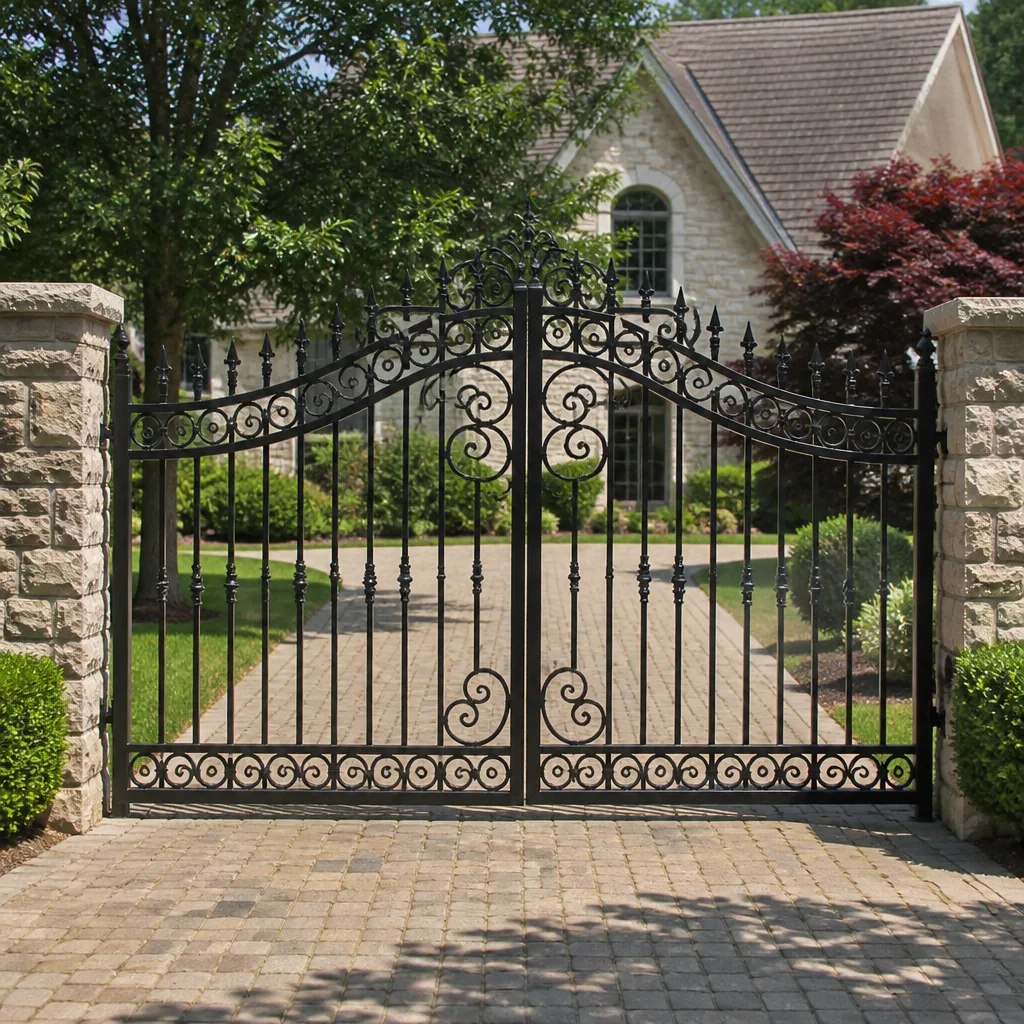 Wrought iron
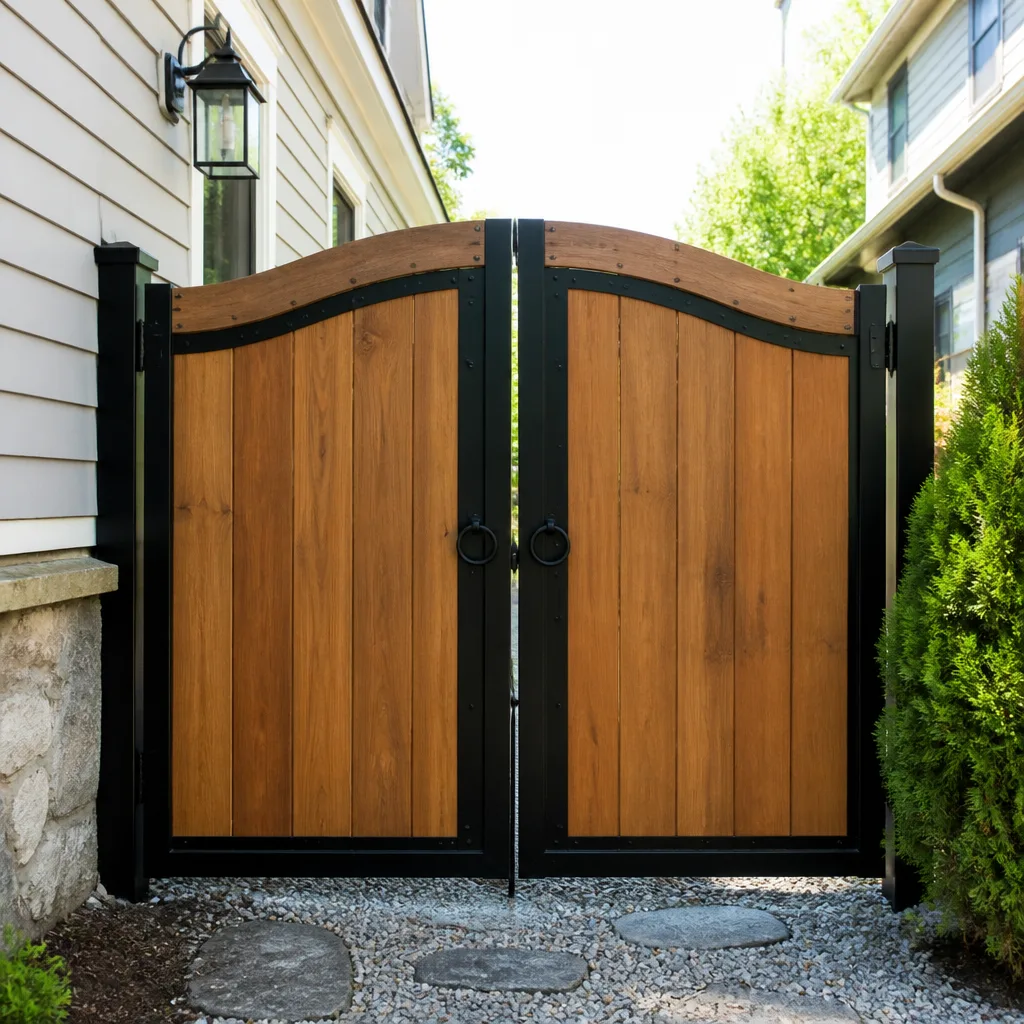 Wood & steel frame
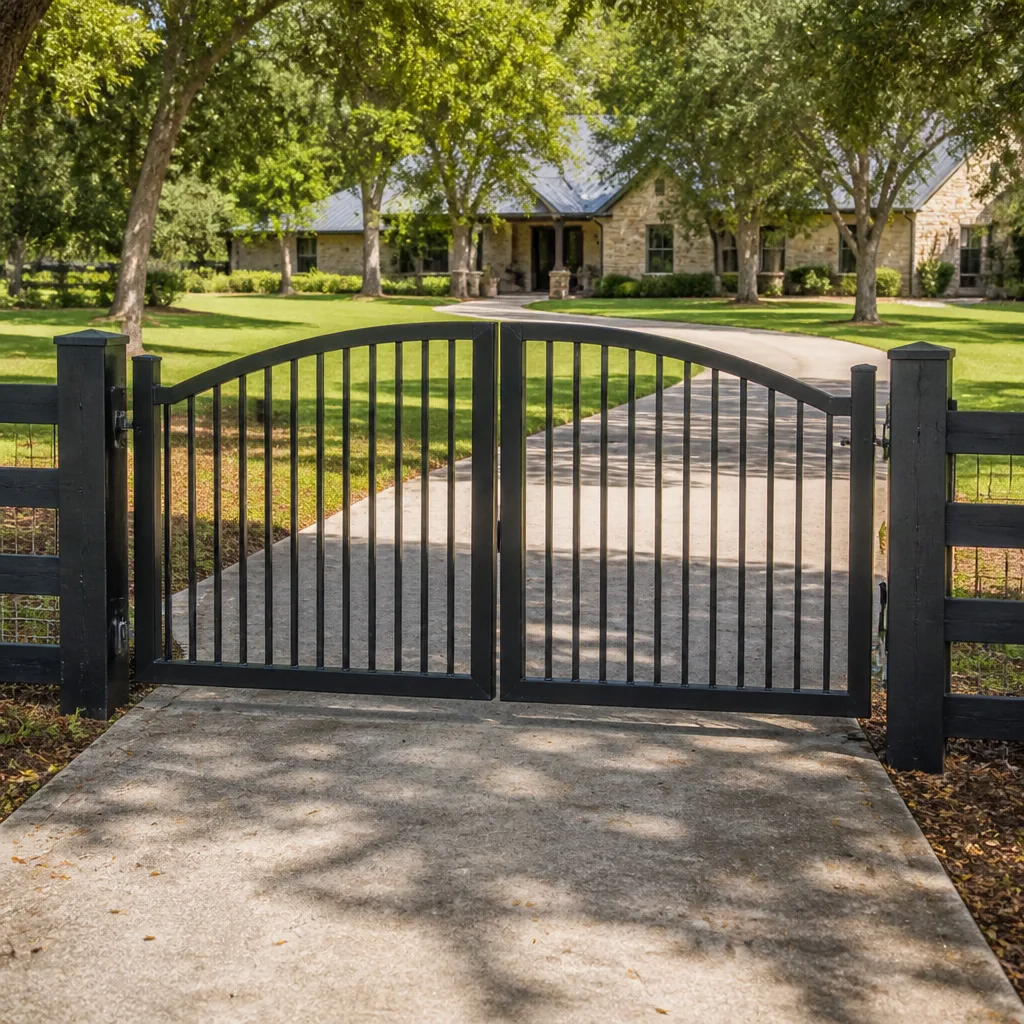 Farm & ranch
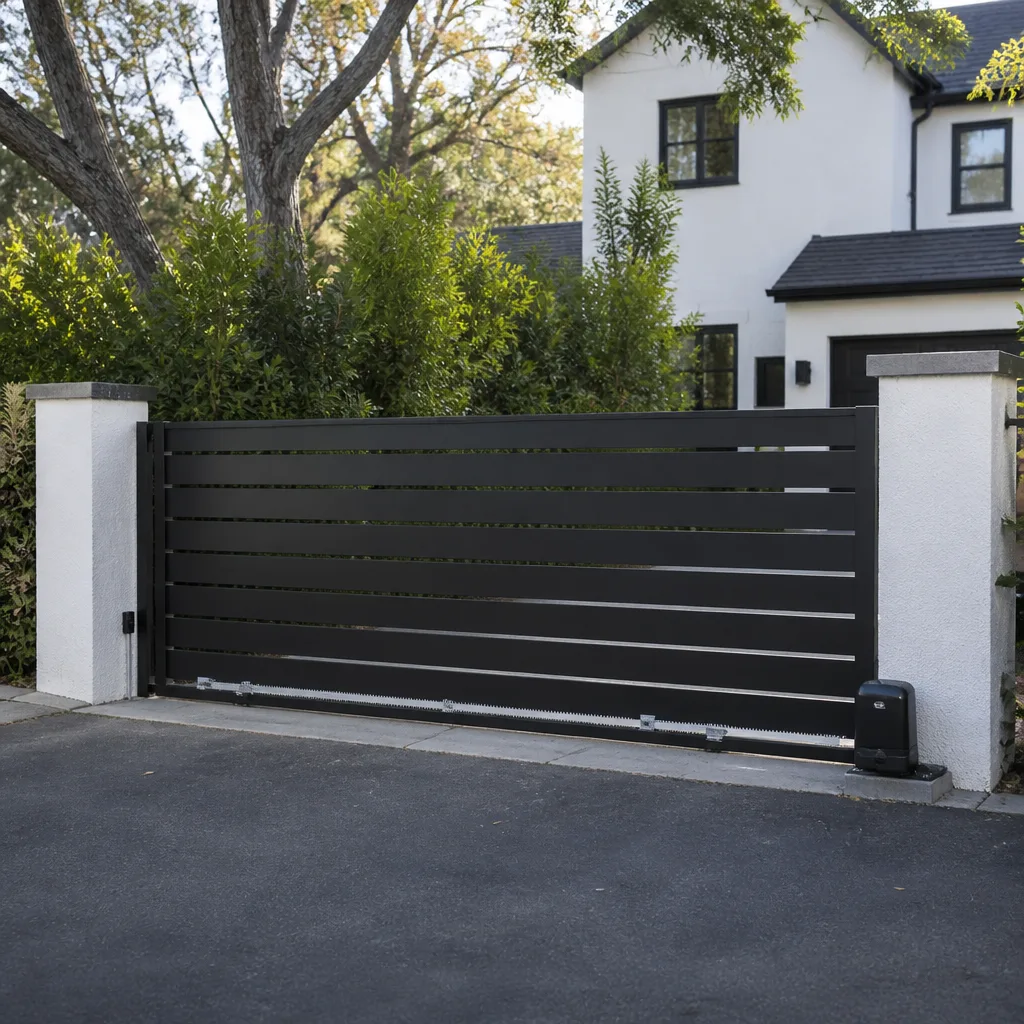 Sliding driveway gates
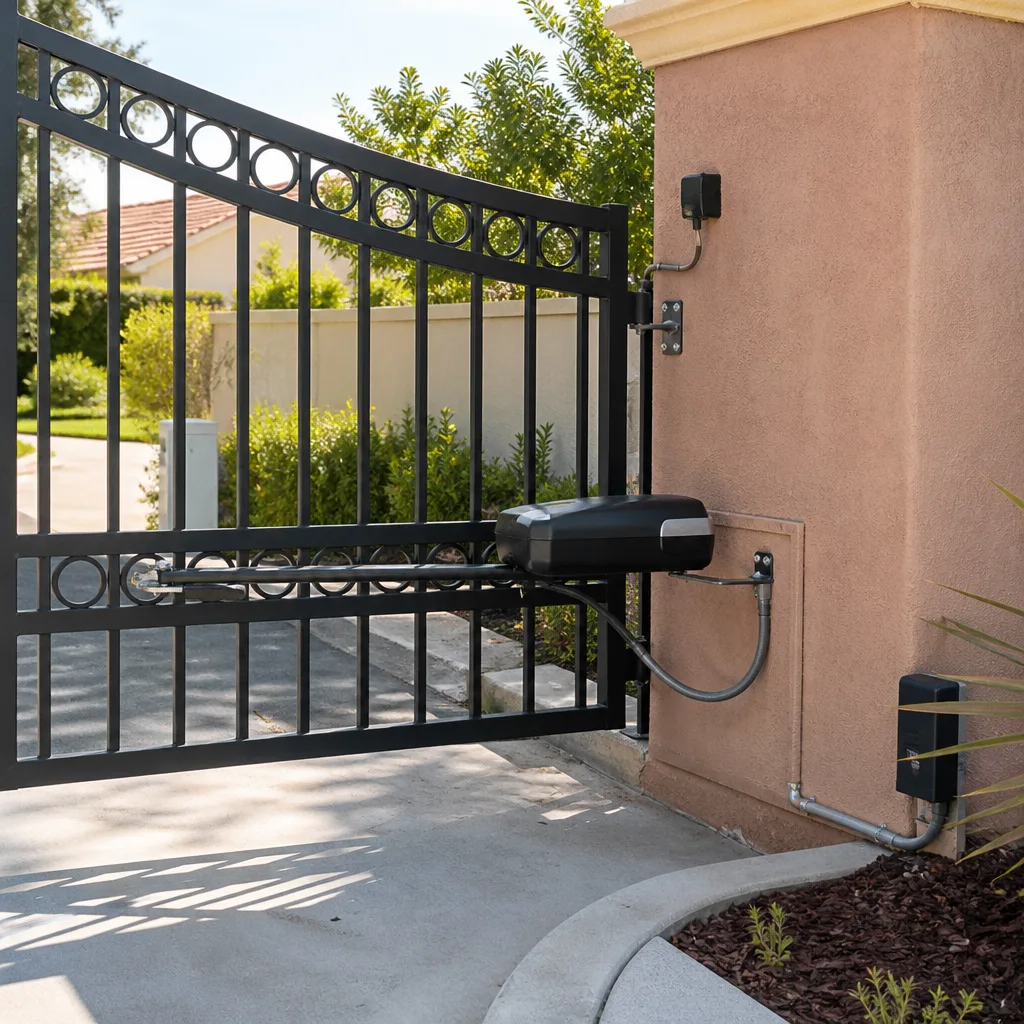 LiftMaster operators
Free on-site gate assessment - hinges, posts, and your LiftMaster or Nice gate operator checked before anything is quoted
The assessment is free and the quote is the invoice.
Get your free estimateGate Repair Maintenance Checklist for Arvada Homeowners
Most gate maintenance advice is written for a climate that Arvada doesn’t have. The standard checklist says “lubricate twice a year and check the battery” and leaves it there, which is roughly like telling someone in Colorado to water the lawn on a fixed schedule regardless of whether it rained. Gates in Arvada fail on a different clock. The freeze-thaw cycle that runs from late fall into spring, the expansive clay beneath a lot of this city’s subdivisions, and the UV load from all that high-altitude sun work together on hinges, posts, wiring, and control boards in ways a generic guide never addresses. This checklist is built around those three forces. You’ll learn what to inspect, how to measure it, what passes and what fails, and which tasks you should hand to a trained technician before you touch anything.
Quick Answer
A gate maintenance checklist for Arvada homeowners should follow the Front Range climate cycle, not the calendar: inspect post plumb and hinge torque after each freeze-thaw period, test the battery backup before spring storm season with a load test rather than a voltage reading, regrease steel hinges and nylon rollers on separate schedules with the correct grease for each material, and check wiring insulation for UV cracking every spring. Anything involving the operator’s power supply, control board, or a post that has drifted out of plumb belongs with a trained technician.
Styles & brands we work with
- Wrought iron
- Wood & steel frame
- Farm & ranch
- Sliding driveway gates
- LiftMaster operators
Table of Contents
- Why Arvada Gates Age Differently
- The Soil-Movement Check: Measuring Post Plumb
- Lubrication by Material: Steel Hinges vs. Nylon Rollers
- Electrical and Control Board Inspection
- Battery Backup Testing Before Storm Season
- Solar Panels, Limit Switches, and Rollers
- Which Tasks Void Your Warranty
- The Arvada Seasonal Maintenance Schedule
Why Arvada Gates Age Differently
Arvada sits in a climate band that punishes gate hardware in a specific order. The city sees roughly 300 days of sun a year, and at this elevation that sunlight carries more UV intensity than it does at lower altitudes. The practical result is that wiring insulation on an automated gate degrades noticeably faster here than it does in a midwest climate, cracking and going brittle on runs that are exposed to the sun for most of the day. A gate that was installed with wiring routed along a sunny fence line will often show insulation damage before the operator itself shows any sign of trouble. When that insulation cracks, moisture gets in, and the failures that follow look like control board problems but start as a wiring problem.
The second force is temperature swing. Arvada regularly moves through freeze-thaw cycles in winter and early spring, and each cycle expands and contracts metal hardware, wood or composite panels, and the ground itself. Hinges work themselves loose. Bolts that were torqued correctly in July are finger-loose by February. Gate sag that a homeowner blames on “cheap hardware” is usually the accumulated result of a dozen freeze-thaw cycles nobody checked.
The third force is soil. Large parts of Arvada sit on expansive clay subsoil, which swells when it’s wet and shrinks when it dries. A gate post set in that soil doesn’t stay where it was set. It drifts, usually slowly, sometimes seasonally. A gate that binds in spring and swings free by August is telling you something about the ground, not the hinges.
None of this makes an Arvada gate fragile. It makes it predictable. Once you know the order in which things wear, a maintenance routine becomes a schedule of specific checks rather than a vague twice-a-year gesture. If you’d rather have a specialist walk the whole system, that’s what our gate repair service is built for. Otherwise, the sections below cover each component in turn.
The Soil-Movement Check: Measuring Post Plumb
The single most useful measurement you can take on an Arvada gate is post plumb, and almost nobody does it. Posts move before gates visibly fail, and catching the drift early is the difference between adjusting a hinge and resetting a post in new concrete. Here’s how to measure it.
- Set a 4-foot level against the gate post on two adjacent faces (front and side). Note where the bubble sits, not just whether it’s centered.
- Mark the current position with a pencil line on the post at the top of the level. Next season, you’ll have a reference.
- Measure the gap between the gate frame and the post at the top hinge and at the bottom latch, using a tape measure. Write both numbers down.
- Open the gate to 90 degrees and let it rest. If it swings on its own toward open or closed, the post has rotated. A gate that won’t stay where you put it is a soil problem, not a hinge problem.
- Repeat the same measurements after the spring thaw. Compare against your notes.
What counts as a pass? A post that holds its mark within about a quarter inch across a season is stable. A post that has drifted half an inch needs a hinge adjustment and a closer look. A post that has moved an inch or more, or that has visibly tilted, has crossed into structural territory and needs to be evaluated by a technician. Continuing to adjust the gate hardware around a moving post just masks the problem until the gate racks out of square and the operator starts straining.
This check matters most in the neighborhoods built on the heavier clay soils, and it matters most in the weeks after a wet spring followed by a dry stretch. That’s when the ground moves the most. A plumb check in Arvada is a five-minute job that saves real money.
Lubrication by Material: Steel Hinges vs. Nylon Rollers
Here’s where generic advice does actual damage. “Grease your hinges” is not a spec. Steel hinges and nylon rollers need different lubricants, and mixing them accelerates wear instead of reducing it.
Steel hinges and steel pivot points want a heavier grease that stays put under load and doesn’t wash out with spring rain. An NLGI grade 2 lithium or lithium-complex grease is the usual spec for gate hinge and pivot work; it’s thick enough to stay in the joint and it handles the temperature range Arvada throws at it. Apply it to a clean joint, not over old grit.
Nylon rollers and nylon guide wheels are a different story. Petroleum-based grease can attack some nylon formulations and cause them to soften and swell, which turns a smooth roller into a dragging one. Nylon rollers generally want a dry-film PTFE or silicone lubricant, or the manufacturer’s specified product. If you don’t know the roller material, check the operator’s manual before you reach for the grease gun.
The reason mixing them accelerates wear is simple: the wrong grease either migrates off the surface it’s supposed to protect, or it holds grit against a nylon surface that should be running clean. Either way, the part wears faster than it should. A few practical rules:
- Clean the joint or roller before applying anything. Grease over grit is grinding paste.
- Use NLGI grade 2 grease on steel hinges, steel pivots, and the operator’s chain if it has one.
- Use dry-film PTFE or silicone on nylon rollers and guide wheels.
- Never use WD-40 as a substitute lubricant on hinges. It’s a solvent, not a grease, and it strips what protection was there.
- Wipe off excess. Grease that collects dust becomes an abrasive.
We’ve seen plenty of gates in Arvada where the hinges were greased faithfully with the wrong product for the roller, and the roller was the part that failed. Match the lubricant to the material and you’ll get far more life out of both.
Electrical and Control Board Inspection
This is the section where we tell you what to look at and what to leave alone. An automated gate’s power supply, control board, and operator wiring carry line voltage and low-voltage control signals side by side, and getting it wrong can injure you or destroy an expensive board. So: inspect visually, and if anything looks wrong, stop.
What you can safely check:
- Look at the wire runs for cracked or sun-bleached insulation. At Arvada’s UV levels this is the first electrical failure you’ll usually see.
- Check that the operator enclosure is closed and free of water intrusion after a storm.
- Look for corrosion or green fuzz at any exposed terminal you can see without opening a powered enclosure.
- Confirm the safety sensors are clean and unobstructed, and that the gate reverses when something blocks the path.
- Press the manual release and confirm the gate can be moved by hand. A gate that won’t release is a safety problem.
What you shouldn’t do yourself: open the control board enclosure, probe terminals with a multimeter, replace a board, or rewire the operator’s power feed. These are the tasks that belong to a technician. Electric gate repair is a specialty, not a side service, and the diagnostic work is the difference between replacing the right part and replacing three parts on a guess.
Our technicians are factory-familiar with nine gate brands, from residential platforms like Mighty Mule and Ghost Controls to commercial-grade operators like DoorKing and FAAC, and the cross-brand diagnostic ability matters here. A failure that looks like a dead control board on a LiftMaster system is sometimes a limit switch problem, sometimes a safety sensor, sometimes the board itself. Without the right diagnostic process, you guess. If your board or operator needs attention, our electric gate repair team handles it.
Battery Backup Testing Before Storm Season
Before Colorado’s spring storm season, test the battery backup properly. A voltage check with a multimeter is not a battery test. A battery can read a healthy resting voltage and still fail the moment it has to carry the operator’s load, which is exactly what happens during an outage. What you want is a load test.
Here’s the procedure, in general terms:
- Confirm the gate is in its normal operating cycle and the battery is fully charged.
- Disconnect the main power to the operator, or trip the breaker feeding it, following the manufacturer’s instructions.
- Cycle the gate open and closed several times on battery power alone, and time each cycle against the normal powered cycle time.
- Watch for the gate slowing noticeably, stalling, or the operator faulting out. Any of those is a failing battery.
- Reconnect power and confirm the operator recharges and resumes normal operation.
If the gate runs slow or stalls on battery, replace the battery before storm season rather than after. A backup that fails during the first power outage of the season is worse than no backup, because you’ve been relying on it. Check the battery’s age too; most sealed lead-acid batteries in gate operators have a finite service life and don’t recover from being deeply discharged.
We test battery backups as part of a general gate inspection because it’s a five-minute check that prevents the most common storm-season failure. If you’re not comfortable disconnecting power to your operator, that’s a reasonable instinct, and it’s a task we handle on a service visit.
Solar Panels, Limit Switches, and Rollers
Solar-powered gates, which are common on Arvada properties where running power to the gate location isn’t practical, need their own inspection pass. The solar panel is the easiest component to neglect because it’s up high and out of the way.
Panel check: look for dust, pollen, and bird droppings on the panel face. At Arvada’s sun exposure, even a light film cuts output more than you’d expect. Clean with water and a soft cloth, never a scrubber. Check that the panel is still aimed the way it was installed and hasn’t been nudged by wind. Look at the cable from panel to charge controller for UV cracking; this is the same insulation failure mode as the rest of the wiring.
Limit switch check: limit switches tell the operator where open and closed are. If your gate stops short of fully open, or reverses before it reaches the stop, the limit switches are usually the first suspect. Visually inspect the switch and its cam for debris and wear. Don’t adjust the cams unless you know the adjustment procedure for your operator, because setting them wrong causes the operator to drive the gate into its stops, which damages the gearbox. Limit switch adjustment on most residential operators is a technician task.
Roller check: a passing roller turns freely and quietly by hand. A failing roller drags, squeals, or has visible flat spots. Spin each roller by hand and listen. Replace rollers that drag or that have developed play in their axle; rollers are cheap and a dragging roller loads the operator unnecessarily.
For owners of a Mighty Mule or Ghost Controls residential system, the manual covers these checks for your specific unit. For commercial-grade equipment like DoorKing or FAAC, keep the panel and switch inspections to visual checks and let a technician handle adjustment.
Which Tasks Void Your Warranty
This is the part of the checklist that saves you money you can’t see. Several maintenance tasks, done incorrectly or by the wrong person, can void the manufacturer’s warranty on your operator. That means a repair you could have had covered becomes a repair you pay for in full.
Tasks that commonly affect warranty coverage:
- Opening the control board enclosure. Many manufacturers specify that board-level work be done by a qualified technician. Probe the wrong terminal and you’ve both damaged the board and given the manufacturer a reason to decline the claim.
- Adjusting limit switches or force settings outside the manual’s procedure. Operators log faults, and a technician can usually tell when settings were changed by someone other than a trained hand.
- Using unapproved lubricants on nylon components. If a roller or guide fails because a petroleum grease swelled it, that’s a maintenance error, not a defect.
- Modifying wiring or the power feed. Any rewiring not done to the manufacturer’s spec typically voids coverage on the electrical components.
- Installing non-OEM parts in the operator. Third-party boards and motors can void coverage on the whole operator, not just the part.
Which brands require certified-tech involvement? The commercial-grade platforms, including DoorKing and FAAC, generally expect operator and board work to be done by trained hands, and their warranty terms often say so. Residential systems like Mighty Mule are more homeowner-serviceable for the basics, but the board and the power side are still technician territory. If you’re not sure, call and ask before you open anything. It’s a two-minute question that can save you a board.
The Arvada Seasonal Maintenance Schedule
This is the checklist distilled into a cycle tied to the Front Range climate rather than to calendar months. Every task here is a pass/fail check, and every one of them is something you can do or have done on a defined schedule.
After each freeze-thaw period (late fall through early spring):
- Measure post plumb on two faces and compare to your marks. Drift over a quarter inch goes on the watch list; over an inch gets a technician.
- Check every hinge bolt and pivot pin for torque. Retorque to spec. Loose hardware is the number-one cause of gate sag.
- Open the gate to 90 degrees and confirm it stays put. If it swings, note it and recheck after the next thaw.
- Grease steel hinges with NLGI grade 2 grease; lubricate nylon rollers with dry-film PTFE or silicone.
Early spring, before storm season:
- Inspect all exposed wiring for cracked or sun-bleached insulation and replace any damaged runs.
- Load-test the battery backup by cycling the gate on battery power and timing the cycles.
- Clean solar panels and check the panel cable for UV damage.
- Test the safety sensors and confirm the gate reverses on obstruction.
- Check the operator’s manual release and confirm the gate moves freely by hand.
Late summer:
- Recheck post plumb; the dry season is when expansive clay shrinks and posts can move.
- Spin each roller by hand and replace any that drag or have axle play.
- Clear debris from the gate track and the operator enclosure.
Before winter:
- Confirm the battery backup is charged and the solar panel output is normal.
- Lubricate hinges and pivots for the cold season.
- Check that the operator’s enclosure is sealed against snow and ice.
That’s the whole schedule. If you run it, you’ll catch soil drift, wiring damage, and battery failure before they turn into operator repairs. Here in Arvada, that’s the difference between routine maintenance and a mid-winter emergency.
Common Mistakes to Avoid
- Greasing nylon rollers with petroleum-based grease. It can soften the nylon and turn a smooth roller into a dragging one. Match the lubricant to the material every time.
- Skipping the plumb check because the gate “works fine.” A gate that swings free can still have a post drifting out of plumb. By the time it binds, the post may need resetting in new concrete, which is a much bigger job.
- Testing the battery with a voltage meter instead of a load test. A high-altitude climate with real storm-season outages is exactly where a battery that reads fine and fails under load hurts you. Load-test it before you need it.
- Opening the control board enclosure to “take a look.” A visual inspection from outside the enclosure is fine. Probing terminals is how boards get fried and warranties get voided.
- Ignoring cracked wiring insulation because the gate still runs. In Arvada’s UV load, insulation cracks before the operator fails. Moisture gets in and the board failure shows up weeks later. Fix the wiring when you see it.
- Adjusting limit switches by trial and error. A wrong limit setting drives the gate into its stops and damages the gearbox. If the gate stops short, call before you adjust.
- Assuming a sagging gate means worn-out hinges. In Arvada it often means the post has moved. Adjust hardware around a moving post and you’re just delaying the real fix.
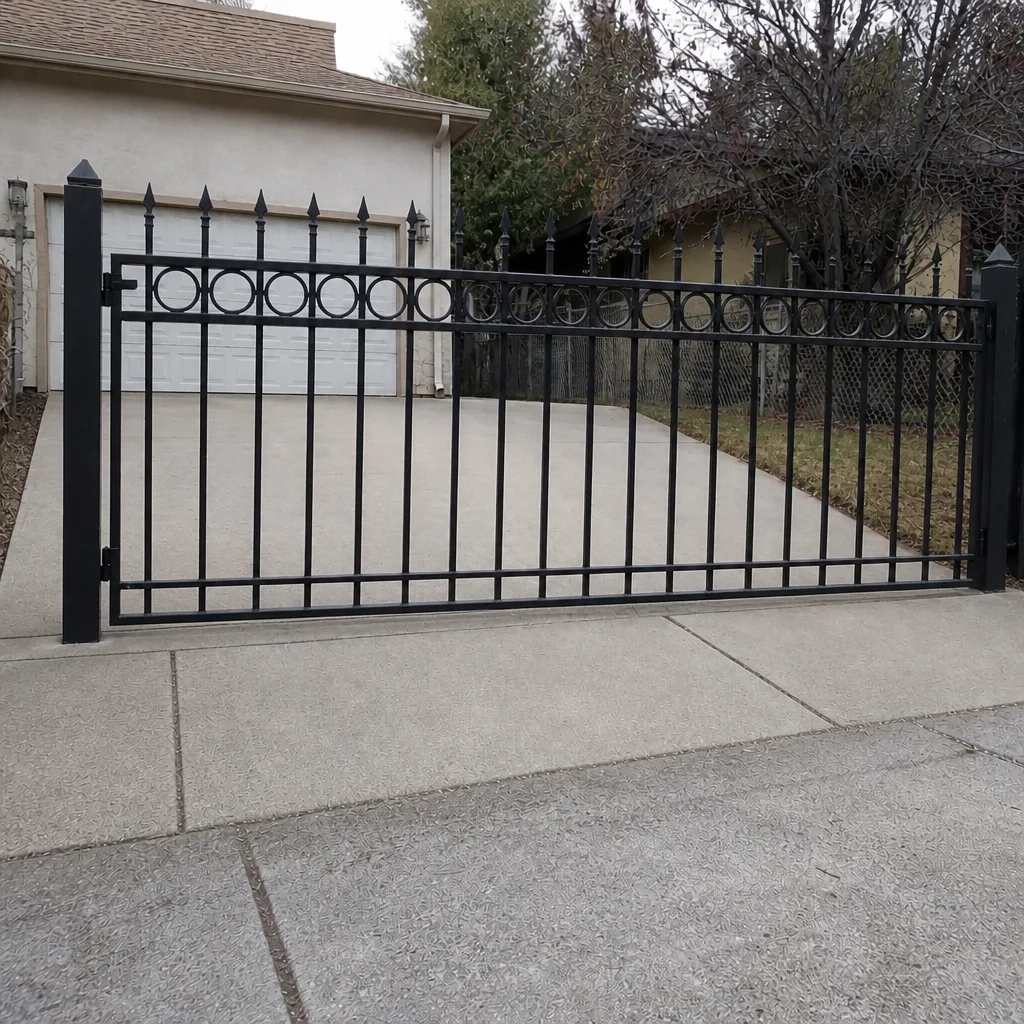
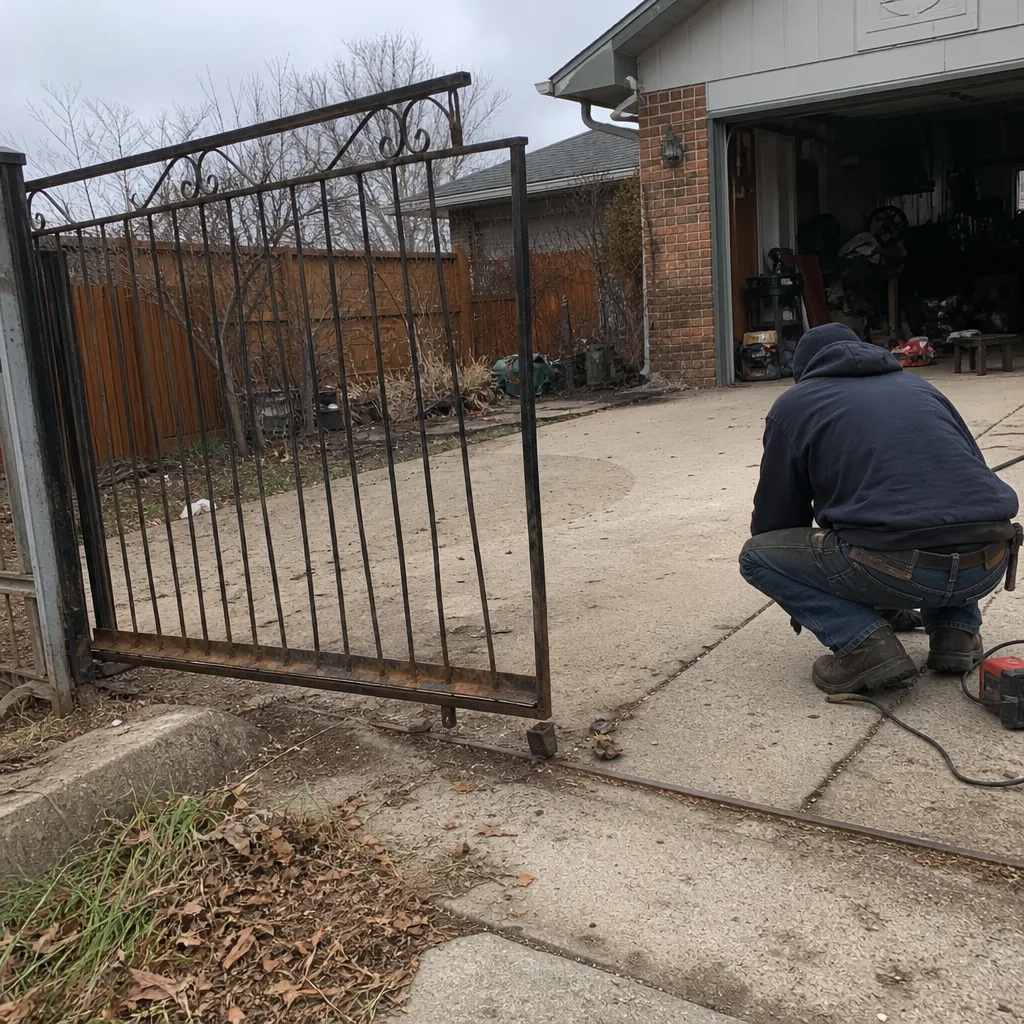
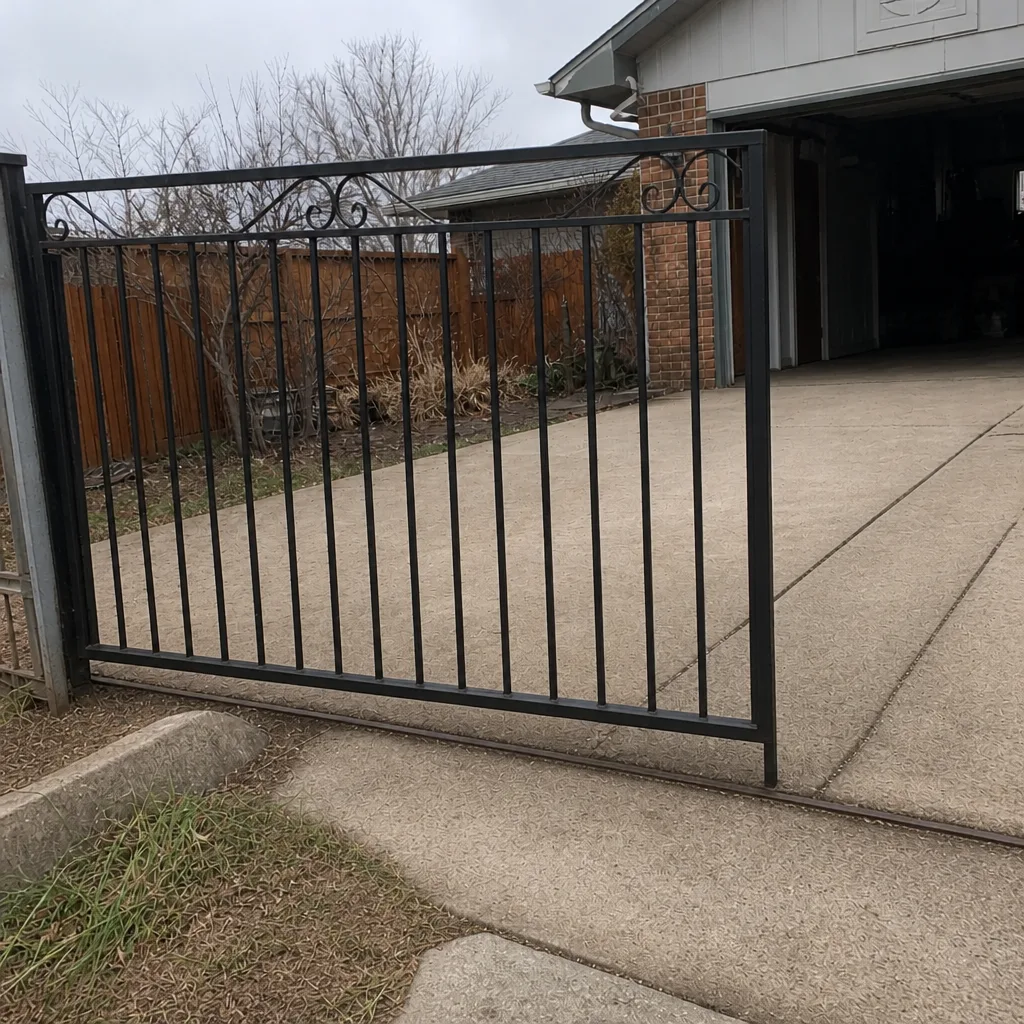
See the difference
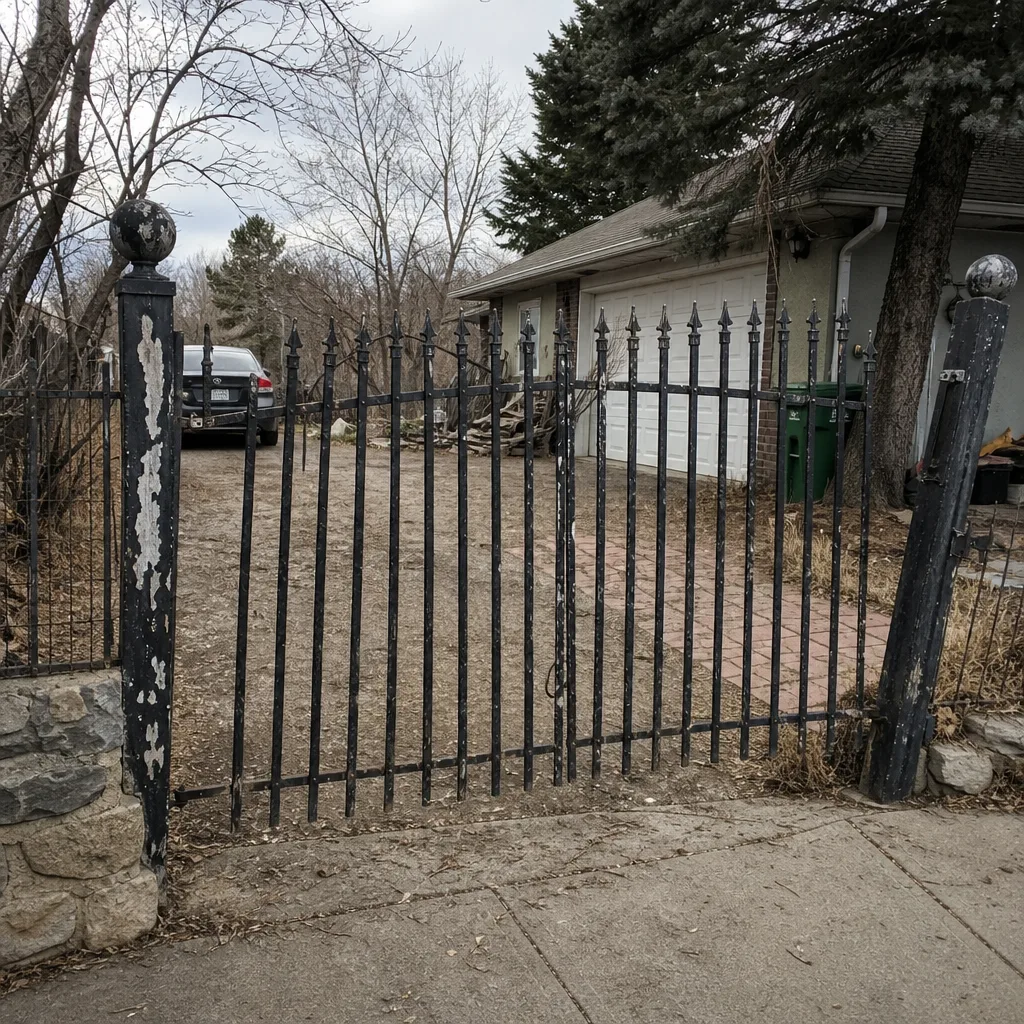 Before
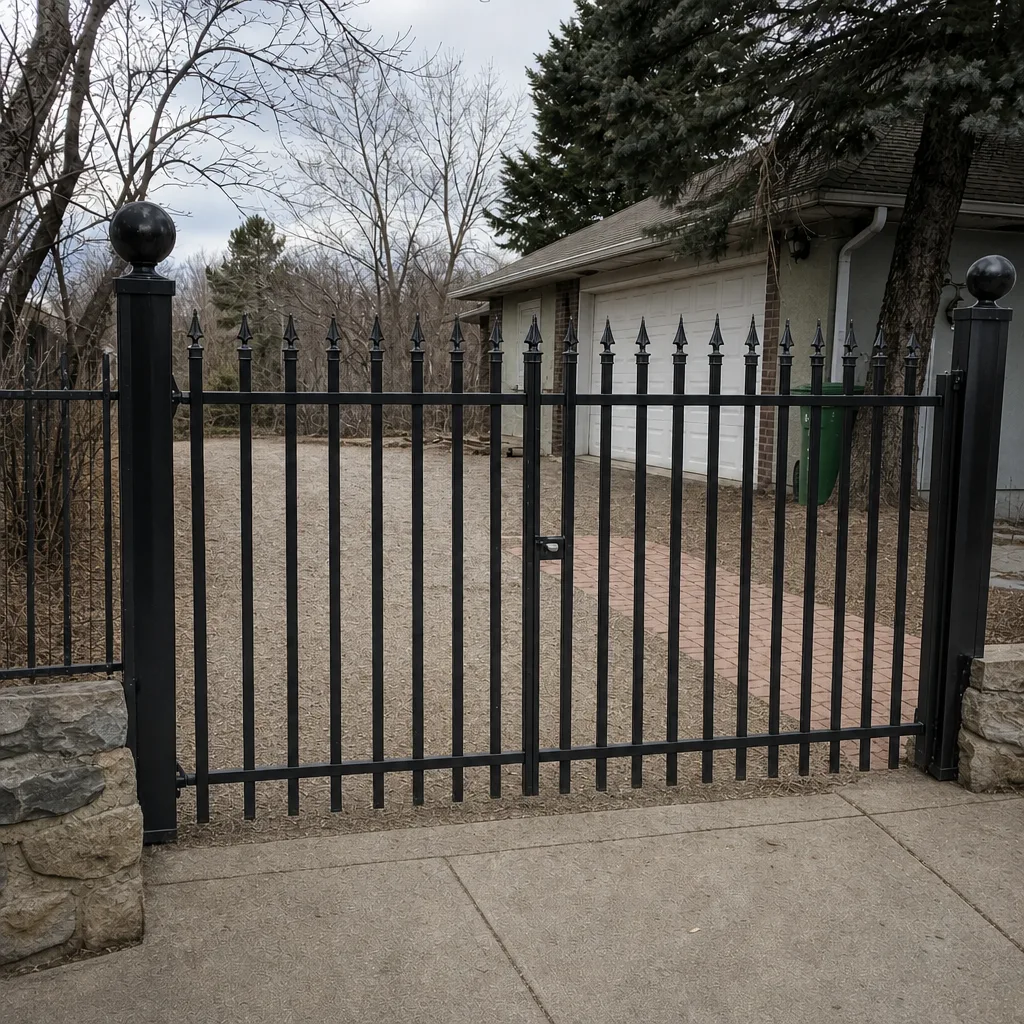 After
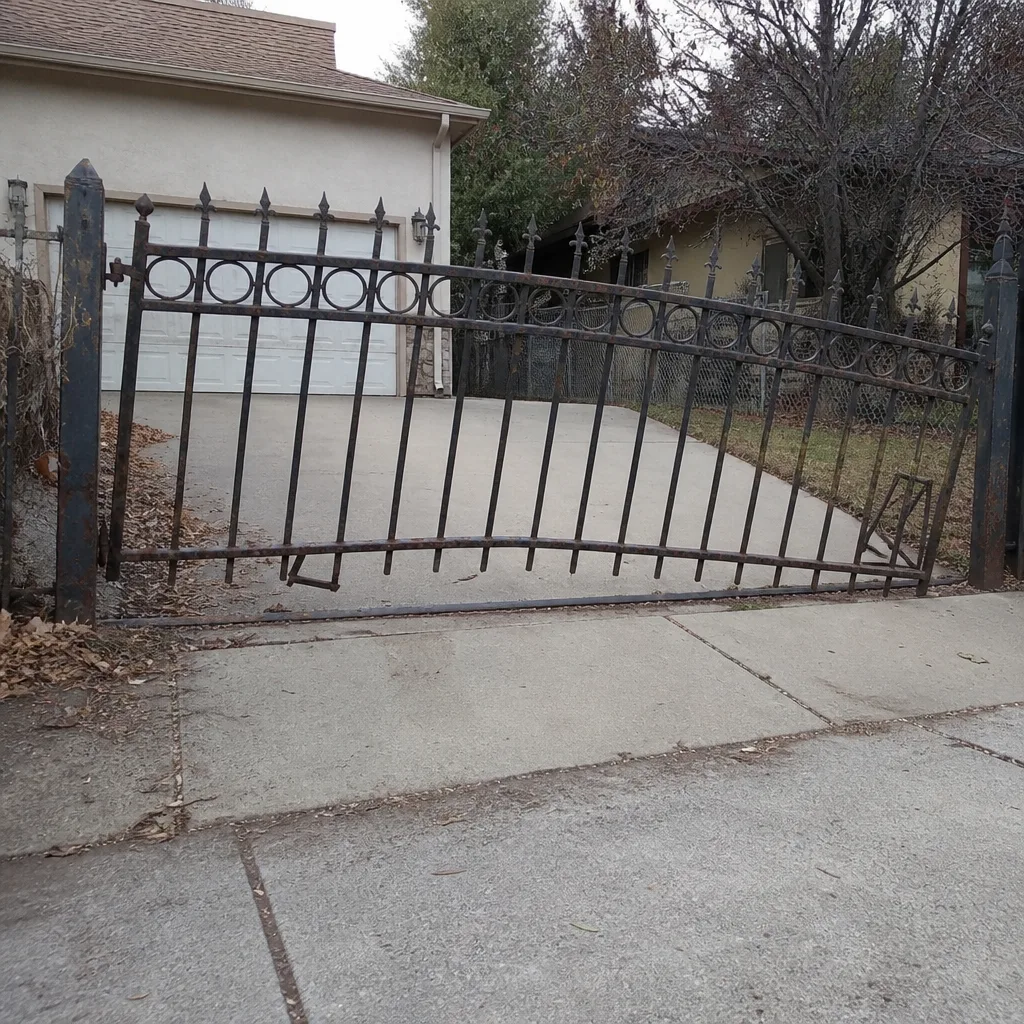 Before
 After
 Before
 After
When to Call a Professional
Call a professional when the task involves the operator’s power supply, the control board, or any wiring you’d have to open a powered enclosure to reach. Call when a post has drifted more than an inch out of plumb, when the gate racks out of square, or when it won’t stay in position when you let go of it. Call when the operator stops short of its limit, faults out, or reverses before reaching the stop. Call when the battery fails its load test and you’re not comfortable disconnecting power to replace it. And call when you don’t know the brand or model you’re working on, because the procedure and the warranty terms depend on it.
Gate Repair Arvada offers free estimates in Arvada. We work on residential and commercial, manual and automated systems, and we diagnose the specific failure rather than defaulting to a replacement. Call (844) 761-1390. We answer 24/7. Fast dispatch from 7am to 7pm, Sunday through Friday. The price is set per job by a written estimate agreed before any work starts.
Frequently Asked Questions
Check it after each freeze-thaw period, which means a few times between late fall and early spring, then once more in late summer when the clay dries. Post plumb is the leading indicator of structural movement in Arvada’s expansive clay, and it takes about five minutes. If a post has moved more than an inch, call for an evaluation before adjusting any hardware.
Steel hinges and pivots take an NLGI grade 2 lithium or lithium-complex grease. Nylon rollers and guide wheels take a dry-film PTFE or silicone lubricant, or the manufacturer’s specified product. Mixing them up accelerates wear rather than reducing it. If you’re not sure of the roller material, check the operator’s manual first.
Do a load test, not a voltage check. Disconnect main power, cycle the gate open and closed several times on battery power, and time each cycle. If the gate slows, stalls, or the operator faults out, replace the battery before storm season. A voltage reading can look fine on a battery that fails under load.
Opening the control board enclosure, probing terminals, adjusting limit switches outside the manual’s procedure, using unapproved lubricants on nylon components, rewiring the power feed, and installing non-OEM parts are the common ones. Commercial-grade platforms like DoorKing and FAAC generally expect operator work to be done by trained hands. When in doubt, ask before you open anything.
Yes. Arvada sees roughly 300 days of sun a year at elevation, and UV cracks wiring insulation faster here than in lower-altitude or midwest climates. Inspect any exposed wiring run every spring. Cracked insulation lets moisture in, and the resulting control board failure shows up weeks later, so fix the wiring when you spot it.
It usually means the ground under the post is moving, not that the hinges are worn. Expansive clay swells when wet and shrinks when dry, and a gate that binds in spring and swings free by late summer is showing you that cycle. Measure post plumb and recheck it in late summer before you replace hardware.
The Bottom Line
A gate maintenance checklist for Arvada works because it’s tied to the Front Range climate, not the calendar. The freeze-thaw cycle loosens hardware and moves posts; the high-altitude sun cracks wiring insulation faster than you’d expect; and the expansive clay shifts a post that was perfect last season. Measure post plumb after every thaw, load-test the battery before storm season, grease steel and nylon with the right product for each, inspect wiring every spring, and leave the control board and the power feed to a technician. Do that and you’ll catch the small failures before they turn into operator replacements. If you’d rather have a specialist run the whole checklist, our team at Gate Repair Arvada handles diagnosis, repair, and installation for residential and commercial gates across the widest range of brands in the market. Call (844) 761-1390 for a free estimate. We answer 24/7. Fast dispatch from 7am to 7pm, Sunday through Friday. Estimates are free, the price is quoted before work starts, and our technicians have up to experience.
Written by the team at Gate Repair Arvada.