
Last updated November 15, 2026
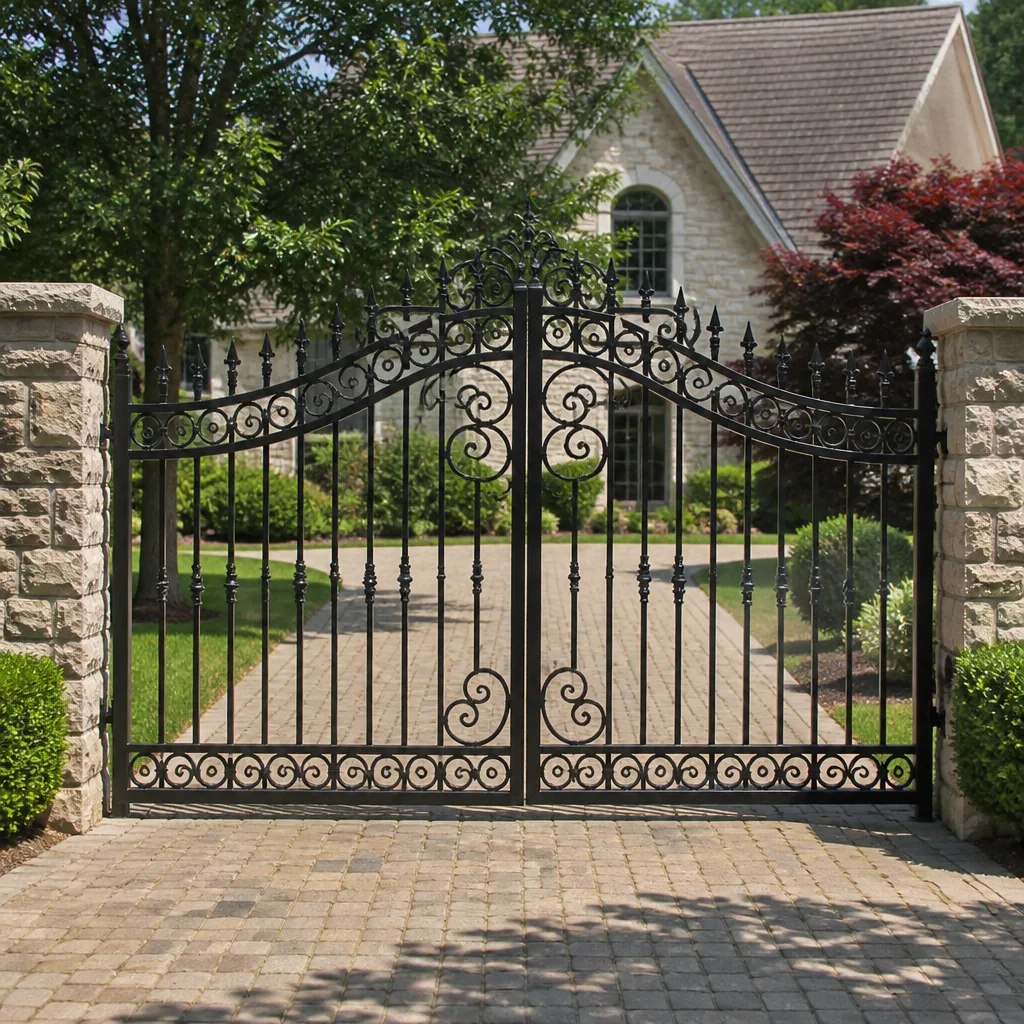 Wrought iron
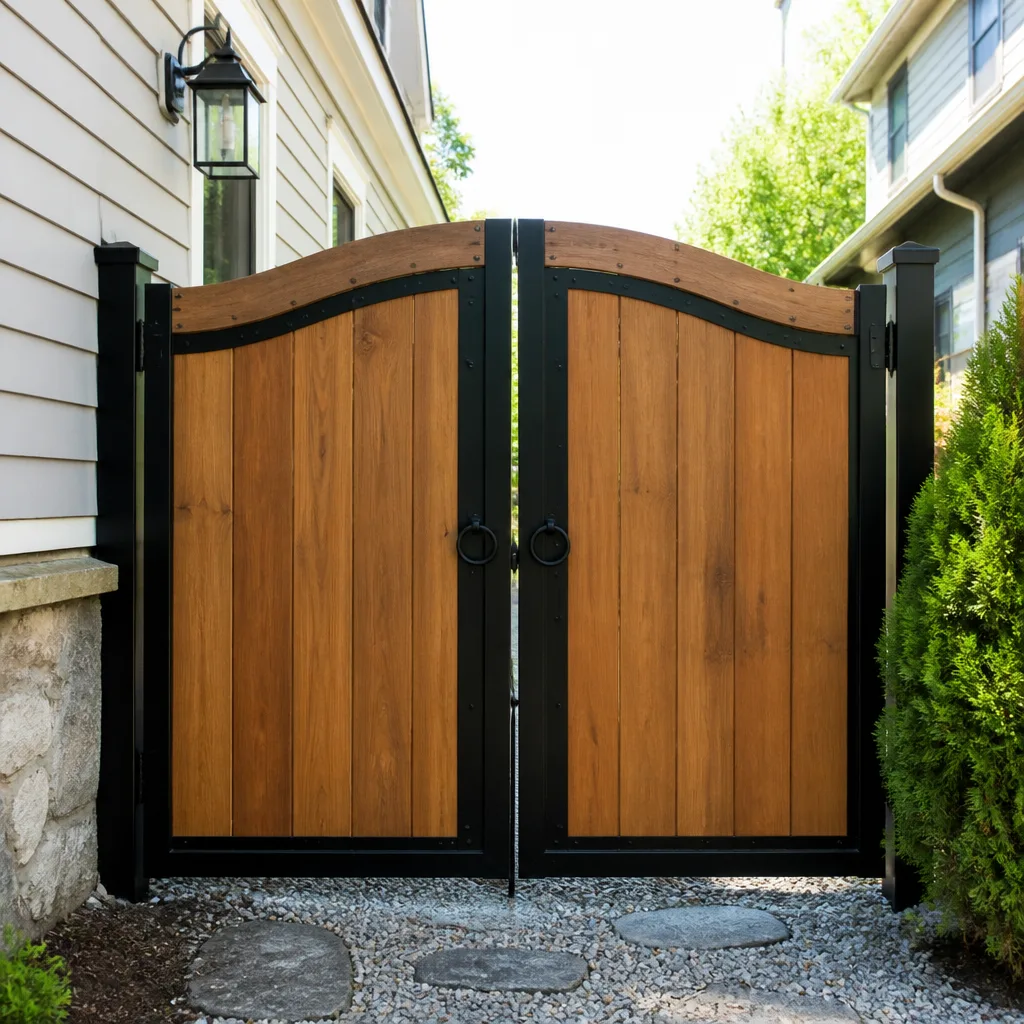 Wood & steel frame
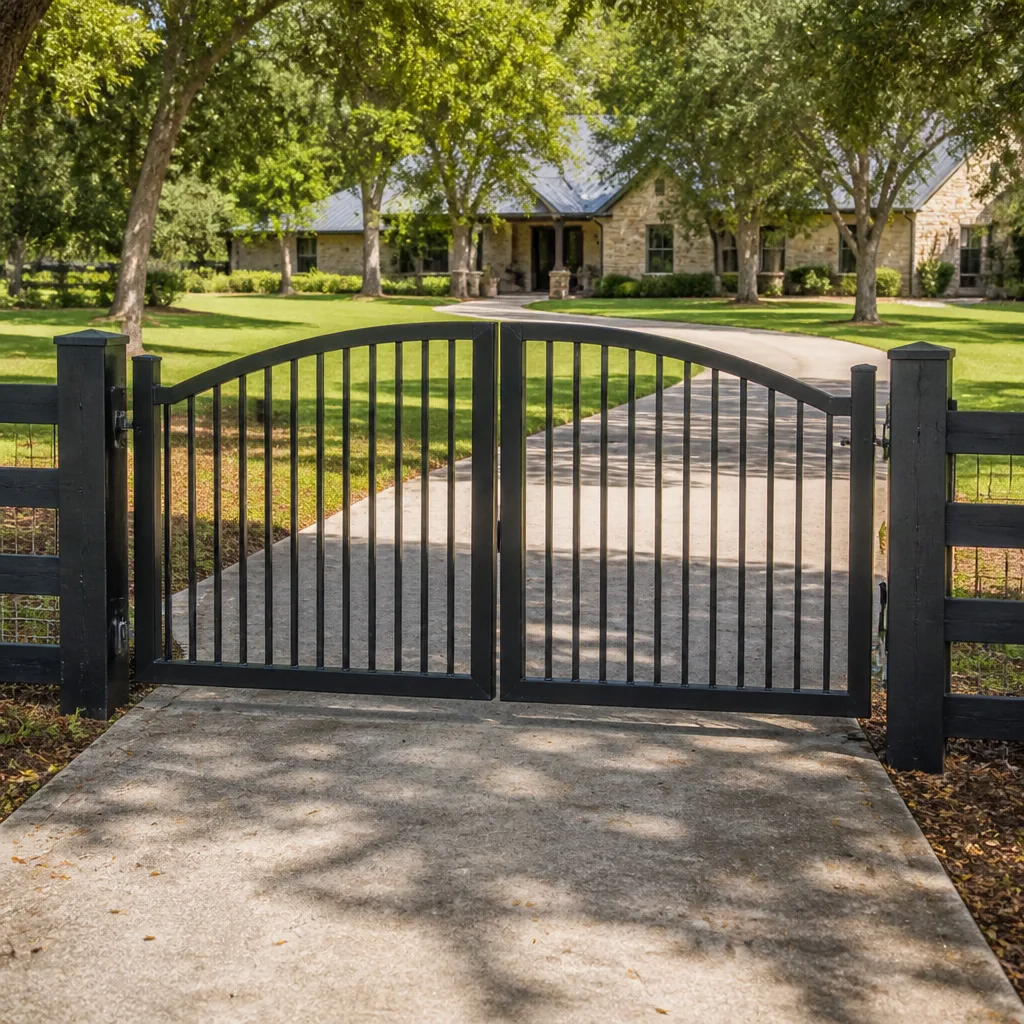 Farm & ranch
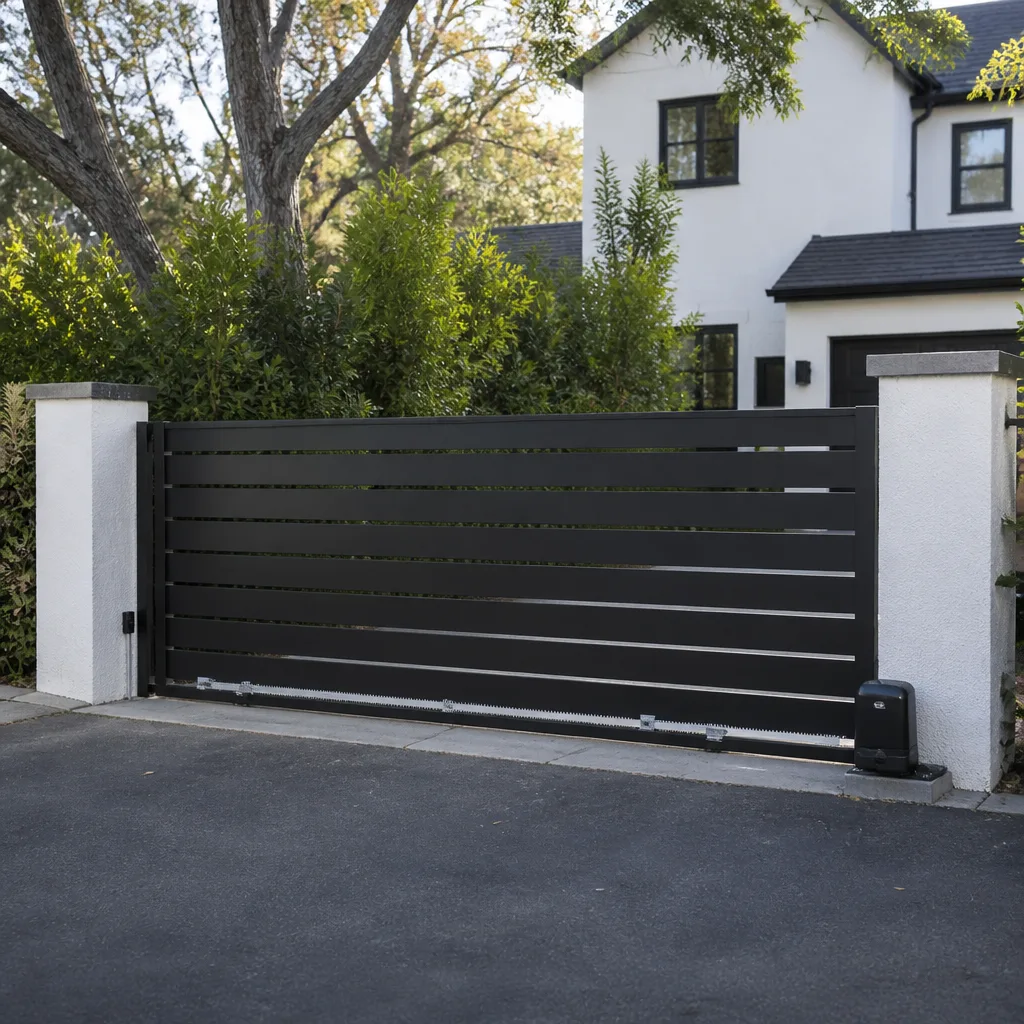 Sliding driveway gates
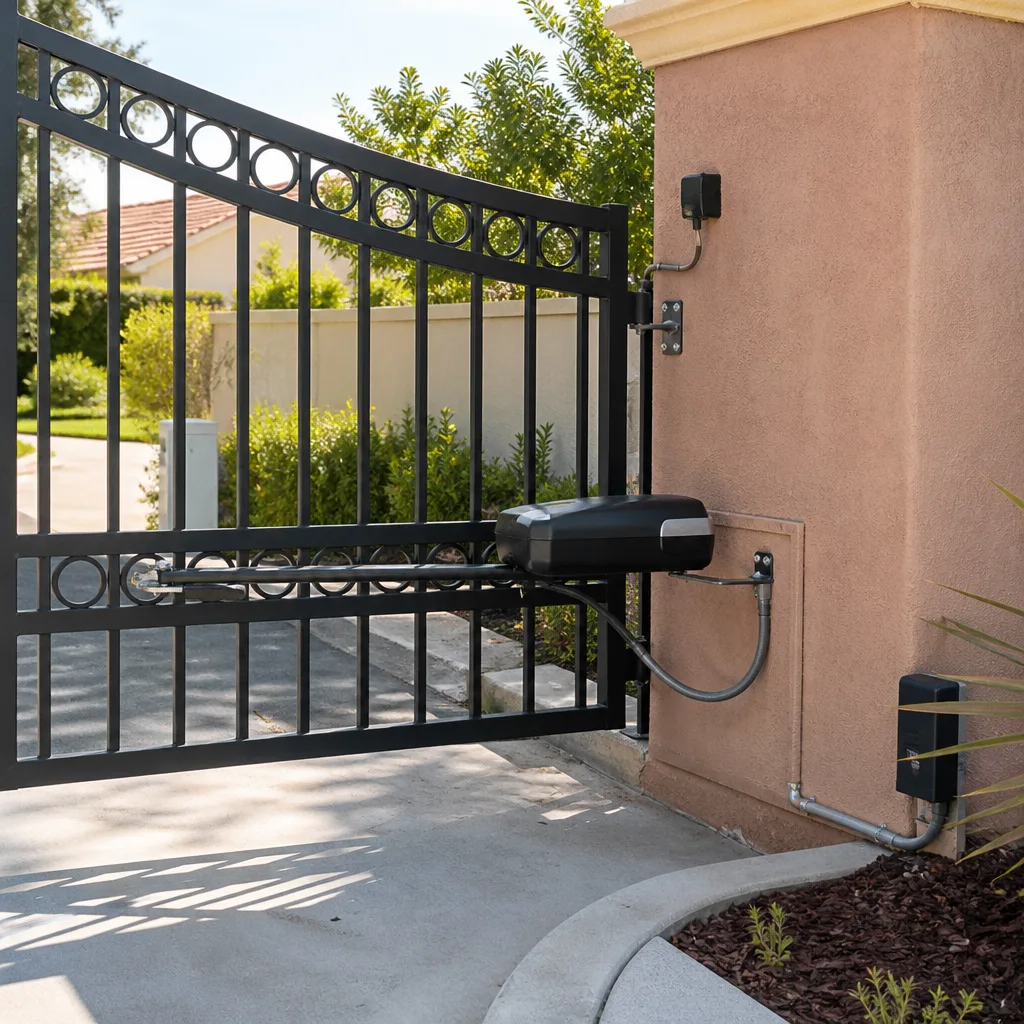 LiftMaster operators
Free on-site gate assessment - hinges, posts, and your LiftMaster or Nice gate operator checked before anything is quoted
The assessment is free and the quote is the invoice.
Get your free estimateDIY vs Professional Gate Repair: The Arvada Homeowner’s Decision Guide
Most advice about DIY gate repair asks the wrong question. It asks whether you’re handy enough. The real question is narrower and much more useful: which specific repair can you legally and safely finish yourself, and which one creates a liability you carry even if the gate ends up working? Replacing a worn latch is a screwdriver job with no code attached. Installing or re-wiring the motor that drives a swinging gate is a different animal entirely, because automated gates fall under entrapment-protection standards and a botched install can leave you responsible for an injury. This guide draws the line task by task, so you know before you pick up a tool whether the job in front of you belongs in your garage or on a technician’s schedule. We work on gates across Arvada every week, and the failures we see rarely come from a homeowner who lacked skill. They come from a homeowner who crossed that line without knowing where it was.
Quick Answer
Some gate repairs are genuinely safe and reasonable to do yourself: swapping a remote battery, replacing a manual latch, tightening or lubricating hinges, clearing debris from a slide track, and resetting a tripped breaker. Anything that involves the gate operator, control board wiring, safety sensors, loop detectors, or mounting a new actuator should go to a trained gate technician, because those components carry electrocution and crushing hazards and fall under UL 325 entrapment-protection requirements. The dividing line is safety and code, not confidence. If the repair touches power or the moving machinery of an automated gate, it’s a professional job.
Styles & brands we work with
- Wrought iron
- Wood & steel frame
- Farm & ranch
- Sliding driveway gates
- LiftMaster operators
Table of Contents
- The Repair-Type Matrix: What’s Actually Safe to DIY
- UL 325 Explained: The Compliance Question Every Automated Gate Owner Faces
- The Parts Access Reality That Blocks Some DIY Repairs
- The True Cost Comparison: DIY Savings vs. DIY Failure
- How to Diagnose a Gate Problem: Operator, Board, Sensor, or Structure?
- When to Stop Mid-Task: Signs the Repair Has Outgrown DIY
- Arvada Conditions and What They Do to Gate Hardware
- Common Mistakes to Avoid
The Repair-Type Matrix: What’s Actually Safe to DIY
The cleanest way to decide is to sort the repair by what it touches. Manual hardware and the outside of the gate are usually fair game. The powered interior of the operator and the safety system that surrounds a moving gate are not. We use this same split when we scope work, because it reflects where the real risk lives.
Legitimate DIY tasks (no power, no moving machinery, no code exposure):
- Replacing a worn manual latch, handle, or drop rod on a swing gate.
- Lubricating hinges, pivots, and rollers with a suitable gate lubricant.
- Swapping the battery in a handheld remote or the backup battery in a control enclosure (not the wiring).
- Clearing leaves, gravel, and debris out of a slide gate track.
- Tightening loose bolts on a gate frame or post bracket with hand tools.
- Resetting a tripped breaker that feeds a gate circuit, once you’ve confirmed nothing is damaged.
Tasks that belong with a professional:
- Installing, mounting, or replacing the gate operator or actuator.
- Any work inside the control box: wiring, board replacement, fuse and terminal work.
- Installing or repositioning safety sensors, photo eyes, and edge sensors.
- Burying a loop detector in the driveway.
- Adjusting the force and travel limits that control how hard the gate pushes before it reverses.
- Repairing a slide gate that has come off its track or a swing gate whose arm has separated.
The pattern is simple: if the task touches line voltage, the control logic, or the safety system that stops a moving gate on a person, it’s a professional’s job. Everything else you can reasonably do in your own driveway. For a fuller picture of what our gate repair visits typically cover, the split above is where most of the work lands.
UL 325 Explained: The Compliance Question Every Automated Gate Owner Faces
UL 325 is the safety standard that governs automated gate operators, and its central idea is entrapment protection: a moving gate must be able to detect an obstruction and stop or reverse before it can pin a person, pet, or vehicle. For a homeowner, that translates into a requirement that an automated gate has working entrainment protection in place, typically a combination of an operator that senses resistance plus external sensors like photo eyes or edge sensors. It’s the reason a gate that runs fine can still be non-compliant: the machinery moves, but nothing reliably stops it when a child walks into its path.
This is where a DIY install can go badly wrong in a way that isn’t obvious from watching the gate cycle. A homeowner can mount a motor, wire it up, and get a gate that opens and closes smoothly. What’s often missing is the safety layer: sensors that weren’t installed, photo eyes aimed at the wrong angle, or force limits cranked up so the gate pushes through resistance instead of reversing. The gate works. The protection doesn’t. That gap is where liability lives.
When we service an electric gate repair in Arvada, checking entrapment protection is part of the visit, not an add-on. We test whether the sensors actually trigger a reversal, whether the force setting is appropriate, and whether the control board is wired to the safety inputs at all. Brands like LiftMaster and FAAC build that logic into the operator, but only if the install brings the sensors into the circuit.
A few points that matter for the compliance question:
- Entrapment protection is a system, not a single part. The operator and the external sensors have to work together.
- A gate that opens and closes is not evidence of compliance. The test is whether it stops or reverses on obstruction.
- Force and travel-limit settings control how the gate behaves at the moment of contact. Those are professional adjustments.
- Adding sensors after the fact is possible on most operators, but the wiring has to land on the right control inputs.
If you’re not certain your gate’s entrapment protection works, that uncertainty is the strongest reason to have it checked by a technician rather than assumed.
The Parts Access Reality That Blocks Some DIY Repairs
Before you plan a DIY repair around a part, confirm the part is actually available to you. Several major gate brands restrict component sales to certified dealers and authorized service providers. Viking and FAAC are two clear examples: control boards, motors, and certain operator components typically aren’t sold direct to homeowners through general retail channels. We run into this constantly when a homeowner has already diagnosed the problem, ordered what looked like the right part, and found it either unavailable or incompatible.
This is where the DIY path can be blocked before a single tool comes out of the box. If the failed component is a proprietary control board on a Viking operator, or a motor assembly for a FAAC system, the retail channel may not carry it at all. The brand ecosystem is partly why we work across so many lines, from Mighty Mule and Ghost Controls on the residential side to heavier commercial platforms, and why we can usually tell you on the first visit whether your exact failure is a part we can source or a board we can diagnose and replace.
Consider what’s realistically available to a homeowner:
- Widely available: remotes, batteries, latches, hinges, rollers, and general hardware for many residential operators.
- Often restricted: control boards, motor assemblies, and operator-internal components for brands like Viking and FAAC.
- Dealer-dependent: safety sensors and loop detectors, which vary by brand and model.
- Not sold to the public: proprietary boards and firmware-controlled components on commercial-grade systems.
If the part you need is in the first row, DIY is on the table. If it’s in any of the others, the practical move is to have a technician who works with your brand identify and source it. That’s the reason a general handyman who doesn’t carry brand relationships will often decline the job rather than chase a part they can’t get.
The True Cost Comparison: DIY Savings vs. DIY Failure
A DIY repair looks cheaper because you only see the part cost. The honest comparison includes what happens when the repair fails, and gate failures tend to be expensive because they damage the gate itself, the operator, or both. We price our work per job from a written estimate after we’ve looked at the gate, so we can’t hand you a number here. What we can do is lay out how the math works in principle.
The DIY path, itemized:
- Cost of the part (if you can source it).
- Cost of any tools you don’t already own.
- Your time, including the diagnosis you did to pick the part.
- If it fails: the original repair cost plus the damage the failed attempt caused.
The professional path, itemized:
- On-site diagnosis to find the actual failure, not the assumed one.
- The written estimate, agreed before any work starts.
- The repair done with the right part and the safety settings verified afterward.
Where DIY failure gets costly is in mechanical damage. A motor or actuator mounted slightly off-angle, or bolted to a frame that wasn’t reinforced, can load the gate arm and frame unevenly. Over weeks of cycling, that misalignment can bend the arm, stress the gate frame, or wear the operator to failure. In that scenario you’ve paid for a part, the botched install, and now the repair to fix the frame plus whatever it takes to mount a new operator correctly. The DIY attempt has now cost more than a professional repair would have from the start.
There’s a quieter cost too: the time you spend on a repair you can’t finish. A gate is a piece of access control, and every day it’s non-functional is a day you’re relying on a manual override or working around it. The comparison that matters is total cost to get the gate working and compliant, not the price of the part alone. If you want the gate diagnosed before deciding, we can walk the repair with you.
How to Diagnose a Gate Problem: Operator, Board, Sensor, or Structure?
Most gate problems land in one of four places, and the repair you choose depends entirely on which. Getting the diagnosis right is the difference between a $15 part and a service call, or between a service call and an unnecessary new operator. Here’s how the four failure categories show up, and which of them are worth checking yourself.
- Mechanical structure. The gate sags, catches, binds, or the slide gate drags on its track. This is often the friendliest DIY territory: tighten a loose hinge, clear the track, adjust a latch. If the gate frame is bent or the post is unstable, stop and call.
- Power and the operator. The gate doesn’t move at all, hums without motion, or moved partway and quit. Check the breaker first, then stop; anything past that is operator territory.
- Control board and wiring. The gate behaves erratically, runs backward, or won’t respond to the remote while the keypad does. This is a board or wiring problem, and it’s professional work even when it looks small.
- Safety sensors. The gate reverses for no reason, stops short, or won’t close while an object is nowhere near. Photo eyes and edge sensors are a safety system, and they need a technician to test and re-aim them.
Work through the list in order. A surprising number of “operator failures” are really structural: a binding hinge that the motor can’t overcome looks exactly like a dead motor until the gate is freed up. That’s the reason “repair first” is our default rather than reaching for a new operator. And it’s why we can diagnose across brands instead of guessing from the label: the failure tells you more than the brand does. If you’re in Arvada and want a second set of eyes on the diagnosis, our team handles Arvada homes and commercial properties alike.
When to Stop Mid-Task: Signs the Repair Has Outgrown DIY
The most useful skill in DIY gate repair is knowing when to put the tools down. Mid-task, you’ll often find the problem is bigger than you expected. These are the specific indicators that you’ve reached the edge of safe DIY scope and should hand off to a professional rather than push further.
- You’ve uncovered damaged or suspect wiring. Insulation that’s cracked, connections that are loose or corroded, or any wiring that looks charred means stop, and don’t touch it. Wiring damage is a shock and fire risk.
- The part number doesn’t match what’s in your gate. Brands revise components over time. If the board or motor in front of you doesn’t match the part you ordered, the install has become a diagnosis problem, and you’ll want someone who knows the brand line.
- You can’t find the safety sensors or the wiring for them. If you’re installing or repairing an operator and can’t locate the safety inputs, you can’t verify compliance. That leaves the gate running without protection.
- Force or travel limits drift after adjustment. These settings control how the gate reverses on obstruction. If it won’t hold an adjustment, the operator or board has a fault that the settings can’t fix.
- The gate is heavy and unsupported. Swing gates and slide gates can weigh well into the hundreds of pounds. If you’re at a point where the gate panel is unsupported or needs to come down for access, the hazard is now crushing and the job needs two trained people.
- You’re working in wet or dark conditions. Electrical and mechanical work on a live gate system should never happen in poor conditions. Stop and book it.
None of these indicators means you did anything wrong. They mean the repair has moved past the safe envelope. The right move is to leave the gate in a safe, stable state, note what you found, and let a technician take it from there.
Arvada Conditions and What They Do to Gate Hardware
Gate hardware in Arvada lives through real seasons, and that shapes which repairs fail early and where. The foothills get cold snaps and freeze-thaw cycles, and that cycle is hard on gates: metal parts expand and contract, moisture finds its way into hinge pins and stalls rollers, and ground movement around a slide gate’s track or a swing gate’s posts can throw alignment off. We see hardware loosen and bind in spring after a winter of that cycling, and the same freeze-thaw pattern can affect the foundation a post sits in.
The dry stretches arida brings matter too, in a different way. Dust and grit work into rollers and tracks, and a slide gate that ran smoothly in wetter months can start dragging when the track isn’t clean. That’s a genuinely easy DIY fix: clear the track, wipe down the rollers, and lubricate the moving points. It’s one of the highest-value things a homeowner can do, and it’s on the safe side of the line.
Summer sun and heat add another factor: metal gate arms and frames expand, and if the operator’s travel limits were set tight during cold weather, summertime can push the gate to binding at the ends of travel. If a gate that worked all winter suddenly stops short in summer, that’s a sign the limits need a professional look rather than a DIY adjustment. Automated gate systems have to hold their settings across these seasonal swings, and the settings that keep the gate compliant in January need to keep it compliant in August.
The other local reality is that Arvada has an older housing stock alongside newer construction and multi-unit properties. Gate setups differ: an older swing gate on a residential driveway may run on a residential-grade operator like Mighty Mule, while an HOA or apartment property around town might run a heavier commercial platform where the repair stakes are higher. We see both, and the seasonal wear shows up differently depending on which system it is.
Common Mistakes to Avoid
- Skipping entrapment protection on a DIY install. Mounting an operator without wiring its safety sensors leaves a gate that moves but can’t reliably stop on a person. It’s the single most common compliance gap we find on automated gates in Arvada.
- Cranking the force limit to stop false reversals. When a gate keeps reversing, homeowners often raise the force setting so it pushes harder. That treats the symptom and removes the protection, and it’s a professional-level fix, not a DIY one.
- Over-tightening hinge and post bolts. It’s tempting to torque everything down to stop rattles, but over-tightening warps gate frames and can strip threaded hardware. Snug is right; overtight is damage.
- Buying a control board before confirming the diagnosis. A gate that won’t close may have a bad sensor, a binding hinge, or a dead board, and a board won’t fix a binding hinge. Diagnose first with a technician who knows your brand line, then source the part.
- Assuming any operator works with any gate. Residential-grade operators like Mighty Mule and heavier commercial platforms like FAAC or BFT are built for very different gate weights and duty cycles. Mismatching the operator and the gate shortens the life of both.
- Working on the gate in wet or freezing weather. Electrical and mechanical work in poor conditions multiplies the risk of shock and of a frozen-but-live system. Arvada weather makes this a real concern in the cold months.
- Burying a loop detector without a professional. Loop detectors are an access-control project with wiring and calibration, and getting it wrong means a gate that’s constantly triggered or never triggered. This is a job for a technician, not a weekend.
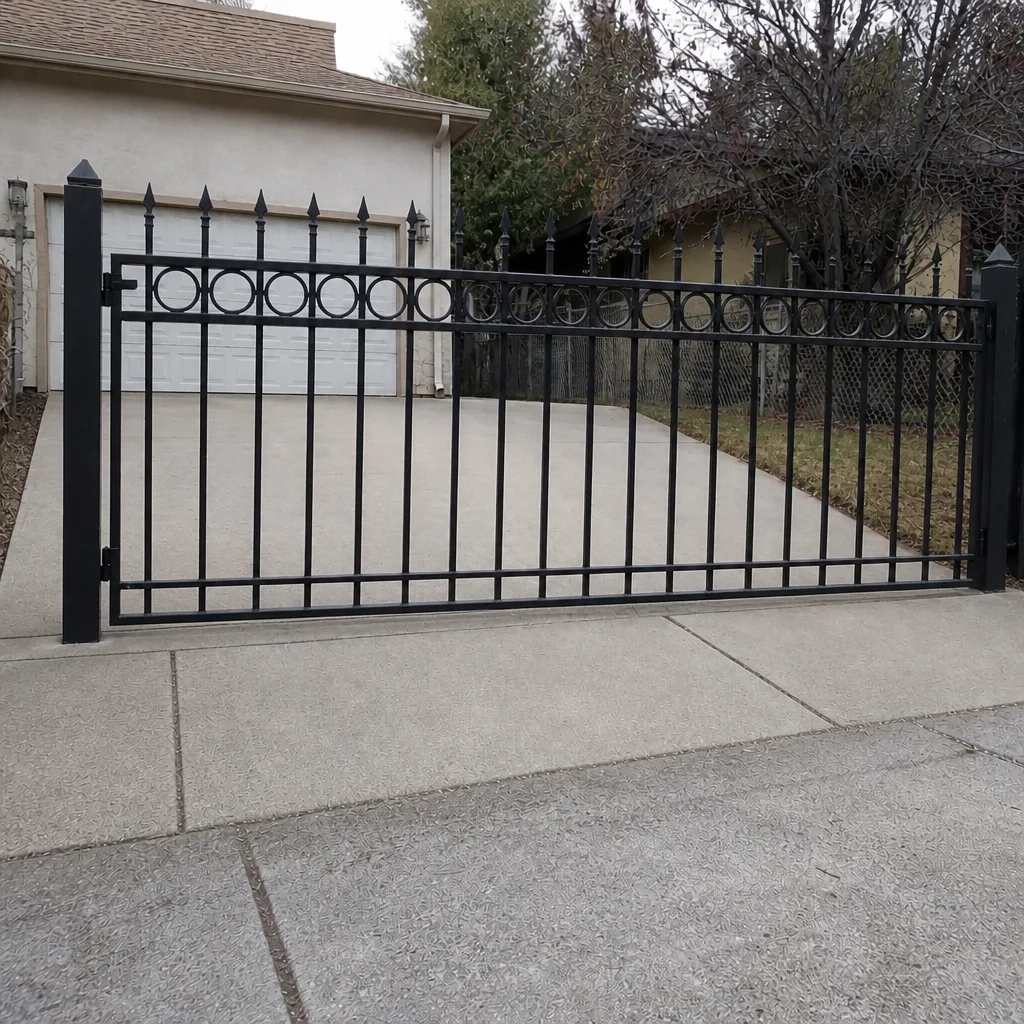
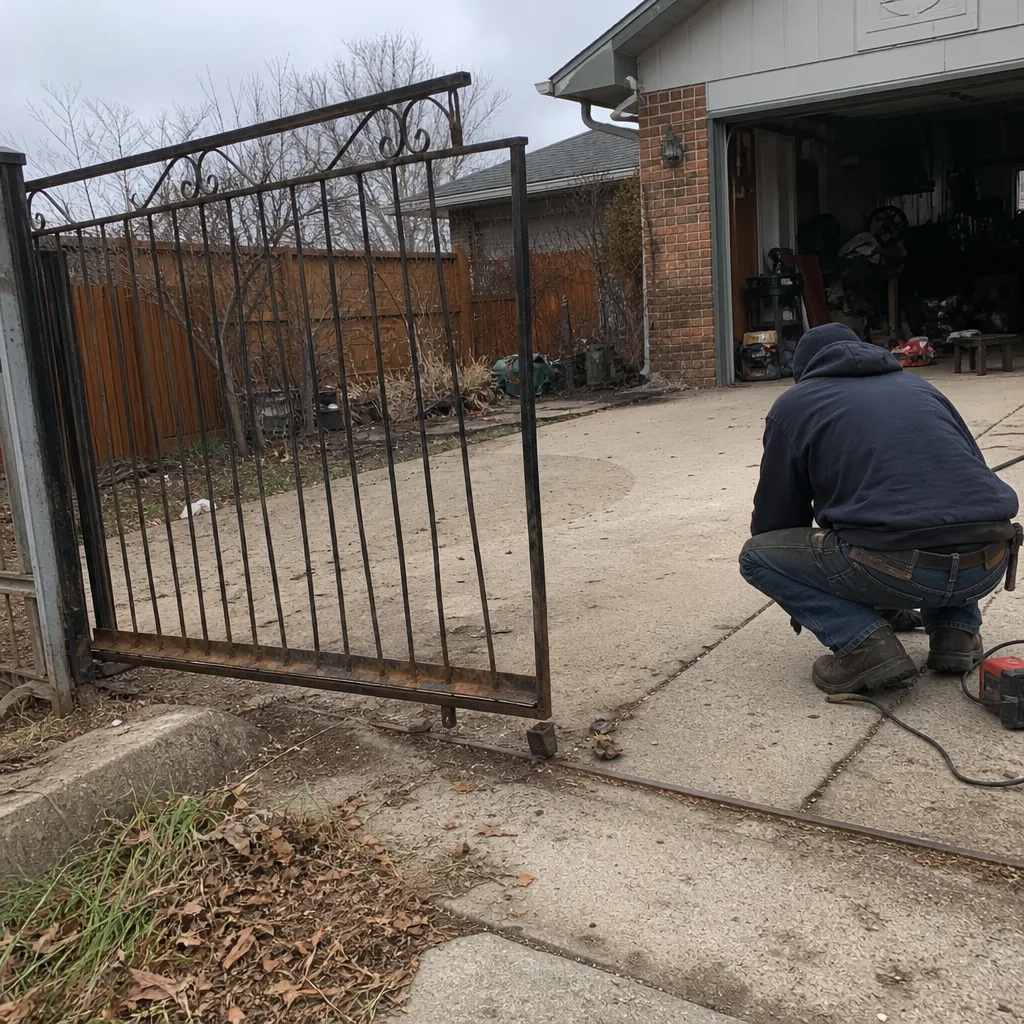
See the difference
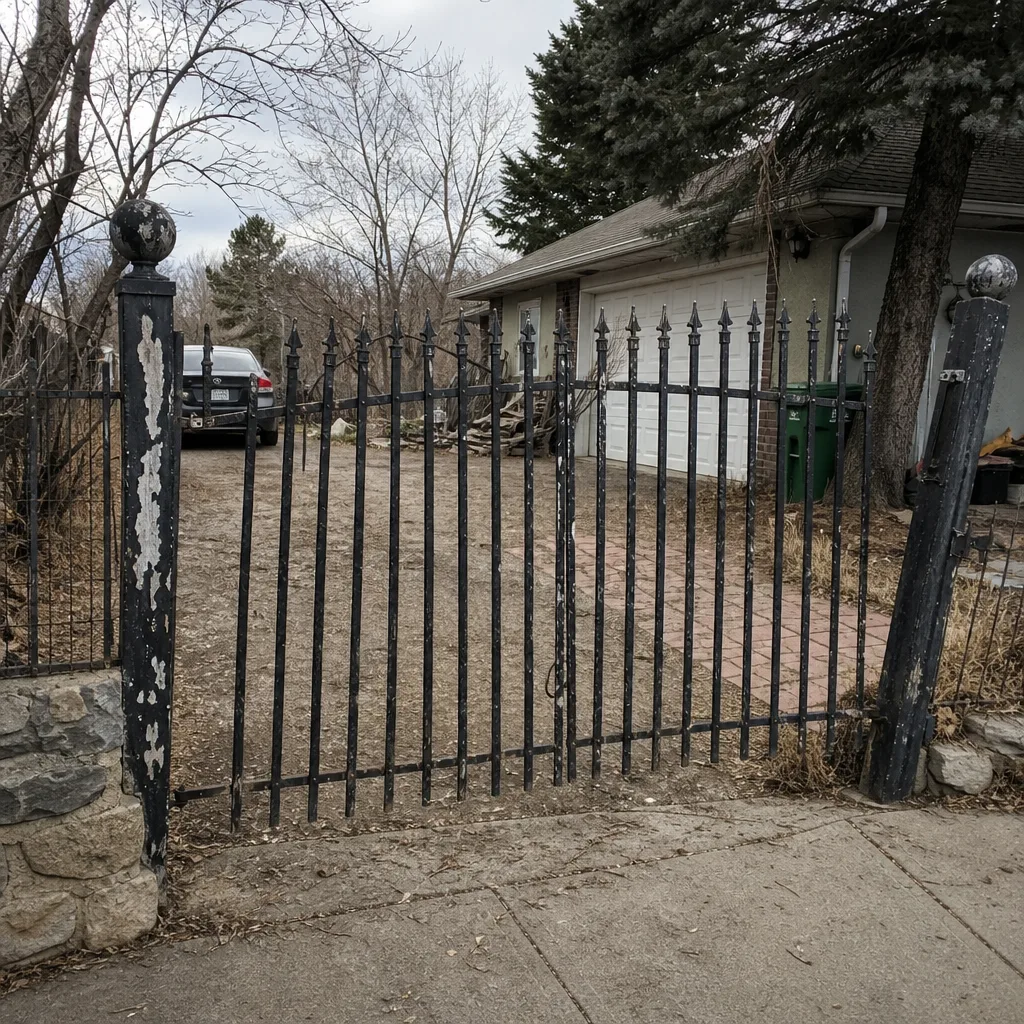 Before
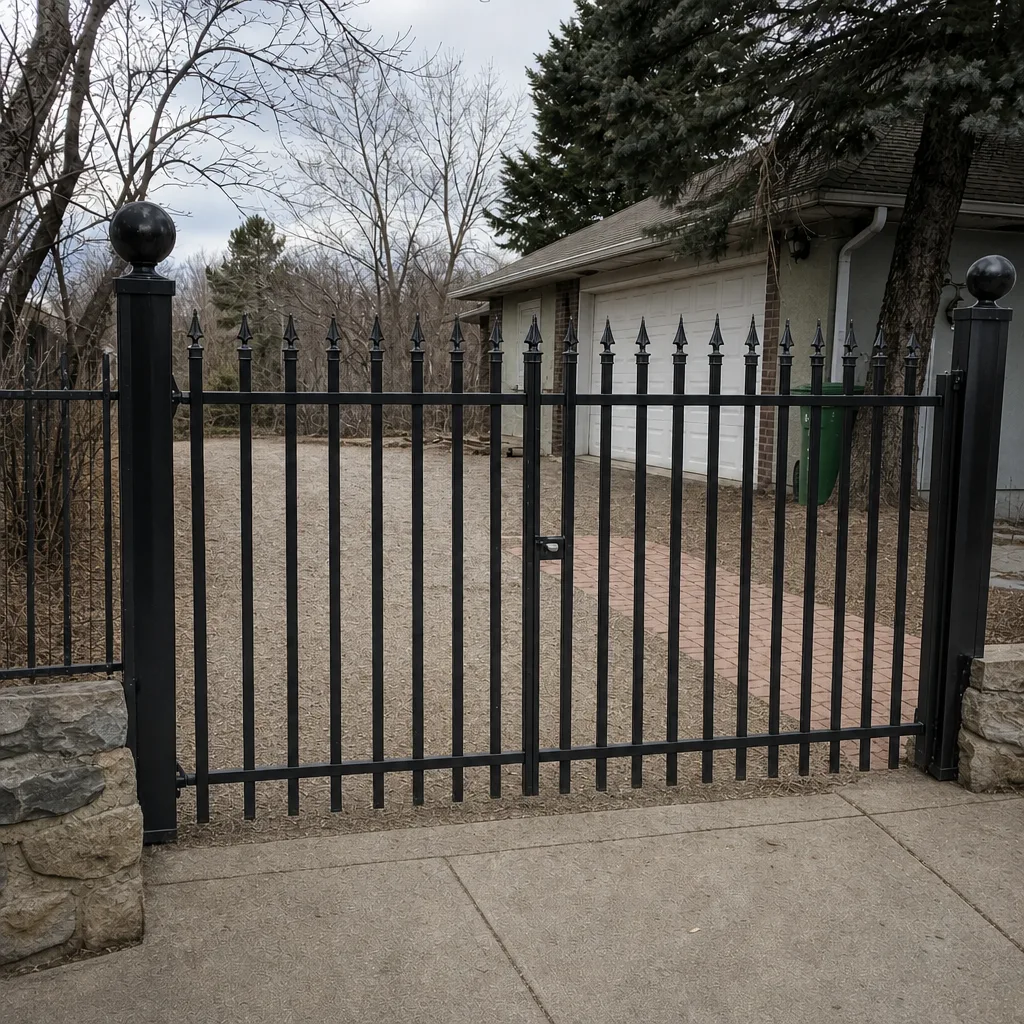 After
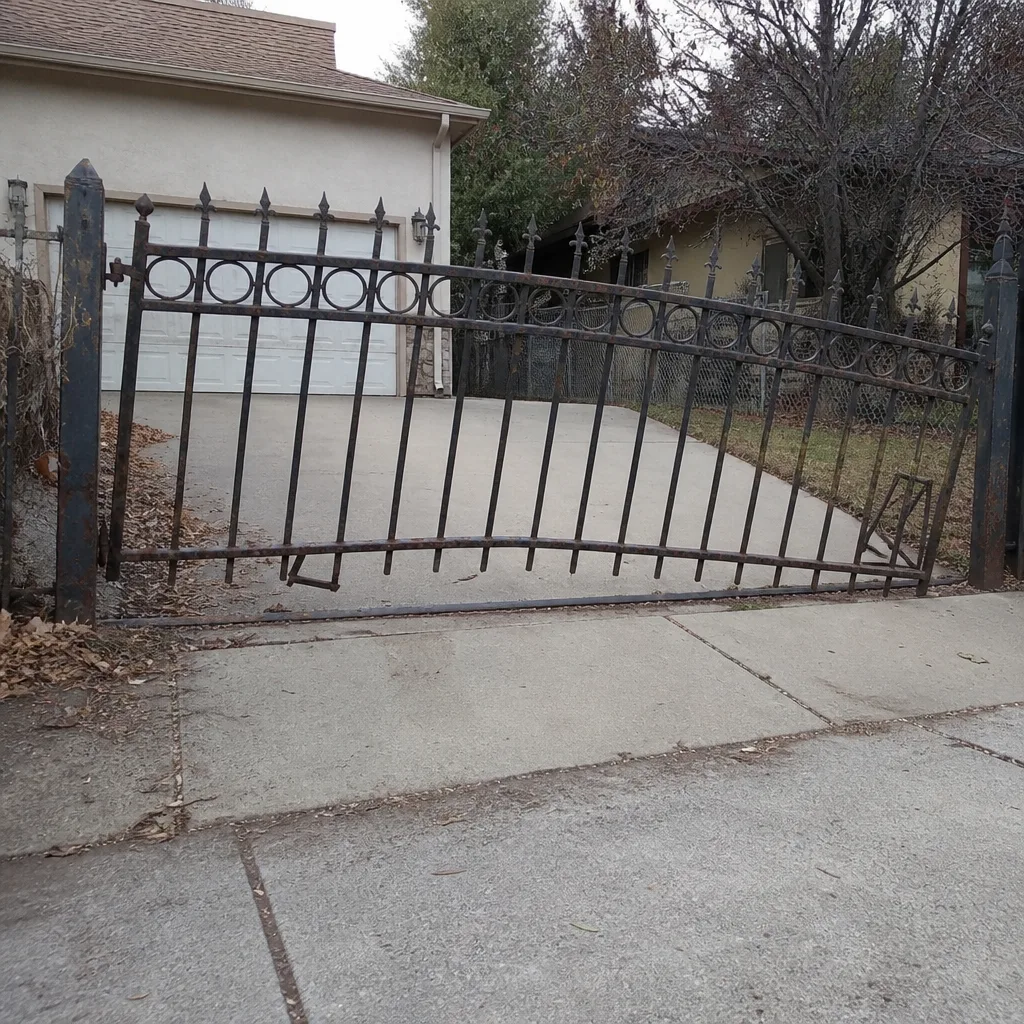 Before
 After
 Before
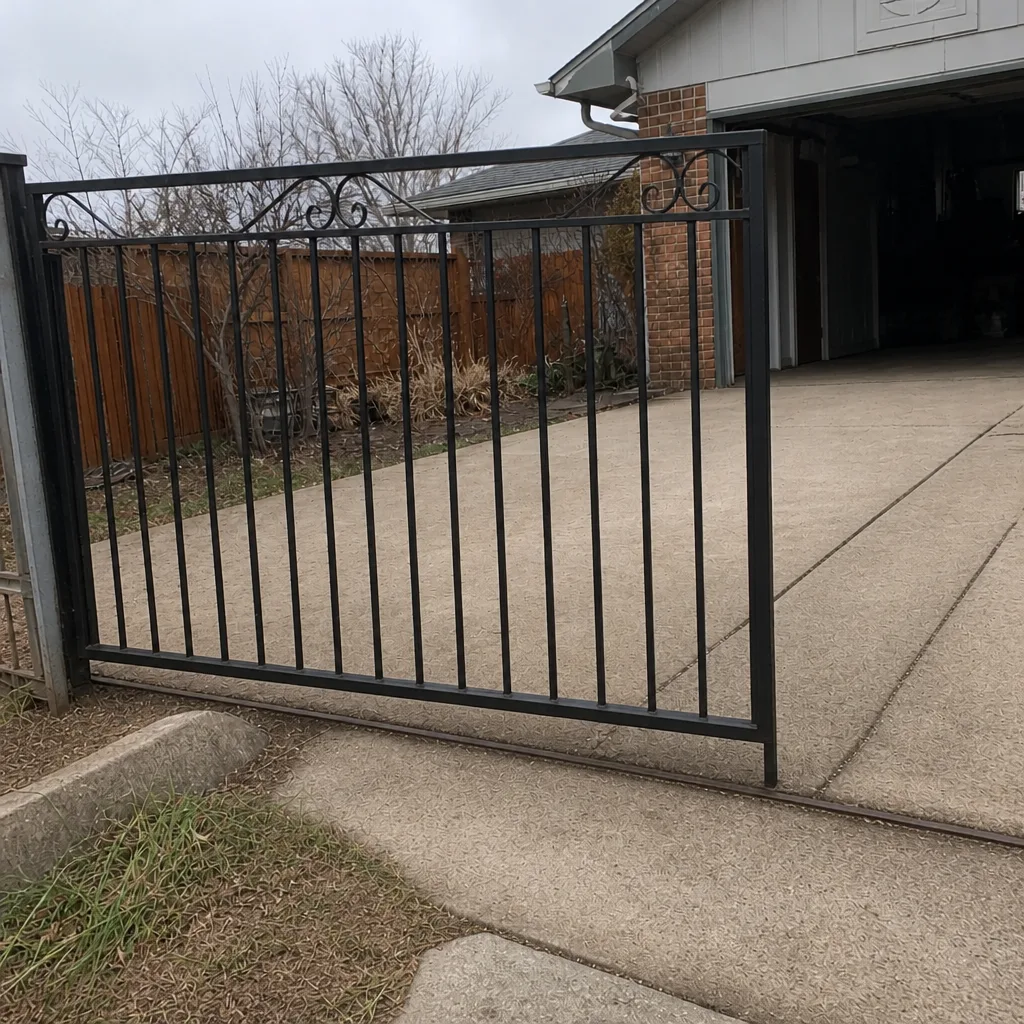 After
When to Call a Professional
Call a professional when the repair touches the operator, the control board, the wiring, the safety sensors, or the entrapment protection that makes an automated gate compliant. Call when the gate has come off its track or the arm has separated. Call when you’ve been through the diagnosis and the failure doesn’t fit what you’d expect. Call when the DIY attempt has stalled: a gate left in a partial state is a bigger problem than the one you started with.
We answer 24/7, with fast dispatch from 7am to 7pm Sunday through Friday. If your gate fails outside those hours, a call is still the right move, and we’ll book it into the next opening. Gate Repair Arvada offers free estimates in Arvada, and the written estimate sets the price before any work starts. Call (844) 761-1390 for a free estimate, and we’ll tell you straight whether your repair is one to finish yourself or one to hand off.
Frequently Asked Questions
Some repairs are entirely fine to do yourself, and others are not. Manual hardware work like replacing a latch or lubing hinges carries no code requirement, but working on an operator or its safety sensors risks running afoul of entrapment-protection requirements under UL 325. If your repair touches the powered side of the gate or the safety system, it belongs with a trained technician. Call (844) 761-1390 for an exact quote; estimates are free.
Gate repair is priced per job from a written estimate after we’ve looked at the gate, so the number depends on the failure and the system. A simple hardware repair like a latch or hinge will land far below an operator or control board repair. We agree the price before any work starts, so there are no surprises when we hand you the bill. Call (844) 761-1390 for an exact quote; estimates are free.
It’s possible in principle, but it’s one of the riskiest DIY gate projects because compliance depends on the safety system being wired and set up correctly, not just the gate moving. If you mount the operator but don’t get the photo eyes and force limits right, the gate runs without effective entrapment protection. That’s the gap that creates personal injury liability for the homeowner. Call (844) 761-1390 for an exact quote; estimates are free.
It includes a diagnosis that finds the actual failure, sourcing the right part for your brand, and verification that the gate is safe and compliant afterward. A technician also tests the entrapment protection, checks force and travel settings, and confirms the control board is wired correctly, which is the part most DIY repairs can’t verify. The written estimate tells you the price before work begins. Call (844) 761-1390 for an exact quote; estimates are free.
Yes. We service nine gate brands, ranging from residential operators like Mighty Mule and Ghost Controls to commercial-grade platforms like FAAC, BFT, and DoorKing. Our technicians have up to experience, and cross-brand diagnostics let us tell whether your failure is the operator, the control board, the sensors, or the mechanical structure. Call (844) 761-1390 for an exact quote; estimates are free.
Permit requirements for gate work vary by property and by what’s being built, so the right step is to ask the City of Arvada before you start a project. A hardware repair on an existing gate usually raises no permitting question, but adding or replacing an operator on a property can bring one up. A technician can tell you what’s typically involved for your system. Call (844) 761-1390 for an exact quote; estimates are free.
The Bottom Line
The DIY-versus-professional question is really about where the safety line falls, and it falls at the powered side of the gate. Hardware, latches, hinges, lubrication, and remote batteries are yours to handle. The operator, control board, wiring, safety sensors, entrapment protection, and loop detectors belong with a trained technician, because the risks there are electrical, mechanical, and legal all at once. If you’re unsure which side of the line your repair lands on, the diagnosis is the whole job, and we’ll help you make it. Call Gate Repair Arvada at (844) 761-1390 for a free estimate in Arvada. We answer 24/7. Fast dispatch from 7am to 7pm, Sunday through Friday. The price is set per job and agreed in writing before any work starts. Our technicians have up to experience, and we work on your brand from the motor to the control board. Visit Gate Repair Arvada to learn more about what we cover.
Written by the team at Gate Repair Arvada.