
Last updated November 15, 2026
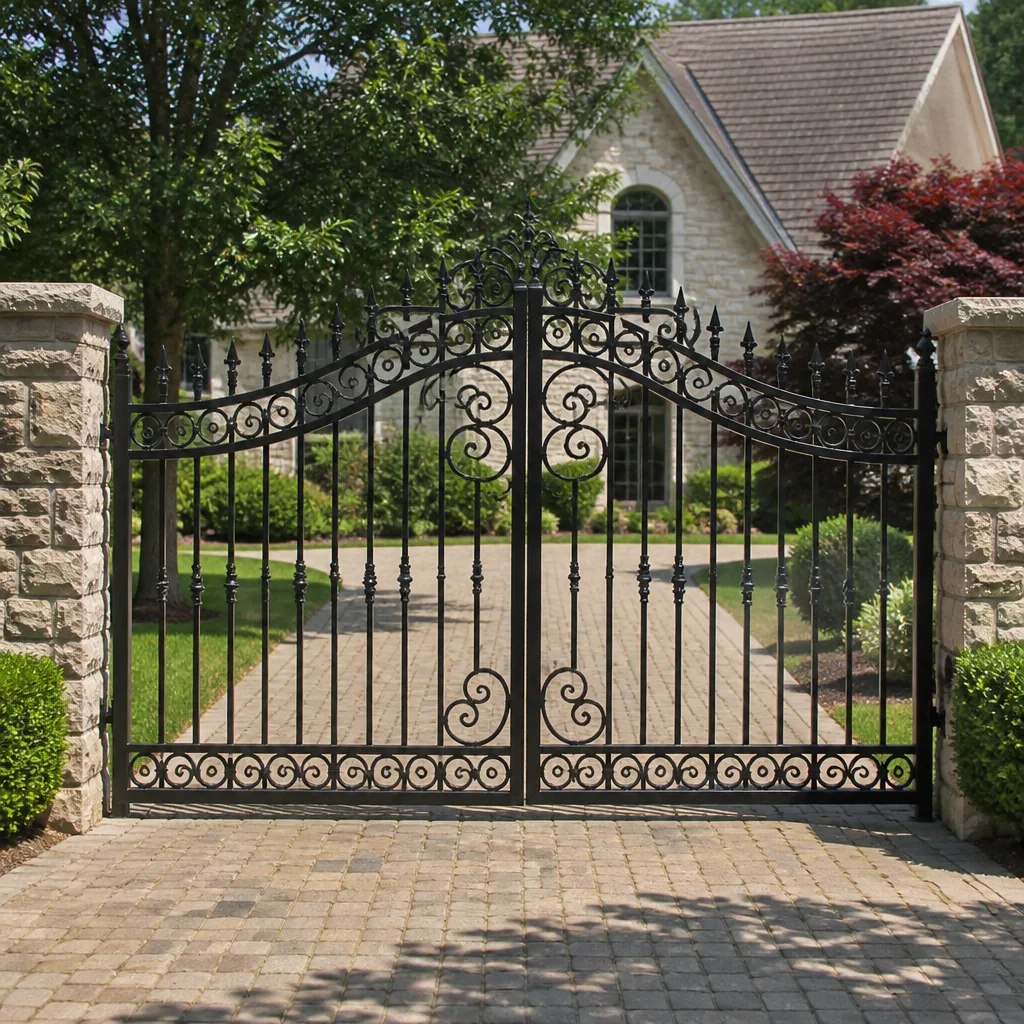 Wrought iron
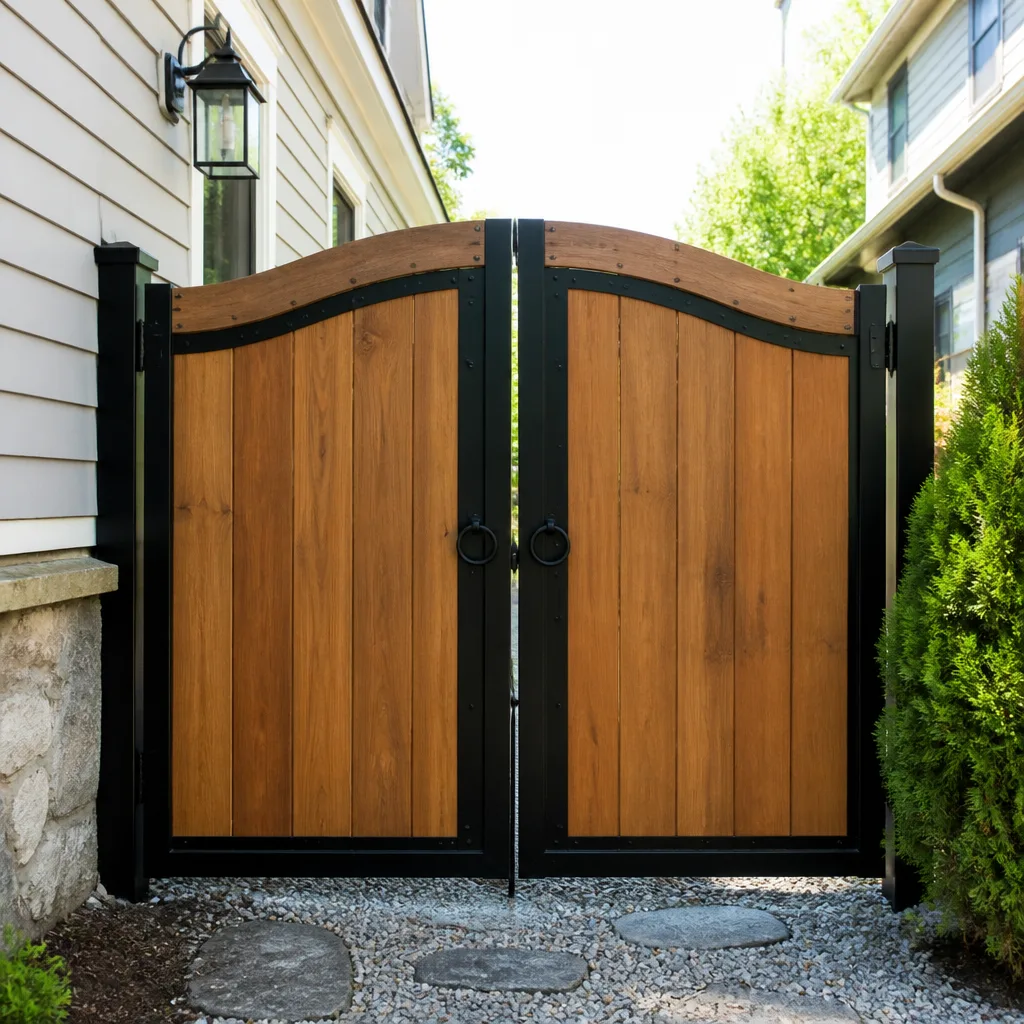 Wood & steel frame
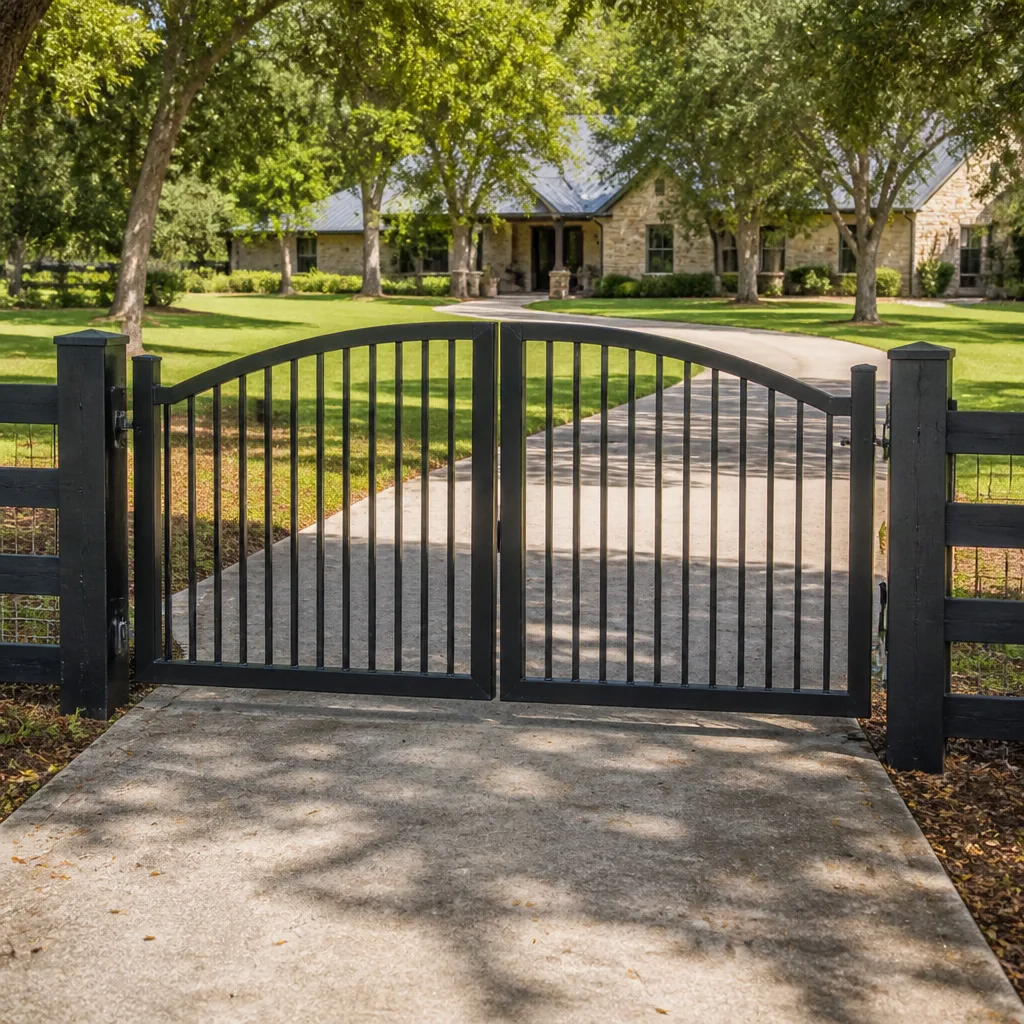 Farm & ranch
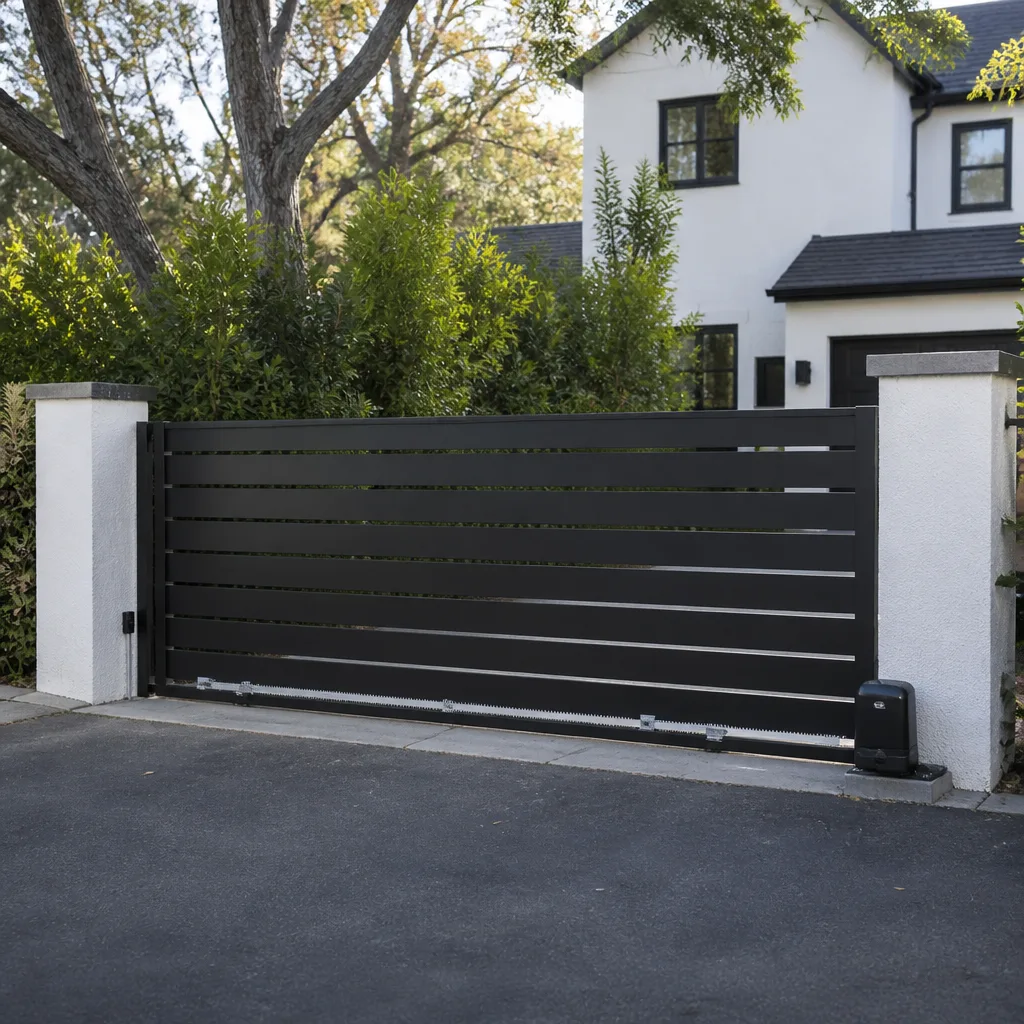 Sliding driveway gates
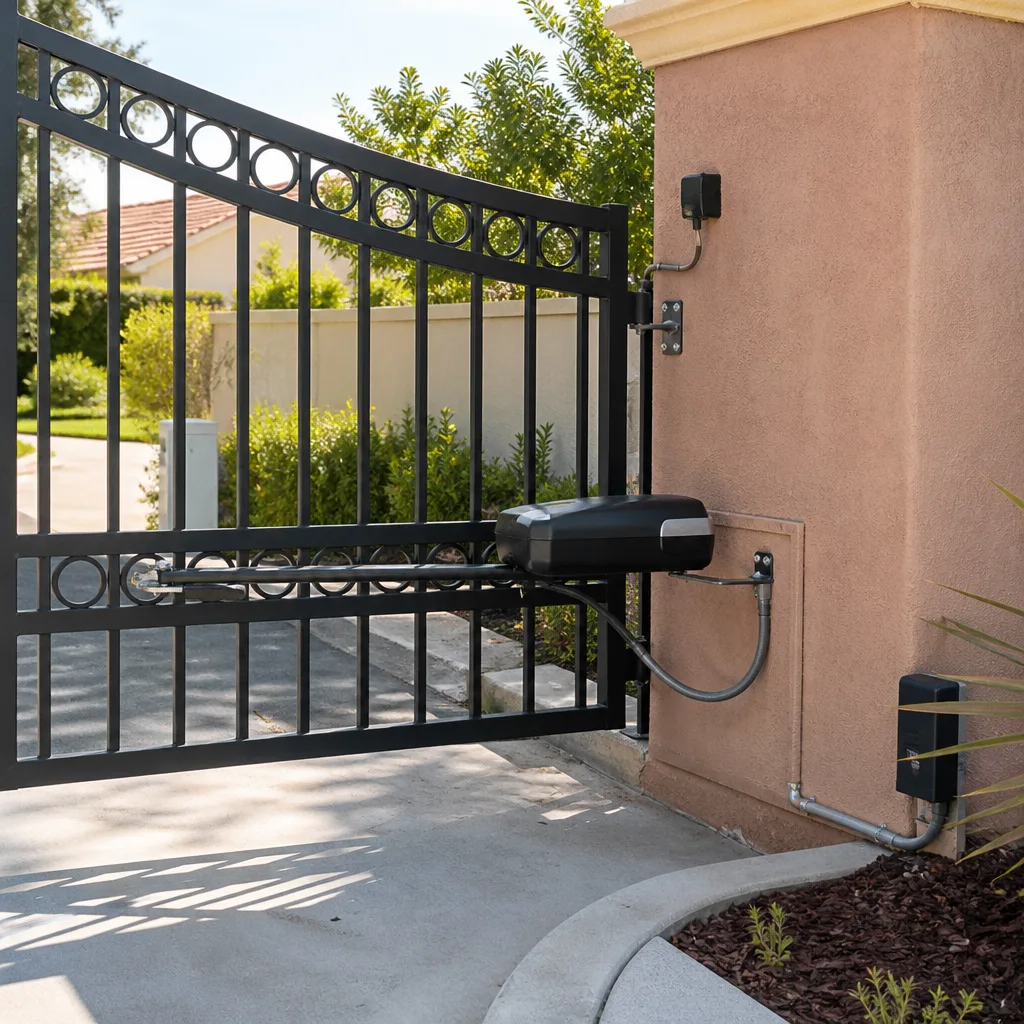 LiftMaster operators
Free on-site gate assessment - hinges, posts, and your LiftMaster or Nice gate operator checked before anything is quoted
The assessment is free and the quote is the invoice.
Get your free estimateGate Repair Troubleshooting in Arvada: Common Problems and How to Fix Them
A gate that reverses before it closes all the way isn’t acting up. It’s telling you exactly what’s wrong through its obstacle-detection logic, and reading that signal correctly is the difference between one service trip and three. Most gate failures in Arvada trace back to one of six root causes: power, sensor, motor, control board, hinge or track, and intercom. The tricky part is that four of those six can produce the same symptom, which is why so many gates get parts swapped at them instead of diagnosed. This guide maps each symptom pattern to the failure that actually causes it, explains how Arvada’s freeze-thaw cycles and clay-heavy soil push gate posts out of alignment, and shows you which checks are safe to do yourself and where to stop.
Quick Answer
Gate repair troubleshooting in Arvada starts with matching the symptom to one of six root-cause categories: power, safety sensor, motor, control board, hinge/track, and intercom or access control. A gate that reverses mid-travel is almost always a sensor or limit-switch problem, a gate that hums but won’t move points to the motor or a bound track, and a gate that’s completely dead is a power or control board issue. Local freeze-thaw movement of gate posts accounts for a large share of the alignment and limit-switch faults we see across Arvada.
Styles & brands we work with
- Wrought iron
- Wood & steel frame
- Farm & ranch
- Sliding driveway gates
- LiftMaster operators
Table of Contents
- The Six Failure Categories Every Gate Symptom Falls Into
- Symptom-to-Cause Mapping: What Your Gate Is Telling You
- How Arvada’s Freeze-Thaw Cycles Shift Posts and Misalign Limit Switches
- DIY-Safe Checks vs. Where Amateur Intervention Gets Expensive
- Decoding Error Codes on Arvada’s Most Common Operators
- Repair or Replace: The Decision Tree for Control Boards and Motors
- Loop Detectors, Keypads, and Intercom Faults
- Why Brand Familiarity Shortens Every Repair
The Six Failure Categories Every Gate Symptom Falls Into
Every gate problem we diagnose falls into one of six buckets. Sorting the symptom into the right bucket first is the single biggest time-saver in gate repair, because it tells the technician which panel to open, which meter to grab, and which parts to bring. Here’s how each category presents.
- Power. The gate is completely unresponsive: no lights on the control board, no beep, no movement. Could be a tripped breaker, a failed transformer, a dead battery in a solar or backup setup, or a break in the low-voltage run to the operator.
- Safety sensor. The gate moves partway and reverses, or refuses to close at all while opening fine. Photo-eyes, loop detectors, and edge sensors all live here. This is the most misdiagnosed category in the field.
- Motor. The gate hums, buzzes, or moves sluggishly and strains. The control board is commanding movement but the motor can’t deliver it, usually because of worn brushes, a failing capacitor, or mechanical binding fighting the motor.
- Control board. Erratic behavior: the gate opens on its own, ignores the remote, runs in only one direction, or throws error codes that don’t match any physical fault. The logic board is the brain, and a failing board produces symptoms no mechanical fix will cure.
- Hinge and track. The gate sags, drags, scrapes the ground, or jumps its track. Purely mechanical, and often the underlying cause of what looks like a motor problem.
- Intercom and access control. The gate mechanism works fine but the entry system doesn’t: keypad codes rejected, intercom dead, phone app unresponsive, exit loop not triggering.
The value of this framework is elimination. If the gate opens and closes smoothly by hand release but won’t move under power, power, sensor, motor, and control board stay on the list while hinge and track drop off. Testing in the right order cuts the diagnostic down fast.
Symptom-to-Cause Mapping: What Your Gate Is Telling You
The symptom pattern is data. A gate doesn’t fail randomly; it fails in a pattern that points at its cause. Here’s the mapping we use, and it’s the fastest way for a homeowner to describe the problem accurately when calling for service.
| Symptom Pattern | Most Likely Category | What It Usually Means |
|---|---|---|
| Gate reverses before fully closing, repeats | Safety sensor | Photo-eye blocked, misaligned, or loop detector falsely triggering |
| Gate opens fine, won’t close (or vice versa) | Limit switch or one-direction sensor | Travel limit out of adjustment, or a single sensor failing in one direction |
| Hums or buzzes but doesn’t move | Motor or binding track | Failed capacitor, worn motor, or gate physically binding on track or hinges |
| Completely dead, no lights | Power | Breaker, transformer, battery, or low-voltage wiring fault |
| Opens on its own, or ignores remote | Control board | Board logic failure, moisture damage, or interference on the receiver |
| Sags, drags, scrapes ground | Hinge or track | Worn hinge, shifted post, or track out of alignment |
| Keypad or intercom dead, gate works | Access control | Keypad power, wiring, or intercom/call-box fault independent of the operator |
Read down the middle column and you have a repair plan. Read across and you have the evidence. When a gate shows two symptoms from different categories, such as reversing mid-travel and dragging on the ground, the mechanical fault may be triggering the sensor, which means fixing the track and re-testing before touching any electronics.
The Midtown and Olde Town areas of Arvada have a lot of older manual-to-automated retrofits, and those systems tend to present with hinge and track symptoms first because the original hardware wasn’t designed for the extra weight and torque of an operator. That changes the diagnostic order.
How Arvada’s Freeze-Thaw Cycles Shift Posts and Misalign Limit Switches
Arvada sits at the edge of the Front Range where the ground goes through dozens of freeze-thaw cycles every winter. Water gets into soil and post footings, freezes, expands, and moves the ground around it, then thaws and settles. That cycle repeats, and gates feel every bit of it. The result is one of the most common local repair calls we get: a gate that worked all summer suddenly stops in the wrong place, reverses, or scrapes.
Here’s what the freeze-thaw cycle actually does to a gate system:
- Post movement. A gate post set in clay-heavy Front Range soil heaves and settles with the seasons. Even a fraction of an inch of movement at the hinge post translates to inches of swing error at the far end of a long gate leaf.
- Limit switch drift. The operator’s limit switches tell the motor where open and closed are. When the gate leaf’s travel path shifts because the post moved, the switch that was set correctly in July now stops the gate short or runs it into the stop.
- Hinge bind. Movement at the post loads one hinge more than the others. That hinge wears faster, the gate leaf sags, and the whole assembly starts dragging.
- Track misalignment on slide gates. A slide gate’s track and guide rollers are especially sensitive to ground movement. Heave under one end of the track is enough to bind a roller and stall the motor.
- Sensor drift. Photo-eye brackets mounted to moving structures shift too. A beam that was aligned in autumn can be a few degrees off by February, which produces intermittent reversing that looks like a control board problem.
The practical takeaway for anyone troubleshooting a gate in Arvada: rule out structural movement before you buy a control board. A gate that suddenly misbehaves after a hard freeze, especially a long slide gate or a heavy swing gate, is more likely to have a mechanical alignment issue than a failed electronic component. Our technicians have up to experience diagnosing exactly this kind of seasonal failure, and it’s why we check the mechanical structure before we open the operator housing.
DIY-Safe Checks vs. Where Amateur Intervention Gets Expensive
There are real diagnostics a homeowner can and should do before calling. They shorten the repair and sometimes solve it outright. There are also points where opening the wrong enclosure puts you, your gate, or your warranty at risk. The line between the two is clear, and it’s worth respecting.
Safe checks you can do yourself:
- Manual release test. Put the operator in manual release (per your operator’s instructions) and move the gate by hand. If it moves freely, the mechanical structure is fine and the fault is electrical. If it binds or drags, you’ve found a mechanical issue.
- Visual sensor inspection. Look at the photo-eye lenses for dirt, spider webs, or physical damage. Clean them with a soft cloth and re-test. A surprising number of “failed sensors” are just dirty lenses.
- Loop detector sensitivity check. If your gate uses a vehicle loop and it’s falsely triggering, look for metal objects, standing water, or new paving near the loop. The loop sensitivity adjustment itself should be done by a technician.
- Battery backup voltage. If your operator has a backup battery, check that the battery terminals are clean and tight. A failed backup battery can cause the gate to behave erratically on a power dip.
- Breaker and power check. Confirm the gate circuit breaker hasn’t tripped and the operator has power. That’s a five-minute check that saves a service call.
- Obstruction sweep. Walk the full travel path of the gate and clear debris, snow, ice, and vegetation. Freeze-thaw season in Arvada makes ice buildup along the gutter line a common false-trigger source.
Where to stop and call:
- Opening the operator housing or control board enclosure. The 120V and low-voltage wiring inside is live, and a wrong probe can destroy the board or the operator.
- Adjusting limit switches on an operator you’re not familiar with. Misadjusting a limit switch can drive the gate into its mechanical stop and damage the motor or the gate leaf.
- Bypassing or disconnecting safety sensors. The gate will appear to work, but the obstacle-detection logic is disabled, which creates a serious crush and entrapment liability, especially on a heavy slide gate.
- Working on the intercom or access control wiring without knowing the voltage and protocol. Getting this wrong can damage the entry system or the phone line.
- Any work on a gate that has already shown signs of binding, sagging, or structural movement. The gate leaf and hinges carry real mass, and a gate that comes off its track or drops a leaf is dangerous.
Commercial-grade operators such as FAAC and DoorKing add another layer: the safety edges, loop detectors, and access control on those installations are part of a working life-safety and liability system. A homeowner or property manager should not disable or rewire those components. For anything beyond the safe checks above, booking a professional is the right call. You can read more about our electric gate repair scope to see exactly what’s covered.
Decoding Error Codes on Arvada’s Most Common Operators
Error codes on a gate operator are the single most useful piece of data in a repair call, and they’re also the most misunderstood. A code doesn’t tell you a part failed. It tells you what the control board detected, and the board detects symptoms, not causes. Learning to read a code correctly changes the repair plan.
Here’s how the most common residential and light-commercial operators in Arvada present their codes and what the usual cause is:
- LiftMaster. On LiftMaster gate operators, the diagnostic LED error codes are typically two-flash, three-flash, or four-flash patterns, with each count pointing at a different circuit area: a sensor or safety circuit fault, a motor or current-sense fault, or a limit switch fault. LiftMaster is one of the most common operators we see on Arvada residential driveways, and the code mapping is where a brand-familiar technician saves time.
- Viking. Viking operators commonly use the display board’s diagnostic readout. Viking systems are popular on custom residential gates because they support a wide range of access control options, and the codes often point toward a sensor input fault or a voltage issue rather than the motor.
- FAAC. FAAC’s electronic control units display their faults through LED patterns, and on FAAC operators a common code pattern indicates an obstacle detected on one direction. FAAC is more common on light-commercial and multi-unit complexes in Arvada, and the codes need to be read with the loop detectors and safety edges in mind.
- Mighty Mule. Mighty Mule’s diagnostic pattern is usually a combination of the operator’s status lights that tells you whether the fault is in the safety circuit, the limit circuit, or the motor circuit. Mighty Mule is a common entry-level residential platform, and it’s one of the easiest operators to misdiagnose when the technician doesn’t know the light pattern.
- BFT. BFT control panels use a diagnostic LED sequence. BFT systems appear frequently on larger sliding gates, and BFT faults often trace back to the safety edge or the loop rather than the drive motor.
A technician who knows the brand and its diagnostic language reads three or four codes from memory. One who doesn’t starts from the beginning every time. That’s the reason we work across the nine brands we do rather than handle a narrow slice. When we see a code we can’t place from memory, we consult the manufacturer’s diagnostic documentation, not guess. That’s the difference between a repair and a parts lottery.
Repair or Replace: The Decision Tree for Control Boards and Motors
The most common place people get talked into the wrong repair is at the control board. Replacing a control board when a sensor was the problem costs the homeowner a board they didn’t need. Piecemeal repairs when a board is truly failing and taking the motor with it cost more over a year than a single board replacement. Here’s how we decide.
- Confirm the fault is a board fault. Before the board is on the table, verify power, sensors, and mechanical structure. A board is only the culprit when it produces symptoms no other category explains: erratic direction changes, phantom opens on the remote, or codes that don’t match any sensor, motor, or limit condition.
- Count the damaged circuits. If a board has one failed output, a single component-level repair is often viable. If two or more outputs or the logic chip itself has failed, the board replacement is the right call.
- Look for moisture damage. On operators in Arvada, condensation and freeze-thaw moisture inside the housing can leave the board with corrosion on multiple traces. That’s a swap.
- Check motor current draw. A board that keeps failing on the motor output can be pointing at a failing motor drawing more current than the board tolerates. If the motor and board are both marginal, replacing one and leaving the other is the piecemeal repair that becomes uneconomical.
- Weigh parts against a replacement operator. On a 15-year-old operator with a failed board, a failing capacitor, and worn brushes, the math often tips toward a new operator. On a 5-year-old commercial-grade operator with a single failed board, the math is a board every time.
- Factor access control. If the operator is integrated with a DoorKing or FAAC access control system, the board replacement has to be compatible with the existing intercom and loop hardware. That’s a reason to stay with a matched system rather than mix components.
This is where cross-brand diagnostic experience earns its keep. A technician who leans on one brand will tend to recommend that brand’s parts regardless of what’s actually installed. A technician who works on your brand recommends what the system needs.
Loop Detectors, Keypads, and Intercom Faults
Access control problems get mistaken for operator problems constantly. The gate mechanism can be in perfect health while the keypad, loop detector, or intercom is what’s actually failing. The diagnostic skill is separating the two before anyone touches the operator.
- Loop detectors. The inductive loop in the driveway triggers the gate to open when a vehicle passes. Common faults: the loop has been damaged by pavement work, standing water has flooded the loop trench, the sensitivity adjustment has drifted, or the detector module itself has failed. A gate that opens from the keypad but won’t open from the loop, or that stays open after a car passes, is usually a loop fault.
- Keypads. Keypad failures show up as codes rejected, keypad unlit, or keypad intermittently dead. Most keypad faults in Arvada are power or wiring related. Outdoor keypads also take freeze-thaw moisture damage on their weather seal.
- Intercoms. Intercom problems split cleanly into audio faults (you can’t hear the visitor, or they can’t hear you) and trigger faults (the intercom connects but won’t open the gate). Audio faults are usually the intercom unit or its phone line. Trigger faults are usually in the interface between intercom and access control board.
- Access control boards. The access control board is the interface between the entry device and the gate operator. It’s separate from the operator’s control board, and confusing the two is one of the most common misdiagnosis points in gate repair.
For HOAs, apartment complexes, and light-commercial properties, the access control board is often the single most important component on the site. A failing board can lock out every resident at once. That’s why we treat gate repair as a diagnostic discipline rather than a part-swap. The entry system and the gate have to be tested as one system, not two.
Why Brand Familiarity Shortens Every Repair
The gate industry has a long tail of brands, and each one has its own diagnostic vocabulary, part numbering, and control board architecture. A technician who works on one or two brands can repair gates in one or two brands. The rest require consultation, ordered parts, and a second trip. That pattern gets expensive.
Our position is that the widest range of brand familiarity is the right model for gate repair in Arvada. We’re familiar with nine distinct platforms: LiftMaster, FAAC, BFT, Linear, Viking, Ghost Controls, DoorKing, Elite, and Mighty Mule. We don’t claim to be factory-certified for any of them; we claim to know them from working on them. The residential entry-level end of that list, Mighty Mule and Ghost Controls, has a different diagnostic rhythm than the commercial end, FAAC, BFT, and DoorKing. Knowing the difference matters when the property manager calls.
Here’s what brand familiarity actually does in the field:
- Recognizing an operator’s diagnostic LED pattern without a lookup.
- Knowing which parts are commonly stocked, which are ordered, and how that affects timing.
- Knowing which faults are unusually common on a given platform, which biases the diagnostic order.
- Knowing the safety system architecture well enough not to mistake an access-board fault for an operator fault.
That last point is the one that separates a dedicated gate specialist from a generalist. Electric gate repair is a specialty, not a side service. The motor, the control board, the loop detector, the safety edge, and the access control board are five separate subsystems that talk to each other. Knowing your brand means knowing which subsystem is talking.
If you’re a property manager evaluating a repair quote, ask what brands the technician works on and how they diagnose a board versus a sensor. If Arvada properties are in your scope, the diagnosis should sound like a plan, not a guess.
Common Mistakes to Avoid
- Replacing the control board before testing the sensors. A reversing gate is a sensor symptom first. Swapping a board before confirming the sensor circuit reads it as a board fault wastes money and doesn’t fix the gate.
- Bypassing or taping over safety sensors. This turns a working safety system into a liability. On a heavy slide gate or a commercial installation, a disabled safety edge or photo-eye is a serious hazard.
- Adjusting limit switches to compensate for a shifted post. The limit switch is right; the post moved. Adjusting the switch to match the post puts the gate travel path out of spec and usually recurs the next season.
- Ignoring track and hinge wear during freeze-thaw season. A dragging gate in February is often a heave issue. Skipping the mechanical check and going straight to the operator misses the actual cause.
- Mixing brand components on a repair. A DoorKing access board and a mismatched operator can fight each other, and a brand-familiar installer knows to keep the system matched.
- Treating an access control fault as an operator fault. Keypad, loop, and intercom problems are separate jobs. The gate mechanism may be healthy while the entry system is the failure.
- Calling a general handyman for an electric gate. The motor, the control board, the safety sensors, and the access control are not general handyman territory. The wrong technician on the wrong layer adds cost and time.
- Foregoing a written estimate. A gate repair with a verbal guess is a repair with no agreed scope. Ask for a written estimate before any work starts, every time.
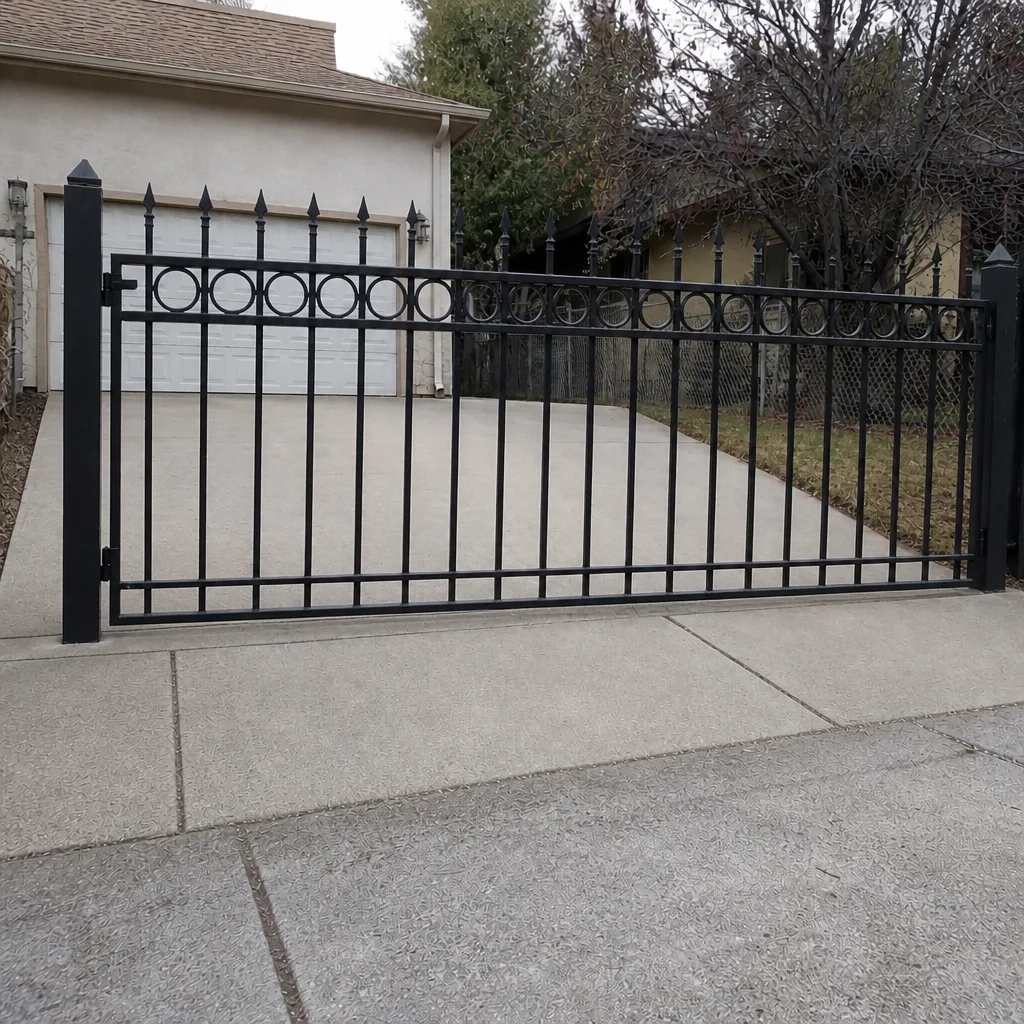
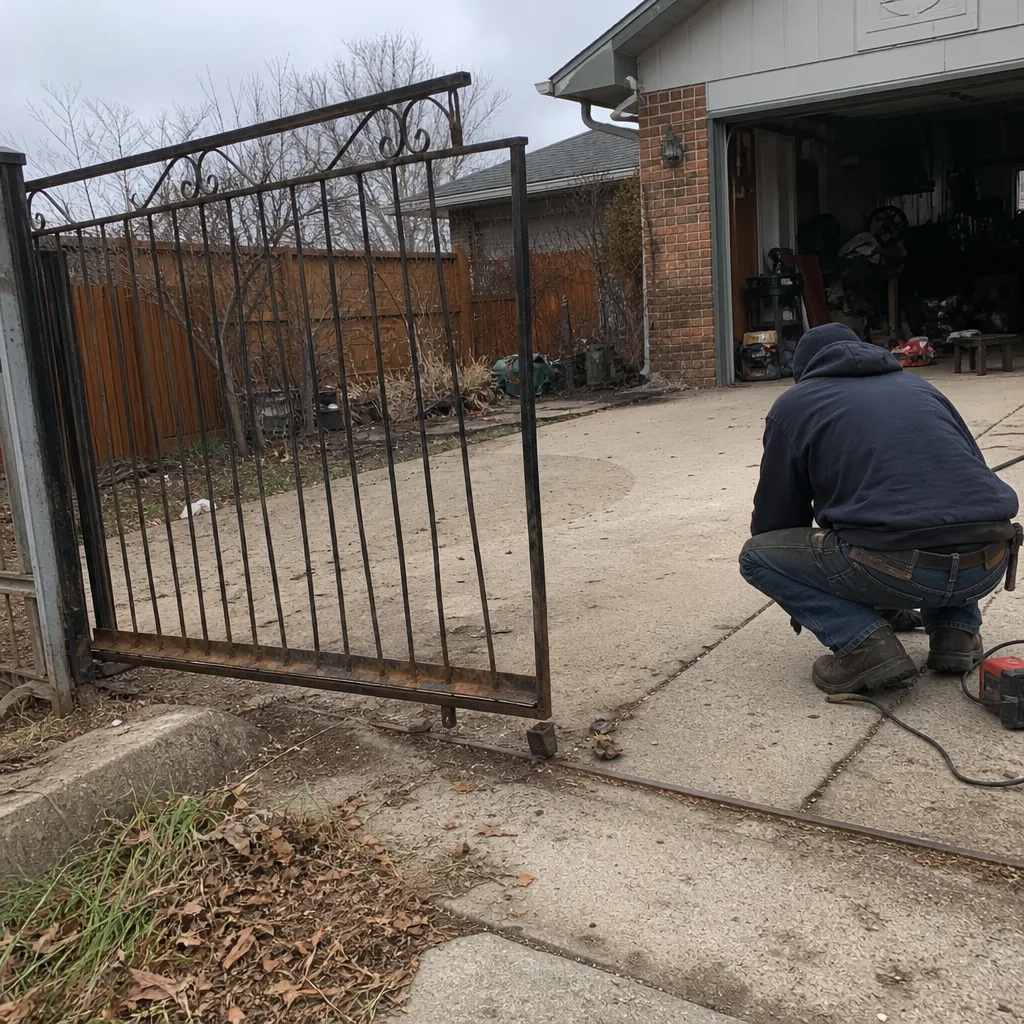
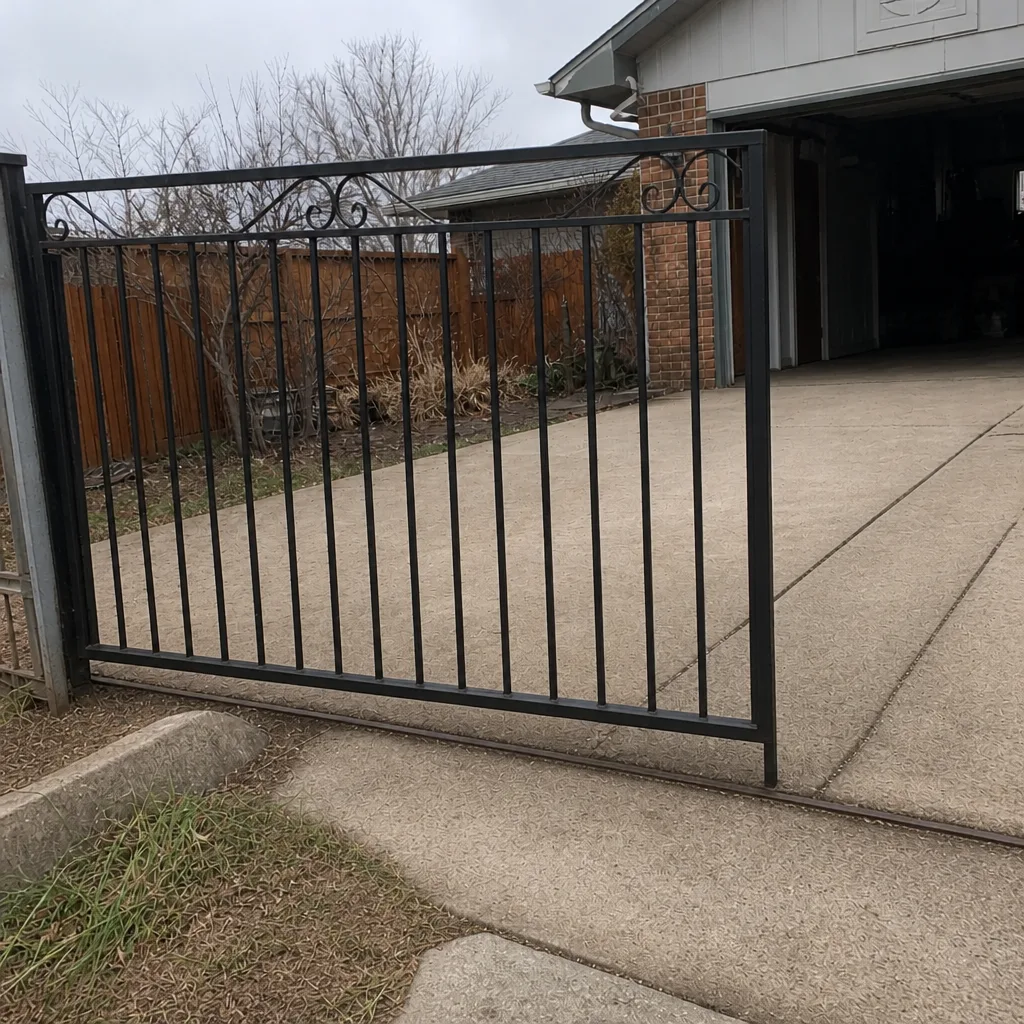
See the difference
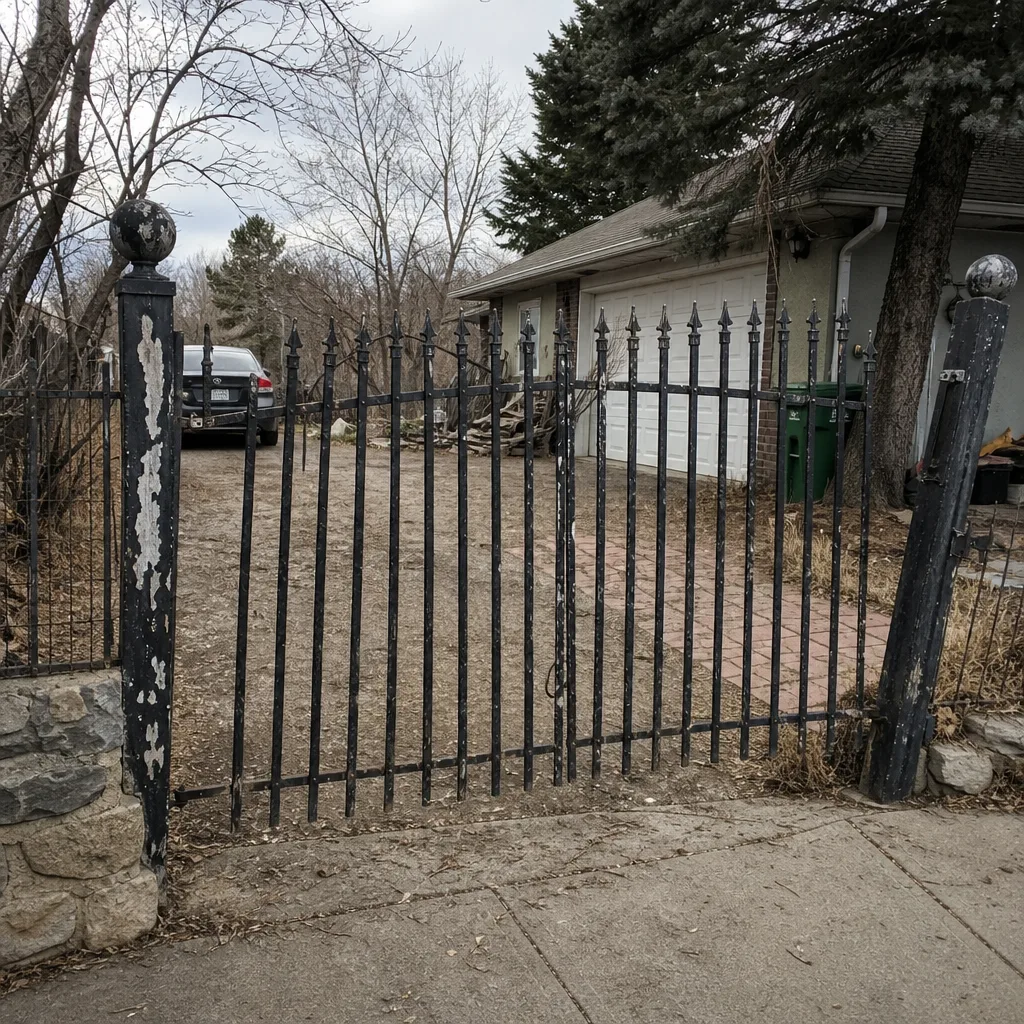 Before
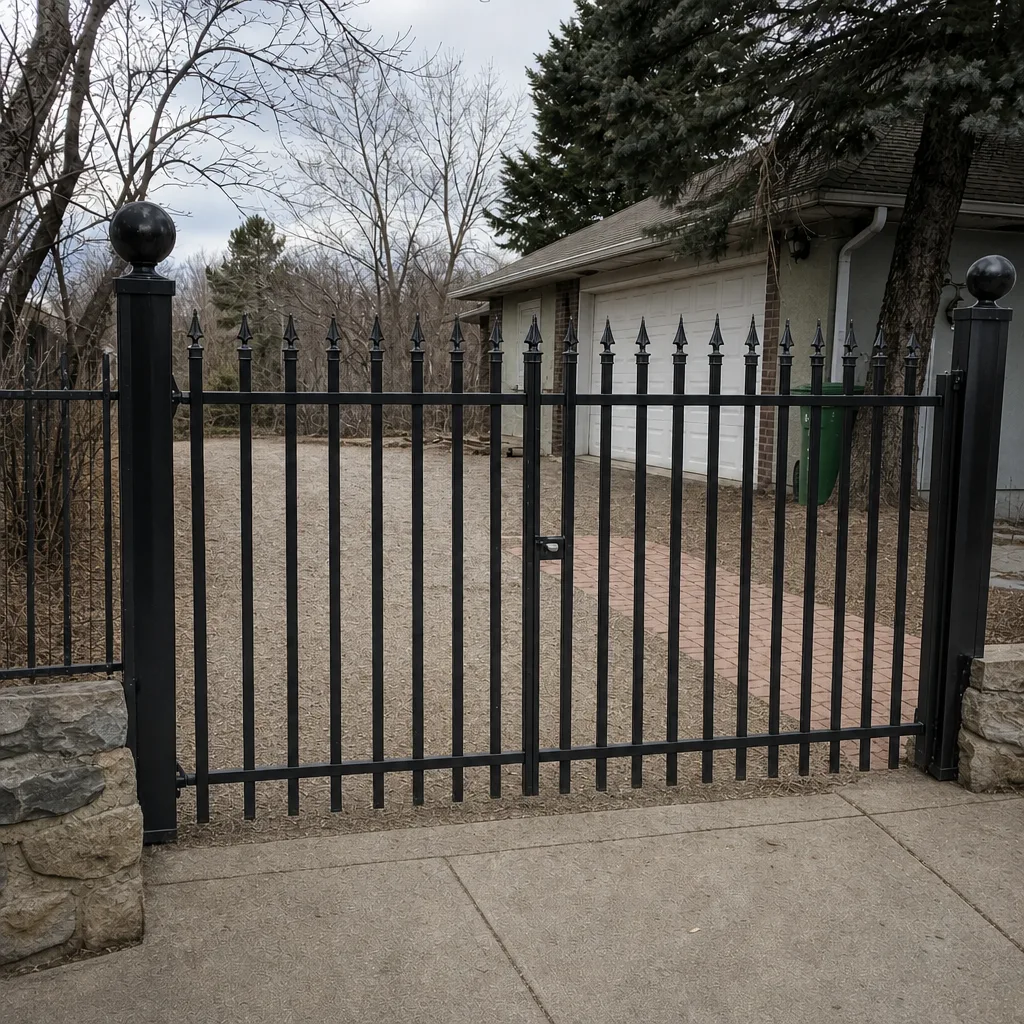 After
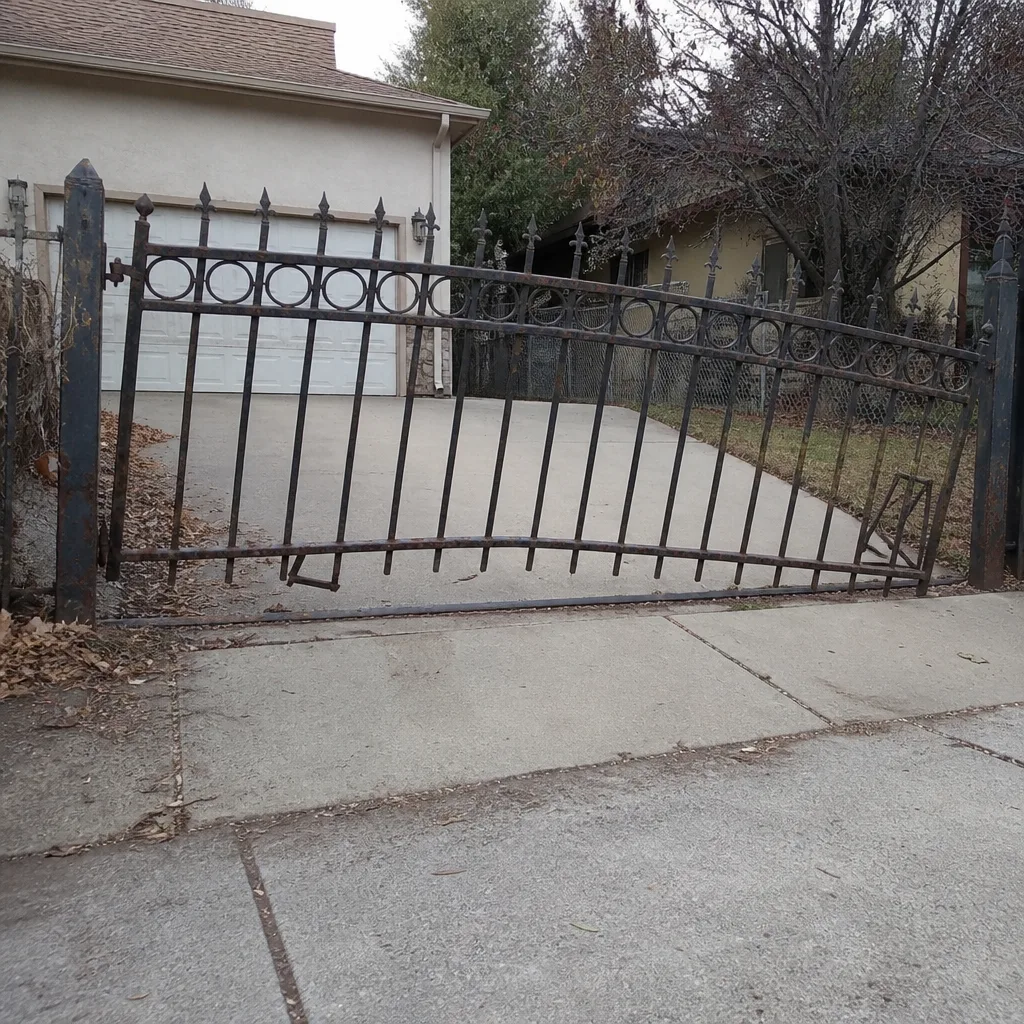 Before
 After
 Before
 After
When to Call a Professional
Call a professional gate technician when the fault is inside the operator or control board, when the safety system has been disabled or damaged, when the gate is binding or dragging, or when the access control layer (keypad, loop, intercom) has failed on a property with multiple users. Also call when the symptom is intermittent and multiple diagnostic checks point in different directions: that’s the pattern that suggests a control board or access-board issue, which requires the right diagnostic tools and the right parts.
As an independent local professional network, Gate Repair Arvada connects Gate Repair Arvada homeowners with independent pros who diagnose the failing component rather than guess. We offer free estimates in Arvada and can be reached at (844) 761-1390. We answer 24/7. Fast dispatch, 7am-7pm, Sunday through Friday, closed Saturday. Our network’s technicians have up to experience, and the price is quoted and agreed before any work starts. No surprises on the invoice.
Frequently Asked Questions
A reversing gate is almost always a safety sensor or limit switch problem, not a motor or control board failure. The obstacle-detection logic is designed to reverse when the sensor circuit triggers. Check the photo-eye lenses for dirt or damage, verify the sensor brackets are aligned, and inspect the loop detector for a false trigger. If the sensor circuit reads clean, the limit switch or a shifted gate post is the next suspect. Call (844) 761-1390 for an exact diagnosis; estimates are free.
Freeze-thaw cycling in Arvada moves gate posts, tracks, and sensor brackets, which produces alignment and limit-switch faults that appear suddenly with a hard freeze. A gate that worked all summer often presents with misaligned limits, dragged hinges, or a shifted photo-eye in the winter. The fix is usually mechanical (realign the post, reset the limits, adjust the hinges) rather than electrical. Call (844) 761-1390 and we’ll diagnose the mechanical and electrical layers together.
Yes. LiftMaster and Mighty Mule are two of the nine brands we work on, and we’re familiar with their diagnostic LED patterns and common fault points. Mighty Mule is a common residential platform in Arvada, and LiftMaster shows up on both residential and light-commercial gates. If your brand isn’t LiftMaster or Mighty Mule, we also work on FAAC, BFT, Linear, Viking, Ghost Controls, DoorKing, and Elite. Call (844) 761-1390 for an exact quote; estimates are free.
Replace the board if two or more outputs have failed, if the board shows moisture corrosion on multiple traces, or if the motor output keeps failing after repeated board replacements. Repair the existing board only if a single output has failed and the board is otherwise healthy. If the operator is old and marginal on the motor side, replacing the operator may be more economical than chasing board repairs. Ask for a written estimate before any work starts. Call (844) 761-1390 for an exact quote.
We handle loop detectors, keypads, and intercoms as part of our electric gate repair scope. The access control layer (loop, keypad, intercom, access board) is diagnosed alongside the gate operator, not handed off to a separate vendor. For HOAs and apartment complexes, having the gate and the access system diagnosed together shortens downtime and prevents the “two contractors, two diagnoses” cycle. Call (844) 761-1390 for an exact quote; estimates are free.
Many repair calls can be diagnosed and repaired the same day if the fault is mechanical or electrical and the parts are on hand. Access control and control board faults may require ordered parts and a scheduled follow-up visit, so timing depends on the specific fault and the operator. The written estimate you receive will set the price and the schedule before any work starts. Call (844) 761-1390 for an exact quote. We answer 24/7, and fast dispatch from 7am to 7pm runs Sunday through Friday, closed Saturday.
The Bottom Line
Gate repair troubleshooting is a diagnostic discipline, not a part-swapping exercise. Almost every failure in Arvada lands in one of six categories: power, sensor, motor, control board, hinge and track, or intercom and access control. Reading the symptom pattern in the context of Arvada’s freeze-thaw climate and clay-heavy soil catches the mechanical faults that get mistaken for electrical faults. Safe DIY checks (manual release, sensor cleaning, loop-inspection, battery and breaker checks) shorten the repair. The operator housing, the limit switches, and the safety system are the points where a professional should step in. Brand familiarity (LiftMaster, FAAC, BFT, Mighty Mule, Viking, DoorKing and the rest of the nine) shortens a repair because a brand-familiar technician reads the diagnostic codes without guessing. And every repair starts with a written estimate you agree to before any work begins.
Call (844) 761-1390 for a free estimate. We answer 24/7. Fast dispatch from 7am to 7pm, Sunday through Friday, closed Saturday. Independent local pros, free estimates, and a written price agreed before work starts.
Written by the team at Gate Repair Arvada.