
Last updated November 15, 2026
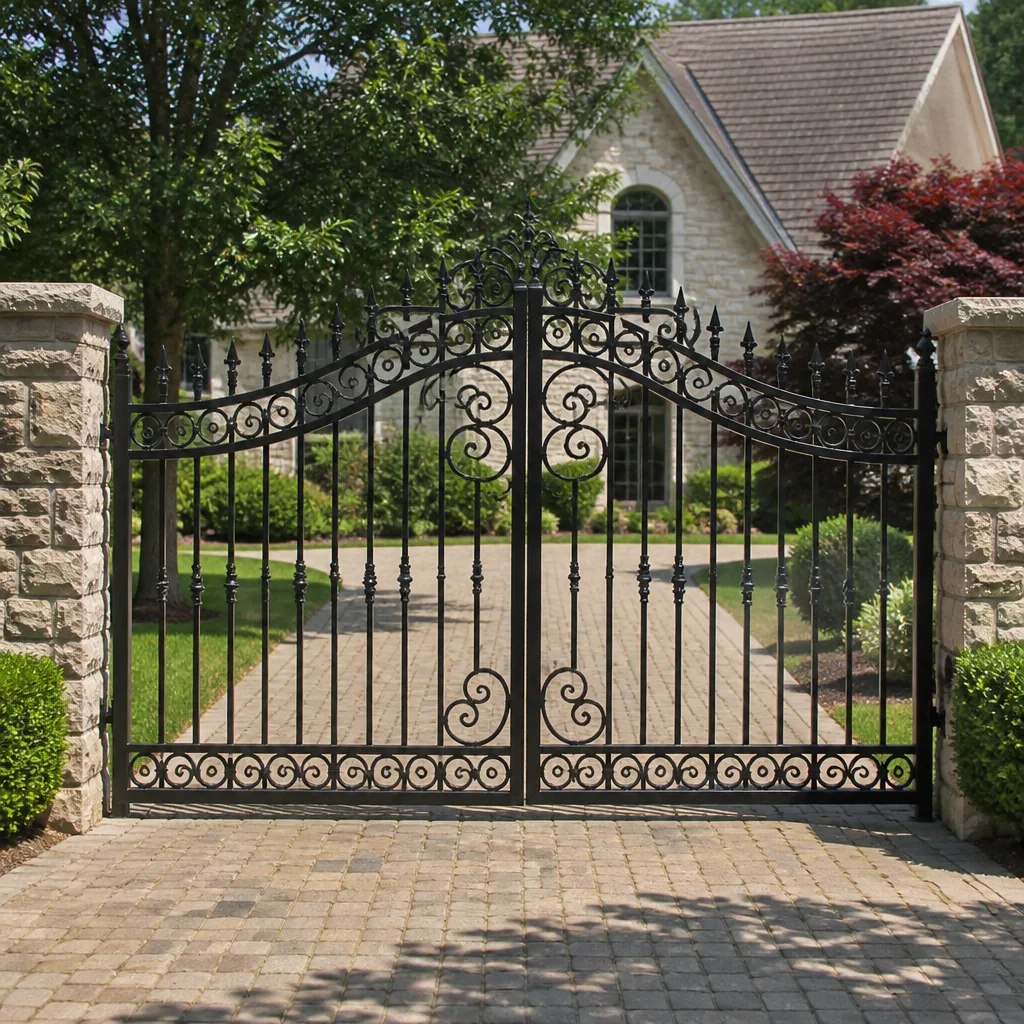 Wrought iron
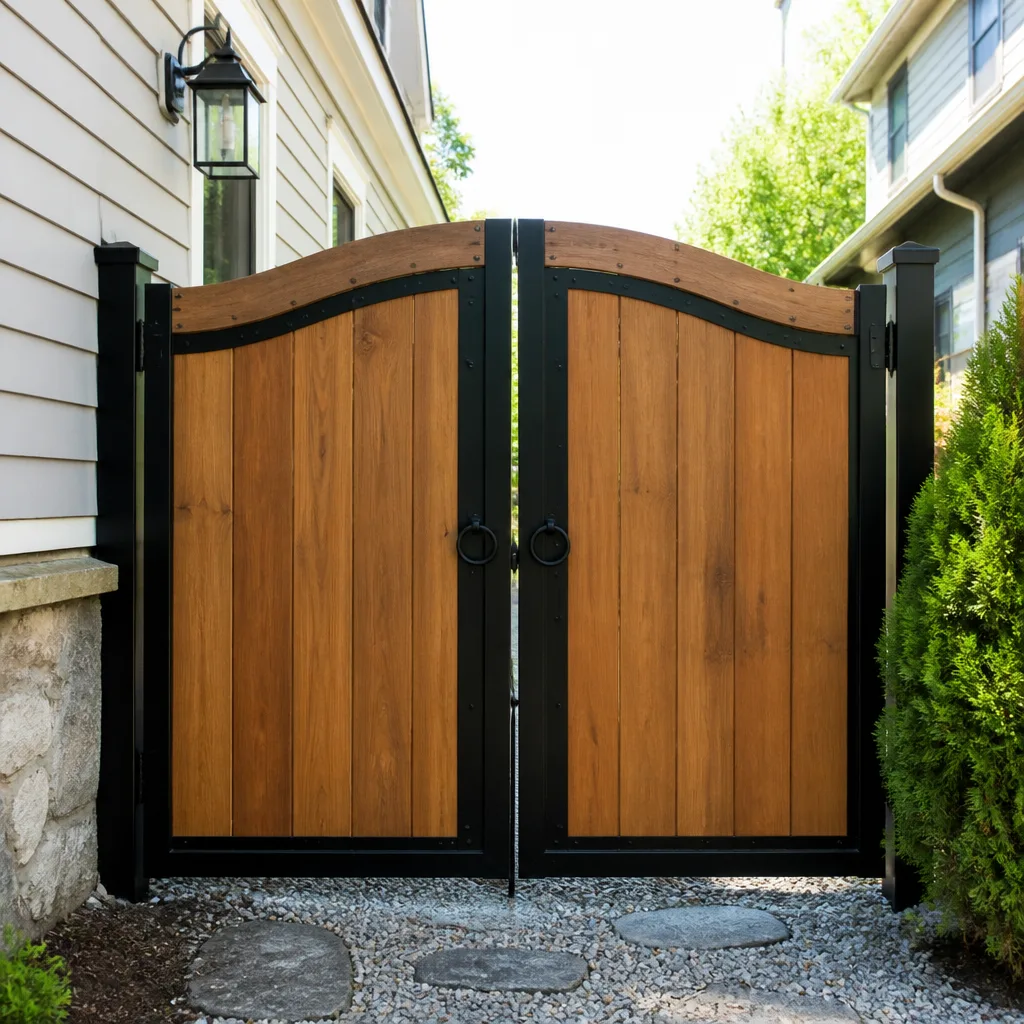 Wood & steel frame
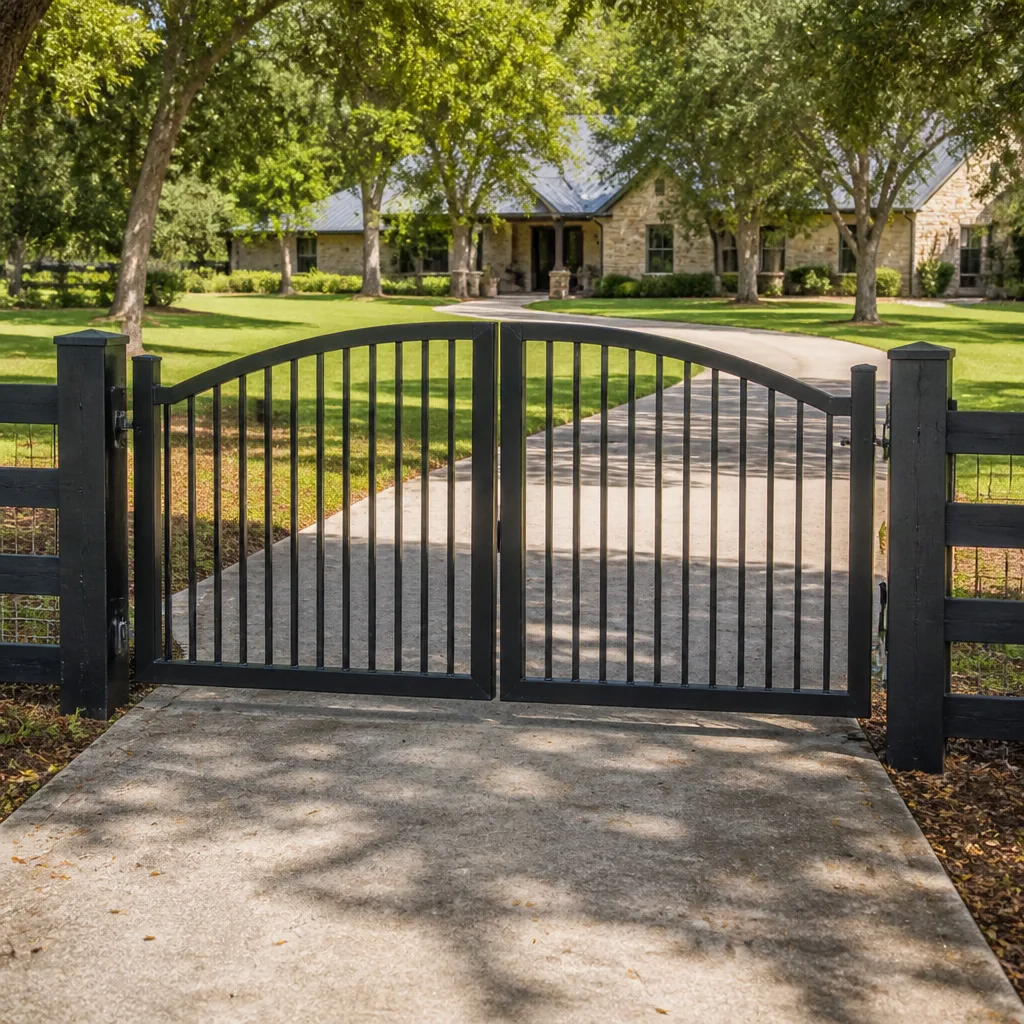 Farm & ranch
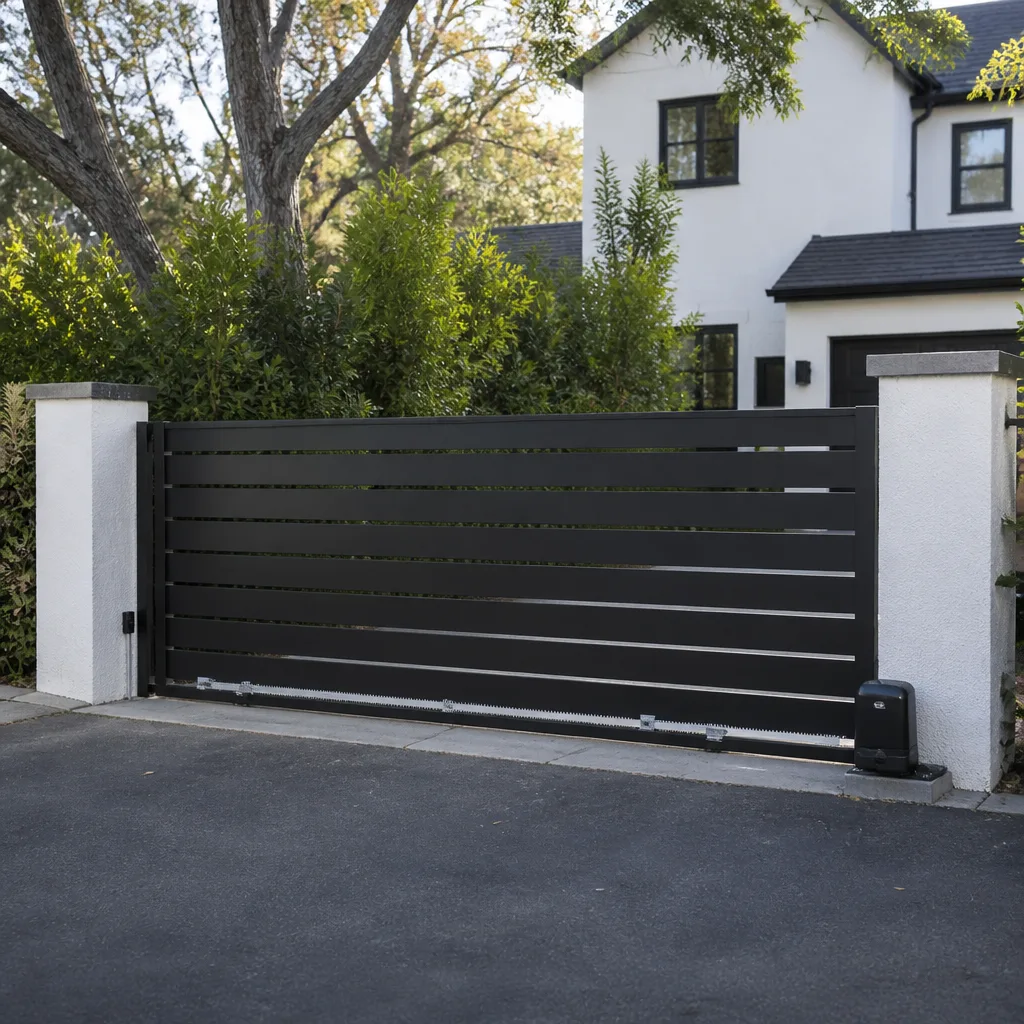 Sliding driveway gates
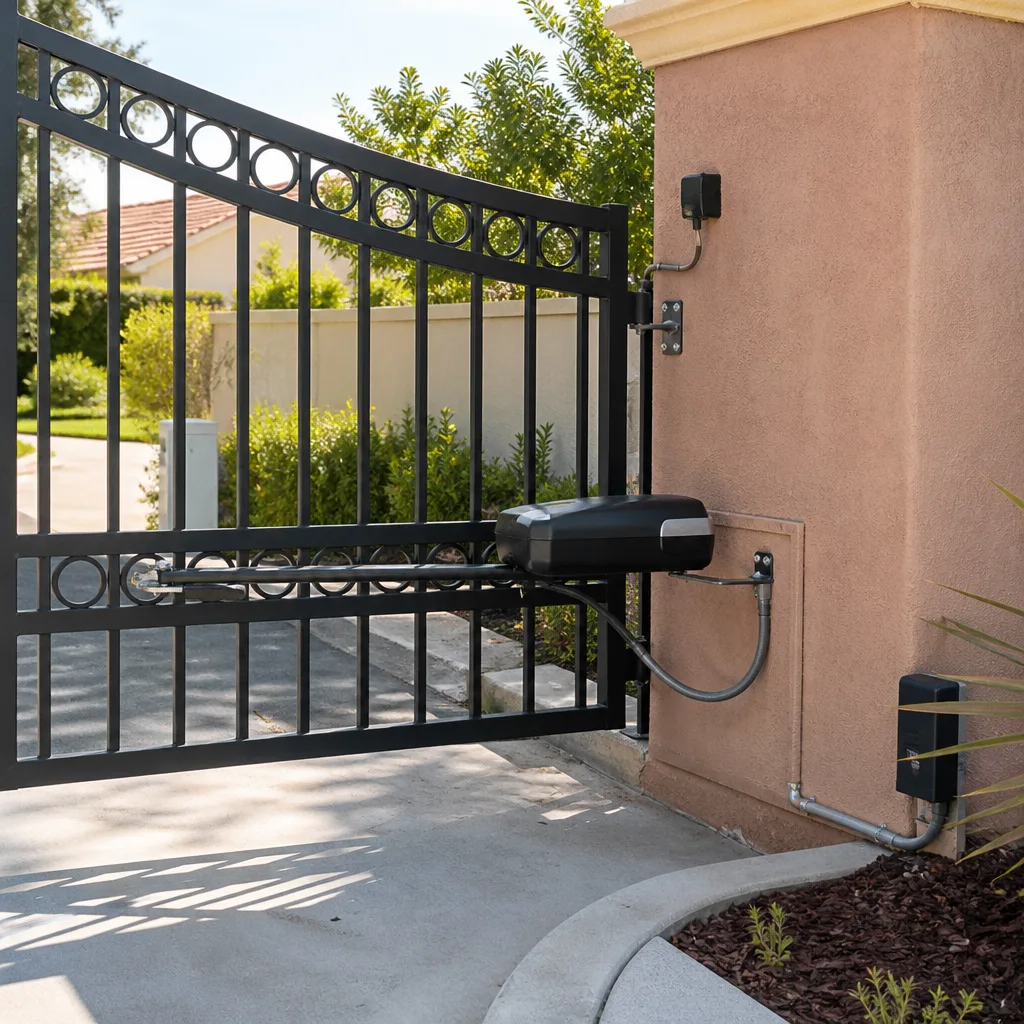 LiftMaster operators
Free on-site gate assessment - hinges, posts, and your LiftMaster or Nice gate operator checked before anything is quoted
The assessment is free and the quote is the invoice.
Get your free estimateSeasonal Gate Repair Care for Arvada: Year-Round Homeowner’s Guide
Most gate owners wait for something to break, then call for help. In Arvada, the smarter move costs less and takes less time: match your annual care to what the Front Range climate actually does to gate hardware. Our technicians have up to experience, and they can tell you the same thing we’ve seen for years on this page: gates don’t fail randomly. They fail on schedule. Freeze-thaw cycles attack seals and footings in winter, UV and heat do quiet damage to limit switches all summer, and spring soil saturation shifts posts just enough to throw a swing gate out of geometry. This guide walks you through each season, what to check, what to fix, and when to call in an expert.
Quick Answer
The best seasonal gate care in Arvada follows one simple calendar: prep hydraulics, batteries and seals in fall before the first hard freeze; check for frost heave and hinge stress in winter; inspect welds and reset limit switches in spring after soil settles; and validate solar output, board ventilation and hardware coatings in summer. Bundling several of these into a single service call saves time, but a handful – hydraulic fluid checks and battery load tests especially – need to happen on schedule even if you can’t bundle them. Skipping a season is how an inexpensive adjustment turns into a controller replacement.
Styles & brands we work with
- Wrought iron
- Wood & steel frame
- Farm & ranch
- Sliding driveway gates
- LiftMaster operators
Table of Contents
- Fall Pre-Winter Protocol: Hydraulics, Batteries and Seals
- Winter Failure Modes: Frost Heave, Hinge Stress and Cold Actuators
- Spring Post-Freeze Inspection: Welds, Post Footings and Limit Switches
- Summer Heat Management: Solar, Ventilation and UV Coatings
- The 12-Month Arvada Gate Care Calendar
- What to Bundle and What to Schedule Separately
- Common Mistakes to Avoid
- When to Call a Professional
Fall Pre-Winter Protocol: Hydraulics, Batteries and Seals
Fall is the single most important month for any automated gate in Arvada. The reason is basic chemistry: hydraulic fluid thickens as temperatures drop, and if the fluid in your operator is wrong for cold weather, the actuator has to work harder to do the same job. That strain compounds every week the freeze continues. By January, a hydraulic swing gate operator running the wrong fluid can be fighting against its own seals instead of the gate.
Here’s what we check and recommend in fall, roughly in the order it should happen:
- Hydraulic fluid viscosity. Fluid with a higher viscosity index, such as AW46, works fine in mild weather but stiffens noticeably in single-digit temperatures. Fluid rated for cold climates, typically AW32, flows more easily and reduces load on the pump. If your operator runs hydraulic fluid and sees temperatures that stay below freezing for weeks, AW32 is the starting point.
- Battery load test. Standby batteries in any operator – whether that’s a DoorKing unit at a multi-unit gate or a Mighty Mule on a driveway – lose capacity in cold weather. A battery that passes a load test in September can fail to move the gate in December. Test it before temperatures drop, and replace anything that reads weak.
- Weatherstripping and gate seals. Cracked or separated weatherstripping lets moisture into the operator housing or gearbox. That moisture freezes and expands, then eats at the internals when it thaws. Inspect seals around the operator cover, hydraulic fittings and posts.
- Hinge and pivot lubrication. Cold thickens grease too. Fresh, appropriate-grade lubricant on hinges, rollers and pivots helps the operator do less work in cold weather.
Our approach is repair first – find the precise failure or wear point, fix it, and only recommend replacement when the component has genuinely reached the end of its service life. For the full range of repairs we handle in Arvada, see gate repair. This pre-winter protocol is exactly the kind of work that keeps an inexpensive adjustment from becoming a costly failure.
Winter Failure Modes: Frost Heave, Hinge Stress and Cold Actuators
Arvada winters bring repeated freeze-thaw cycles. The ground doesn’t just get cold and stay cold; it absorbs moisture, freezes, expands, thaws, settles, and repeats. That cycle puts real stress on gate footings, hinges and swing geometry, and it’s the reason winter is when subtle problems first show up.
Frost heave pushes a post upward or tilts it slightly. Even a small movement changes the geometry of a swing gate: the gate no longer hangs square, the hinge takes more load on one side, and eventually the weld at the hinge plate or the swing arm starts to fatigue. Owners often notice this as a gate that “drags” at the latch or a swing gate that no longer lines up cleanly with its closed position. If you notice that during a cold snap, don’t force the gate through the motion – that’s how a hairline crack at a hinge weld turns into a hinge that tears away from the frame.
Winter checks that catch these issues early:
- Swing geometry check. Open and close the gate by hand if the operator allows it, and watch the swing arc. Any point where the gate binds or hesitates is a warning sign.
- Hinge weld inspection. Look closely at the welds around hinge brackets and pivot plates. Hairline cracks look like small dark lines in the paint. Any yellow or orange discoloration is rust starting at a weld defect.
- Post tilt check. A level held against the post face tells you quickly if the footing has moved. Inconsistent tilt between seasons is the classic Arvada frost heave signature.
- Operator cold-weather behavior. Listen for the motor laboring. A hydraulic operator on the wrong fluid will sound rough or struggle to complete a cycle in deep cold. Stop cycling it and have the fluid checked.
Electric gate operators are especially vulnerable here because a struggling motor pulls more current, and on a control board with a safety threshold that can trigger repeated faults. If your operator is showing faults in cold weather, it’s worth an electric gate repair visit before the fault escalates to a controller failure.
Spring Post-Freeze Inspection: Welds, Post Footings and Limit Switches
Spring in Arvada is when the freeze-thaw cycle finally lets go of the ground. Soil settles, footing tilt that accumulated over the winter either resolves or remains permanently, and everything the cold stressed becomes visible. This is your most important inspection window of the year.
What to look at, in order:
- Weld integrity on frames and hinge brackets. Winter is when fatigue cracks that started as hairlines become cracks you can see. Inspect all structural welds on the frame, especially where hinge plates, swing arms and mounting brackets meet the gate.
- Post footings and pivot alignment. If the post is permanently tilted after the thaw, no amount of hinge adjustment will fix the swing. The gate may need to come off and the footing reset. This is the fix-most-owners-miss moment: resetting the post is far cheaper than replacing the gate when the hinge eventually tears out.
- Limit switch settings. This is the part most homeowners overlook. When a post settles even slightly, the operator’s limit switches – the components that tell the motor where the gate is fully open and fully closed – can lose their set positions. Symptoms include a gate that stops halfway, reverses near the closed point, or over-travels against a hard stop. On residential operators like LiftMaster and Elite swing or slide systems, limit switch adjustment is a routine spring task.
- Safety sensor alignment. Photoelectric sensors and safety edges frequently drift with soil movement. Confirm that both sides are aligned and that a gate cycle with an obstruction in the path reverses correctly.
If your gate uses a control board with sensitivity thresholds, spring is also the time to verify those haven’t drifted. A board that trips on a small obstruction during a spring cycle may need a balance adjustment, not a replacement. Call us for an inspection if you’d rather have a technician run the whole check on a single visit. If you want to know more about how we handle this kind of work at the system level, see Gate Repair Arvada.
Summer Heat Management: Solar, Ventilation and UV Coatings
Arvada summers are dry and bright. That’s great for a lot of reasons, and hard on automated gates for three specific ones: solar output, control board temperature, and UV exposure on exposed hardware.
Start with the solar panel if your operator relies on one. Solar output drops when panels are dusty, shaded, or mounted at an angle that has drifted over the year. A panel that produced adequate charging current in April can fall short in August heat if dust has accumulated or if a new tree branch now casts shade during the peak charging window.
- Solar charge validation. Measure output at the panel or at the charge controller to confirm the panel is producing the current the operator’s battery needs. Panels that read below spec should be cleaned, re-angled, or replaced. Avoid relying on a visual check alone.
- Battery health in summer. Heat accelerates battery aging. A battery that tested fine in spring can be weak by July. Charge controllers also fail silently; battery state and controller function should be tested together.
- Control board ventilation. Enclosures need airflow. A control box mounted in direct sun with a blocked vent or a failed fan will overheat, and an overheated board can fault intermittently or fail outright. Clear obstructions and verify the enclosure is properly sealed against dust but still ventilated.
- UV-protective coatings. Powder coat and paint break down under UV, and bare metal rusts where the coating has failed. Inspect exposed fasteners, hinge hardware and frame edges; touch up any chipped coating with a product rated for exterior metal use.
In our experience, summer faults are often quietly expensive: a board that faults intermittently for a month finally fails on a hot afternoon, and by then the diagnostic is more involved. Front Range summers also stress any operator with a Mighty Mule or similar residential-grade control board that isn’t designed for continuous-hi-load operation, so this is when heat management makes the biggest difference.
The 12-Month Arvada Gate Care Calendar
Here’s the whole year in one place. Treat it as a starting schedule, not a substitute for a professional diagnostic visit when something feels off.
- September – October (Fall pre-winter). Hydraulic fluid viscosity check; battery load test; weatherstripping and seal inspection; hinge and pivot lubrication; final operator cycle test with the gate fully loaded.
- November (Entering winter). Confirm freeze protection is in place; verify the operator housing is sealed; clean out vents and covers; confirm limit switches are set cleanly before the first hard freeze.
- December – February (Winter). Listen for motor laboring; watch for gate drag at the latch; hand-cycle the gate where possible and look for binding; inspect hinge welds for cracks after big temperature swings.
- March – April (Spring post-freeze). Full weld inspection; post footing check; limit switch reset; safety sensor alignment and obstruction test; balance check on swing or slide gates.
- May (Late spring). Second balance check after the ground fully settles; confirm all sensors and boards are functioning; clear any debris from tracks and rollers.
- June – August (Summer heat). Solar output validation; battery test; control board ventilation check; UV coating inspection and touch-up; a full cycle test during the hottest part of the day.
- Every season, every year. A visual inspection of the entire gate system after any major weather event, regardless of the calendar.
If you’re new to your home or your gate in Arvada, the best first move is a diagnostic visit that covers all four seasonal checkpoints at once. From motor to control board, we can tell you what your specific system and brand need going forward.
What to Bundle and What to Schedule Separately
Bundling saves you a service visit, but not every task can wait. Here’s the split we recommend:
- Good to bundle: hinge lubrication, weatherstripping inspection, UV coat touch-up, safety sensor alignment, board ventilation check, and general visual inspections. These are easiest to knock out in a single visit alongside a larger repair.
- Bundle where possible, but don’t delay past the season: limit switch reset after spring settlement, balance check, and solar output measurement. These are time-sensitive, but after the first spring ground settle, it’s realistic to pair them with a repair visit.
- Do not bundle, do on schedule: hydraulic fluid viscosity change in fall and battery load tests before the freeze. These protect the operator from damage that compounds over winter. If you miss the fall window and winter is already here, schedule the fluid and battery check immediately rather than waiting to add it to a spring visit.
The logic is like any preventive maintenance: work that protects a component from damage gets scheduled ahead of the weather, not behind it. Work that restores alignment or finishes a repair can wait a few weeks and benefit from being paired with other work. A quick call is the best way to figure out where you sit right now, and it’s easy to plan next steps from there.
Common Mistakes to Avoid
- Skipping the fall hydraulic fluid check. Owners assume if the gate moved in October, it will move in January. Fluid viscosity matters far more at zero degrees, and an overstiff fluid can damage seals before the operator visibly fails.
- Letting a battery go in winter. Cold reduces battery capacity, and a battery that fails mid-winter can strand a gate open. A load test before the freeze is cheap compared to an operator replacement.
- Forcing a binding gate through its arc. If the gate drags or hesitates in winter, don’t drive it repeatedly. That’s how a hinge weld that would have needed a simple weld repair turns into a torn hinge bracket and a new swing arm.
- Adjusting limit switches instead of fixing the post. When a post has settled, no amount of limit switch tweaking restores the gate geometry. The correct fix is to check footing alignment first, then reset the switches.
- Ignoring UV coating failure. A small crack in the powder coat on an exposed hinge or frame edge starts rust below the paint. Fix it early and the touch-up is minutes; ignore it and the same spot becomes a component replacement.
- Running a solar operator on a dirty panel. Dust and shade quietly reduce panel output until the battery no longer fully charges. Measure output periodically rather than waiting for a low-battery fault to expose the problem.
- Trying to diagnose a control board by brand reputation. The same symptom can come from the operator, the access control board, a safety sensor, or the mechanical structure. A cross-brand diagnosis is far more reliable than guessing based on brand.
When to Call a Professional
Some seasonal work is homeowner-doable: cleaning, visual checks, clearing vents. But call a professional when you see any of these:
- The gate drags or binds during a winter or spring cycle.
- A hinge weld shows a visible crack, or a hinge bracket looks displaced.
- The operator faults repeatedly or struggles in cold weather.
- The post has tilted permanently after the thaw.
- Any electrical or control board work is needed, or you’re not certain what the fault indicates.
Electric gate repair is a specialty, not a side service. Working on operator wiring, power feeds, and control boards carries real shock and burn risk, and the moving parts on a heavy gate can crush a hand or trap a limb if the safety system is misconfigured. We recommend a trained technician handle anything electrical, any heavy-gate mechanical work, and every diagnosis where you’re not certain. Gate Repair Arvada offers free estimates in Arvada – call (844) 761-1390. We answer 24/7, and fast dispatch from 7am to 7pm, Sunday through Friday.
See the difference
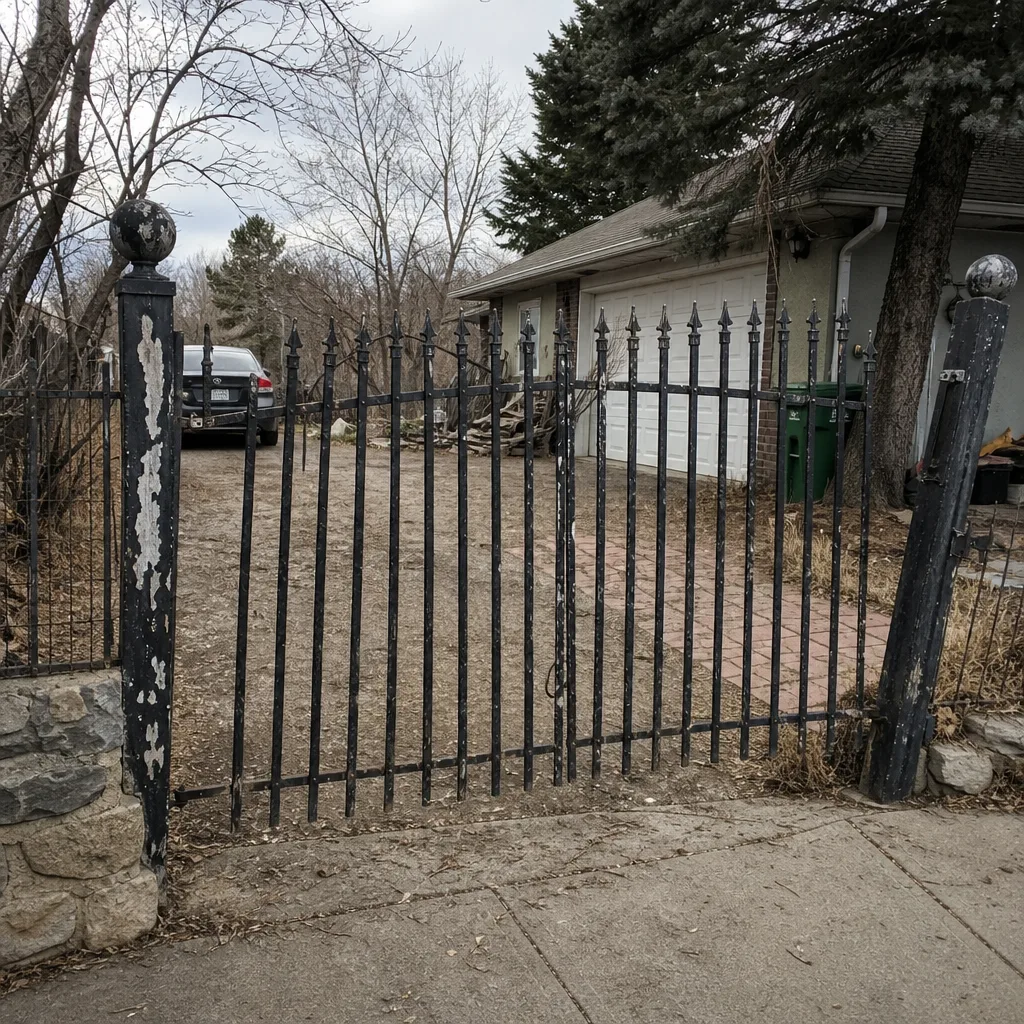 Before
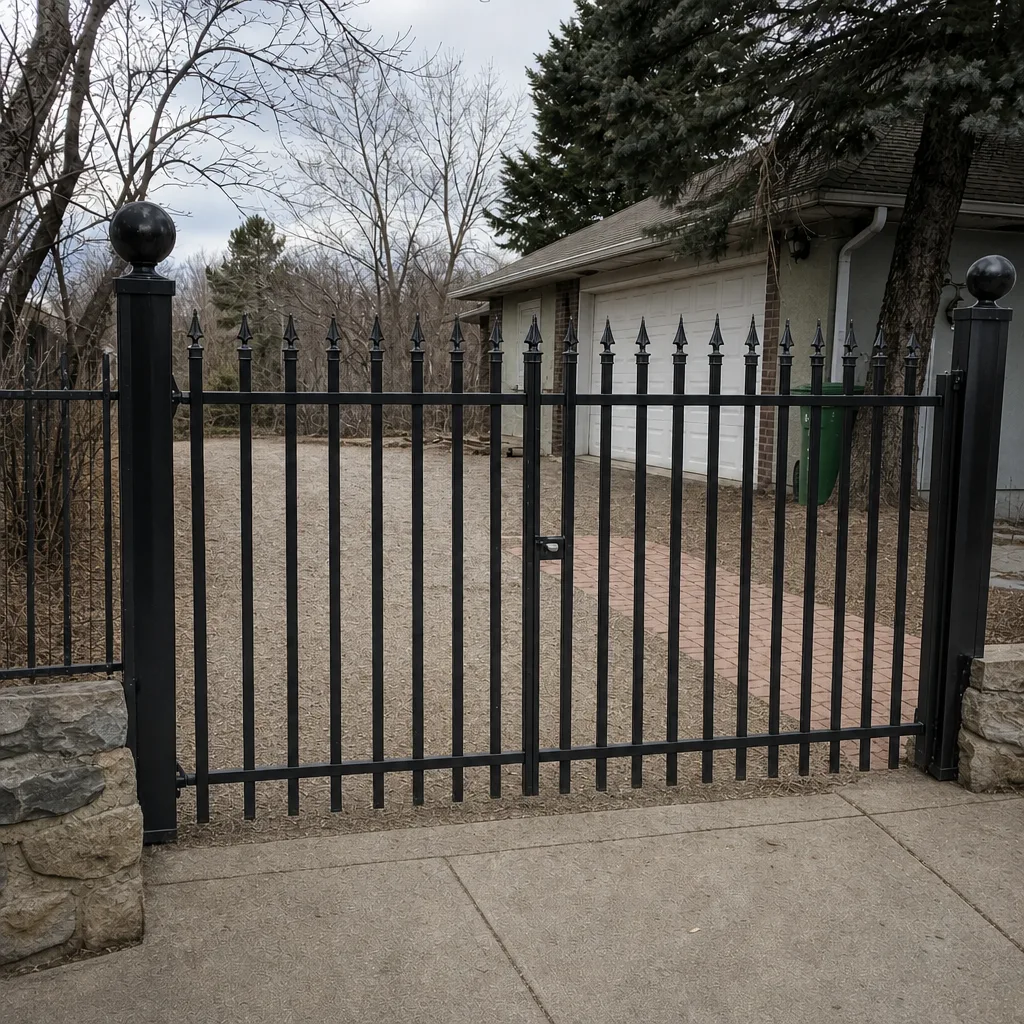 After
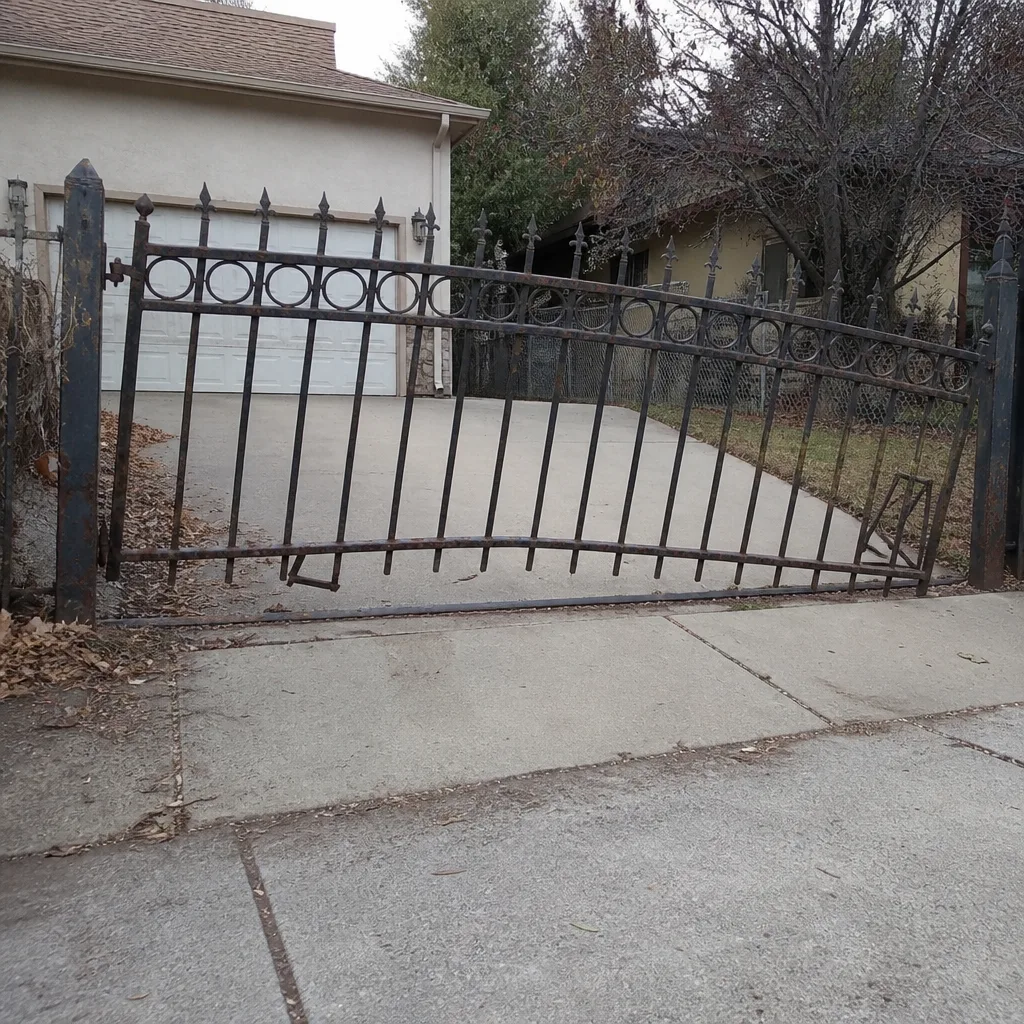 Before
 After
 Before
 After
Frequently Asked Questions
Once a year before the first hard freeze is the practical answer, and that visit should include a viscosity check, not just a top-off. If your operator is running AW46 and you’re consistently below freezing for weeks, switching to AW32 for the cold season reduces load on the pump. Call (844) 761-1390 for an exact quote on a fluid and battery check.
Yes. When a post settles or tilts after frost heave, the operator’s limit switches no longer line up with the new gate position, which is why a gate that worked fine in autumn can stop halfway or reverse early in spring. A spring reset is a routine part of seasonal care in Arvada. Call (844) 761-1390 for a free estimate.
Most visual checks, lubrication, alignment and sensor work can be bundled into one visit. Hydraulic fluid changes and battery load tests shouldn’t wait for a bundle if the season has arrived; they’re the tasks that protect the operator from damage. Call us to plan a single visit that covers everything the timetable allows.
Post footing tilt is the usual cause in Arvada. Even a small tilt changes swing geometry and puts extra load on one hinge, and that’s what you feel as drag. Have the post and hinge alignment checked before you keep cycling the gate. Call (844) 761-1390 to book a diagnostic.
It’s real. Control boards generate heat while running, and an enclosure in direct summer sun with blocked ventilation will run hotter than the board was designed for. Boards fail fastest in heat alone but fail fastest of all in heat plus a weak battery. A single summer check catches the most common causes. Call for an estimate.
The same seasonal logic applies, but with more on the line: a DoorKing or FAAC operator at a multi-unit or commercial gate runs heavier cycles, so fluid wear, battery health, and board temperature matter even more. Commercial-grade systems benefit from a spring and fall diagnostic you can rely on year after year. Call (844) 761-1390 to schedule one.
The Bottom Line
Gate care in Arvada is a four-season schedule, not a once-a-year checklist. Fall is when hydraulic fluids, batteries and seals set the stage for whether your operator survives the freeze. Winter is when frost heave and cold-strained motors reveal the geometry problems that hinge welds tell you about. Spring is the inspection window where welds, footings and limit switches get put back in order. Summer is where solar output, board ventilation and UV coatings protect the system from quiet heat damage. Bundle what makes sense, schedule the critical fall and spring work on time, and call us at (844) 761-1390 for a free estimate. We answer 24/7. Fast dispatch from 7am to 7pm, Sunday through Friday.
Written by the team at Gate Repair Arvada.